This post may contain affiliate links. Please see our disclosure policy.
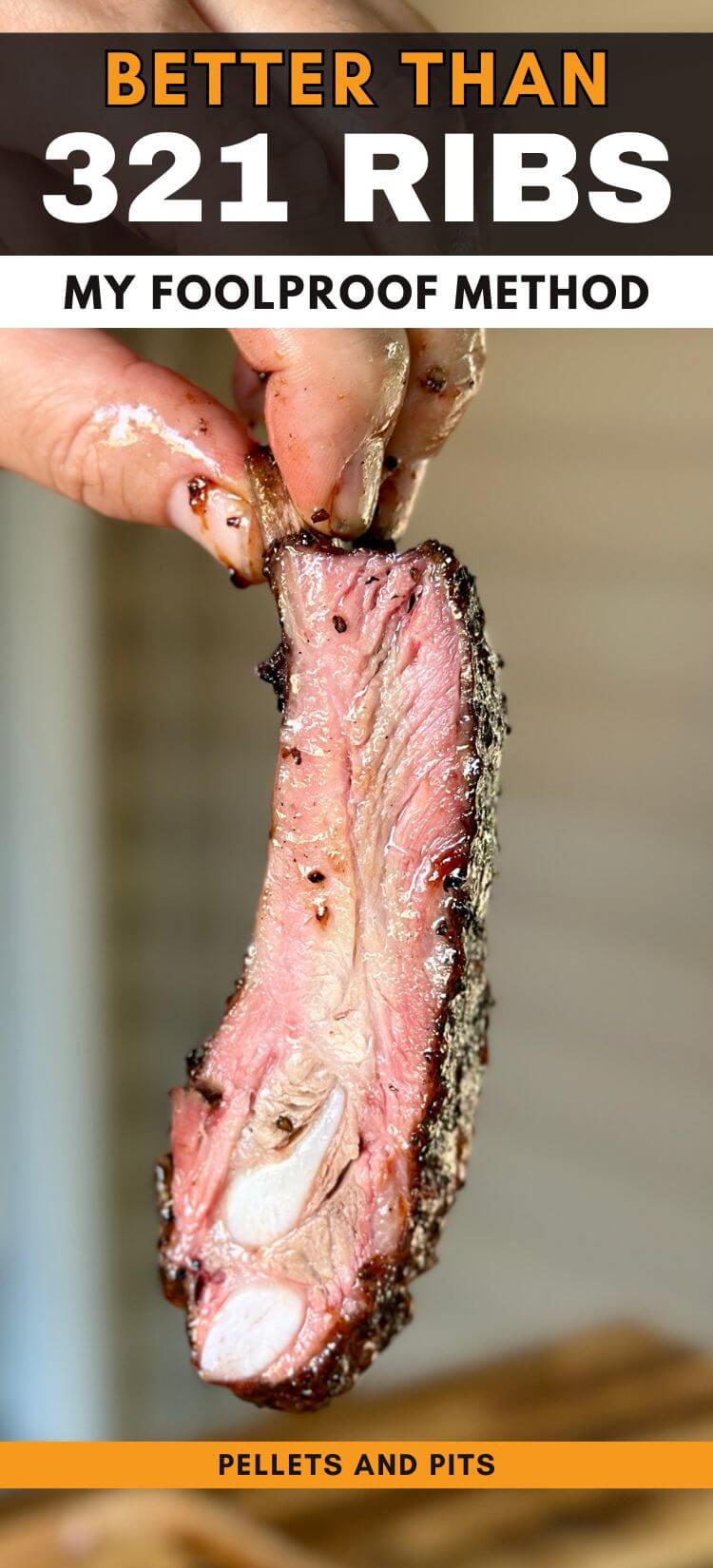
Learn why the 3-2-1 rib method fails – and how to make perfect smoked pork ribs every time on a pellet grill or smoker. Pitmaster-tested tips including cook to temp secrets, my 275°F technique, and a foolproof smoked spare rib recipe for beginners and backyard grill masters.
Let’s get something straight right off the bat: I’m not here to bash a method that millions of people swear by.
But after years of cooking ribs on pellet grills and stick burners, I’ve got some opinions – and after running a head-to-head test on my Traeger Ironwood XL and my TMG Pits stick burner, I’ve got the receipts to back them up.
The 3-2-1 rib method has a serious flaw, and if you’ve ever pulled a rack of ribs and wondered why they weren’t quite right, this article is for you.
Here’s why I ditched the 321 method, and how I make the best smoked spare ribs every single time:
The Problem with 3-2-1 Ribs
Here’s the deal with the 3-2-1 method: three hours on the smoker naked, two hours wrapped in foil with liquid, one hour unwrapped with sauce. Sounds simple, clean, and foolproof – and that’s exactly why it’s everywhere online.
But here’s what nobody talks about: temperature.
At no point in the standard 3-2-1 method does anyone mention what internal temp your ribs should hit. And a true pit master knows that you should never smoke meats with a stopwatch – and even if a recipe says a specific time, the clock goes out the window if the meat thermometer isn’t registering the correct temperature.
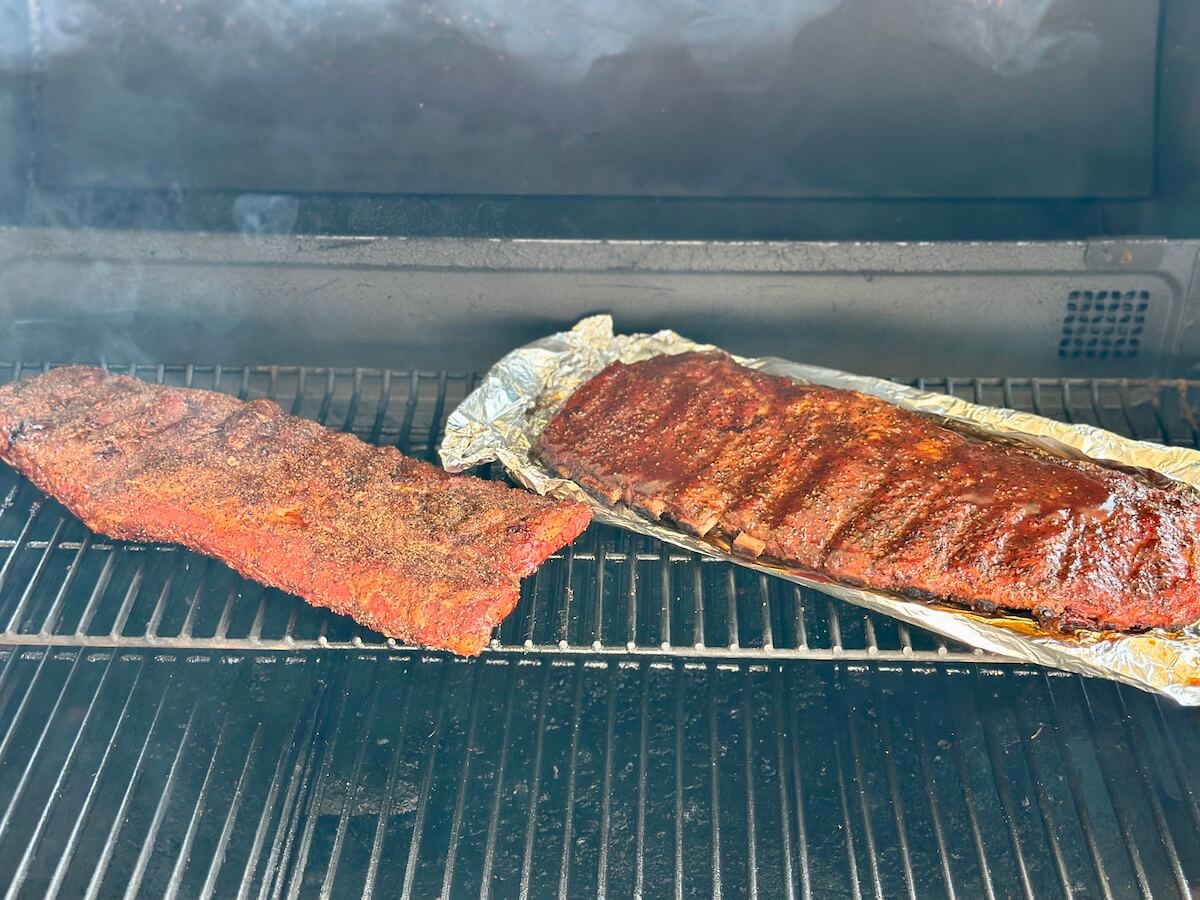
During my tests, I ran both grills (a Traeger pellet grill and a TMG Pits stick burner) at 225-230°F – right in the sweet spot the method calls for. After six full hours following the 3-2-1 process, my ribs were sitting at around 160°F internally. Ribs need to be up near 200°F to properly render the fat and reach that perfect tender bite. I was nowhere near that. I ended up having to crank the temp to 275°F and cook for an additional hour just to get them where they needed to be. That’s a seven-hour rib cook that the method told me would be done in six.
Even more eye-opening? Multiple major BBQ websites claim that ribs should hit the proper temperature within the time the method allows. I was running at a higher temp than some of those sites recommend, and still came up short.
That’s the problem. Time-based recipes set you up to either pull ribs too early or scratch your head wondering what went wrong.
Video
Watch me put my own smoked spare ribs to the test against 321 ribs, and see my foolproof way to make the best ribs on the pellet grill in this YouTube video:
My Method: Straight Through at 275°F
My approach is simple: smoke the ribs straight through from start to finish – no wrapping mid-cook. When they’re done and coming off the grill, that’s when I wrap them to rest. That’s it.
And instead of the low-and-slow 225°F that most rib recipes push, I cook at 275°F.
I even texted my buddy Eric from Smoked Pickle BBQ in Knoxville, an extremely successful pitmaster and craft barbecue food truck owner, and asked him straight up: 225 or 275 for ribs? His answer? “275 all day. No if’s, and’s, or but’s about it.” That’s a guy who has cooked thousands of racks. I’ll take that advice.
Cooking at 275°F lets the fat render properly. You can actually see and feel the difference in texture. And you’ll cut your cook time down without sacrificing quality. I’ve never really understood the argument for 225°F – it just prolongs your day.
One more thing worth mentioning for my pellet grill guys: the 3-2-1 method only gives you three hours of actual smoke exposure before you wrap the ribs. On a pellet grill, which already produces less smoke than an offset, that’s a real disadvantage. Smoke straight through and you’re giving your ribs maximum smoke penetration the whole cook. The smoke has to be working FOR you the entire time.
What You Need for Smoked Pork Ribs
Ingredients:
- spare ribs slabs – This is our preferred cut over baby back ribs – more fat, more flavor.
- Texas-style rub – We make our own Texas-style barbecue rub from scratch, but you can use your favorite seasoning for pork ribs. Our ‘Que That is another great option!
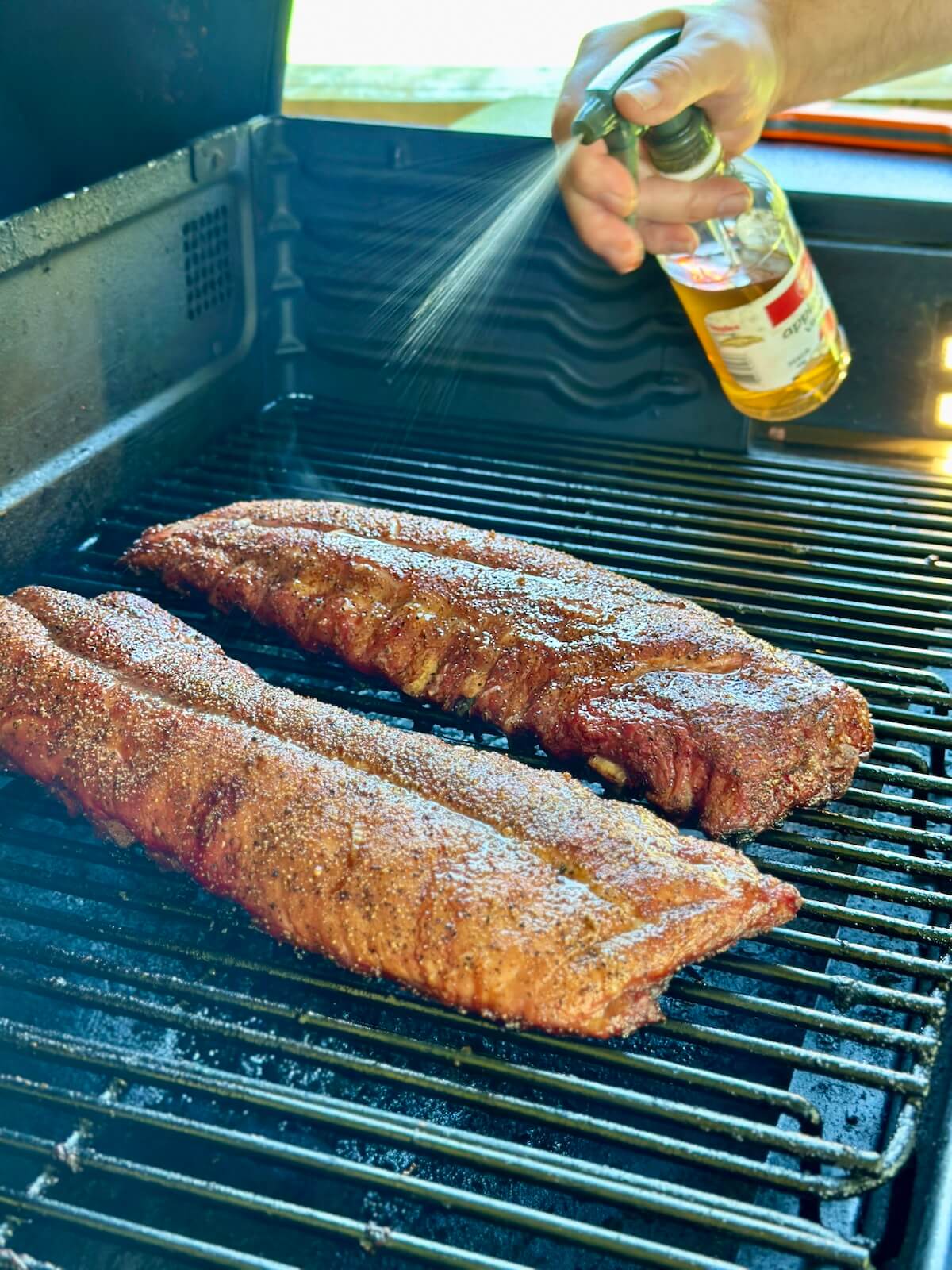
- apple cider vinegar – For spritzing. Or you can also use a 50/50 mixture of apple juice and apple cider vinegar.
- barbecue sauce (optional) – Use your favorite store-bought version or make your own. Most bottled barbecue sauces are overly sweet or too thick for our liking, so we sometimes heat them up with some apple cider vinegar for a semi-homemade version that tastes more like legit BBQ.
Equipment:
- Pellet grill, charcoal grill, or smoker – We have tested our preferred rib method multiple times in multiple different grills. If you can get your grill to 275°F with good smoky flavor, you can make these smoked pork ribs.
- Wood, charcoal, or pellets (depending on what grill you are using) – For pellet grills, we recommend Smokin’ Pecan pellets – premium pellets made from the actual pecan shells. In many taste tests, they deliver more smoke flavor in your smoked meats.
- Instant read meat thermometer – This is crucial for making sure your smoked spare ribs are cooked to the proper doneness. This is our preferred meat thermometer… it’s pricey, but reliable – and when you’re smoking a $75+ brisket, you want a good thermometer.
- Aluminum foil – We only use the foil for resting the ribs, not wrapping mid-cook. More time exposed to smoke means more flavor.
Step-by-Step Instructions
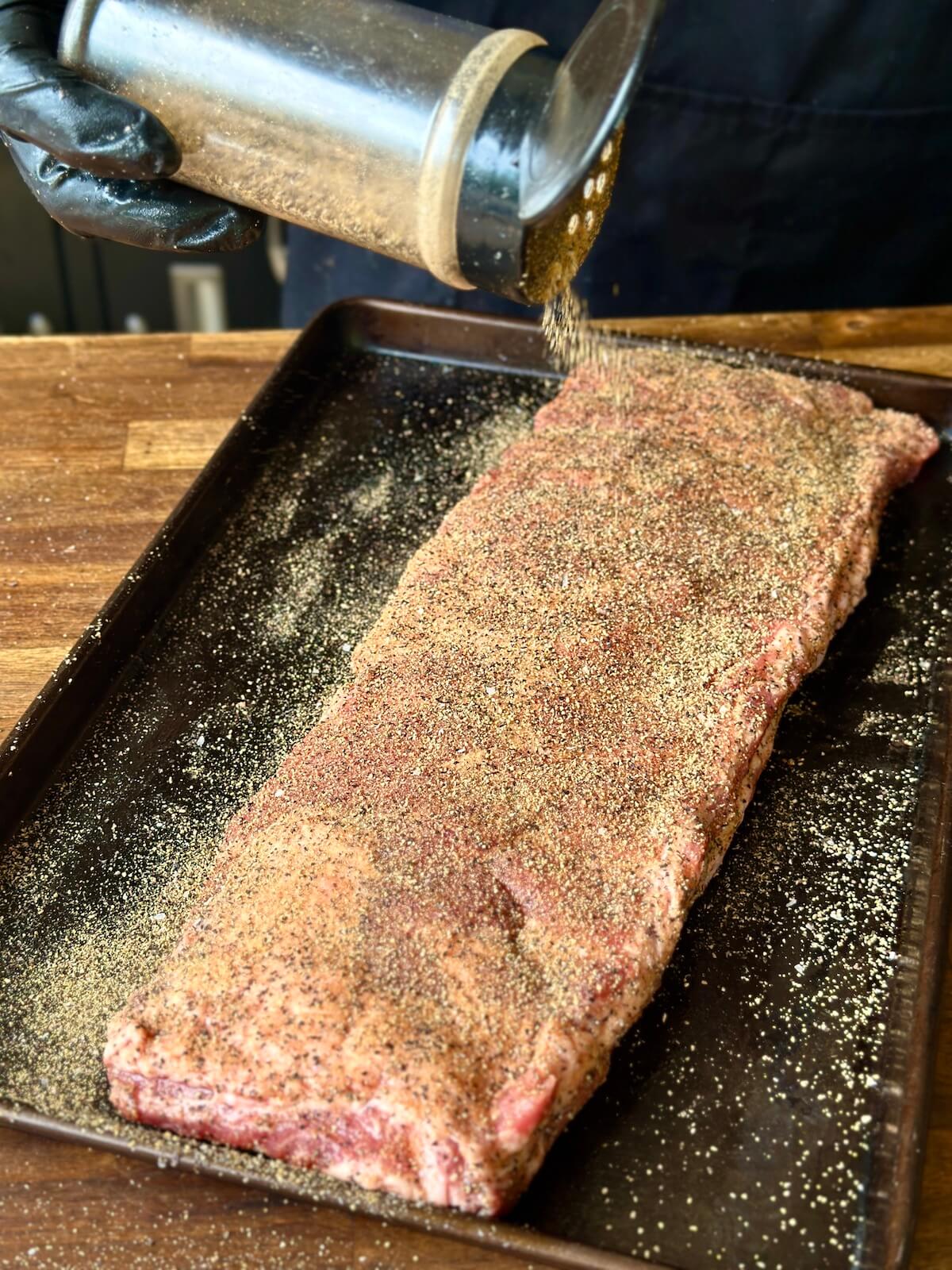
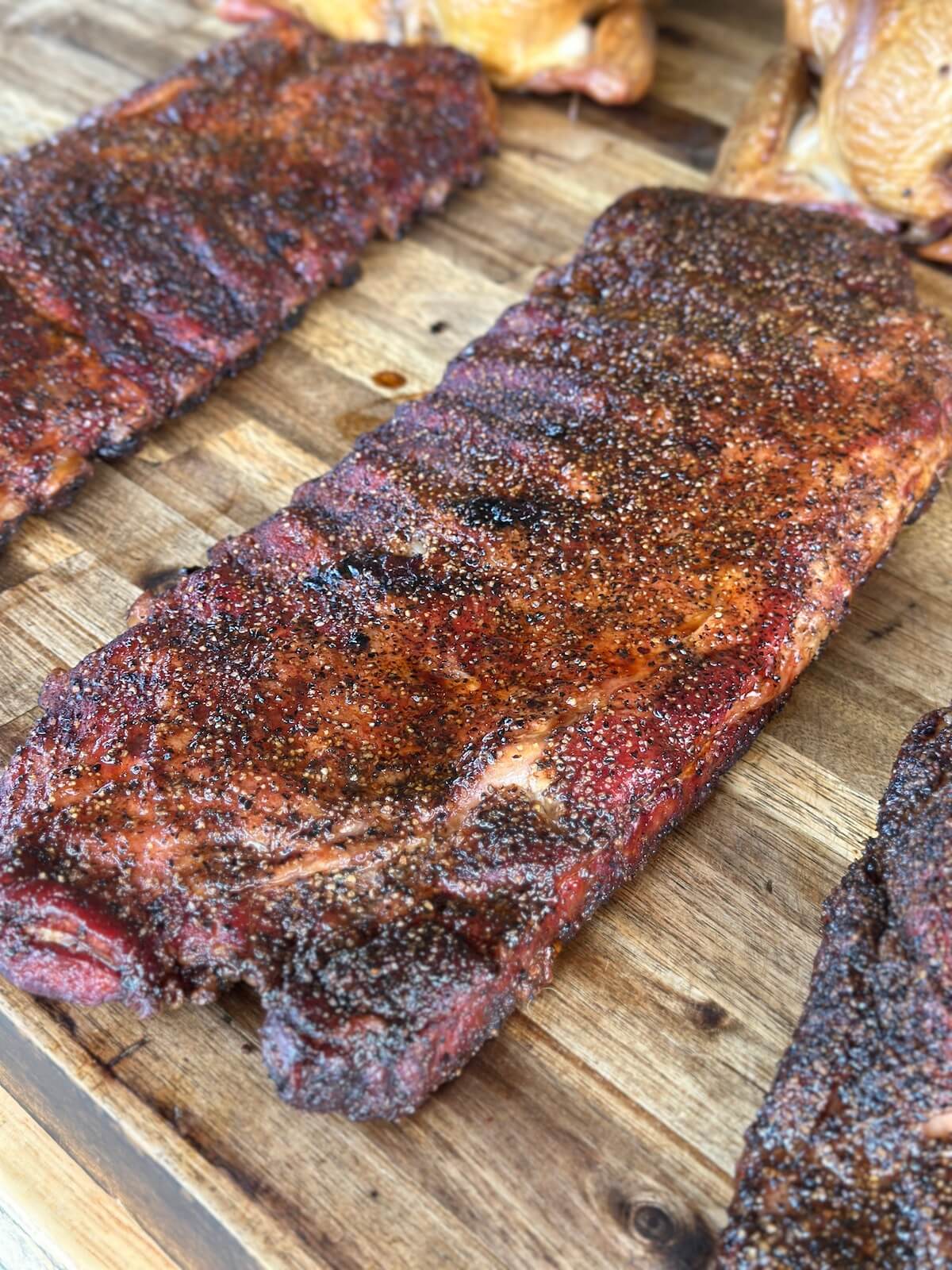
- Prep the ribs. Score the membrane on the bone side in a diamond pattern, or remove it completely if you prefer – we have tried it both ways and there’s no noticeable difference. Then season both sides of the slabs. Let the rub set while you fire up the grill.
- Preheat the grill. Preheat your pellet grill or smoker to 275°F with your choice of pellets or wood.
- Smoke straight through. Place ribs on the grill and leave them alone. No wrapping. Rotate left to right about halfway through to account for any hot spots on your grill. After the first 2 hours of smoking time, when the exterior of the ribs is dry, spritz with a light spritz of apple cider vinegar, and spritz again every hour or so. I only spritz about 2-3 times total.
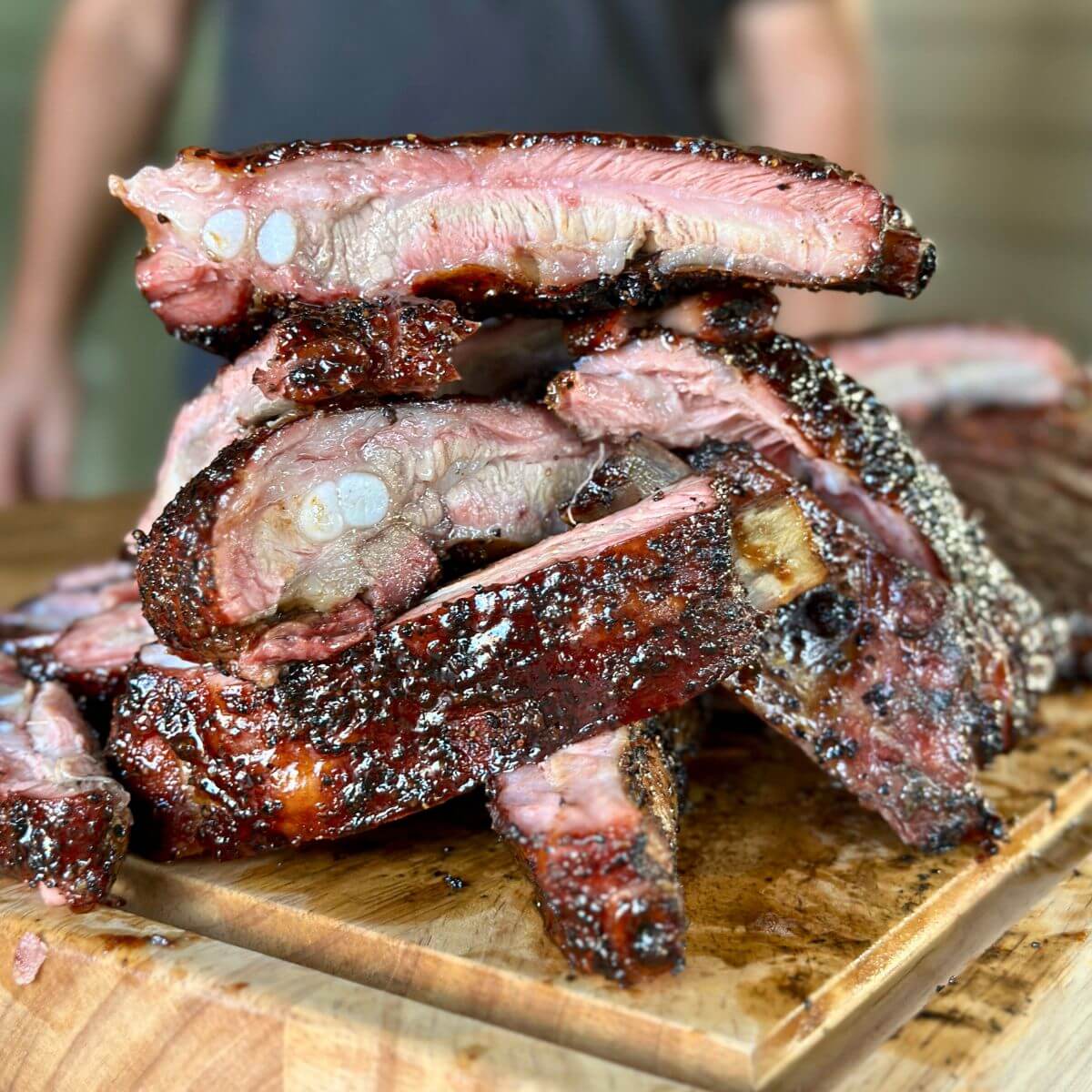
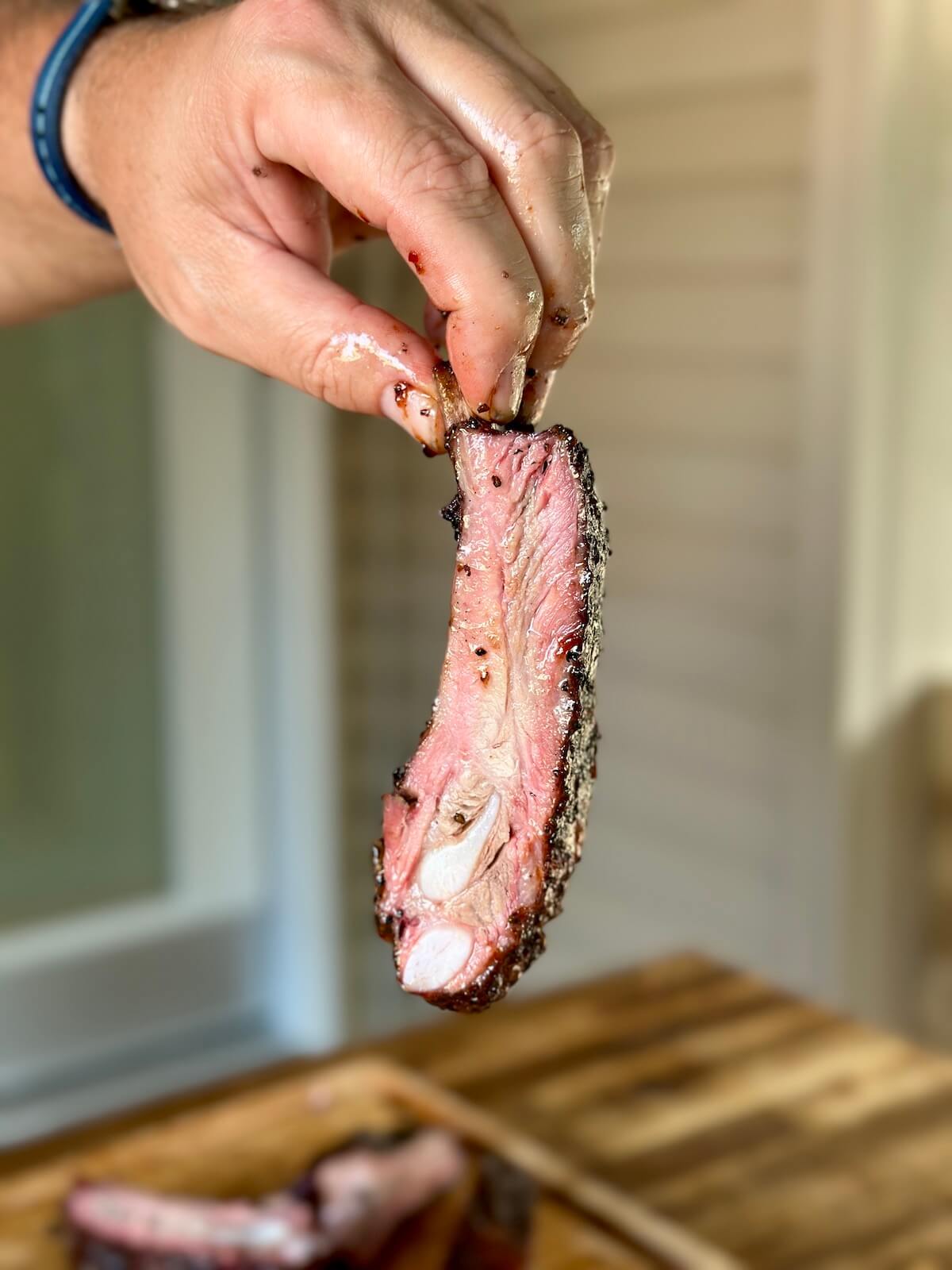
- Cook to temperature, not time. Start checking internal temp after about 3 hours on the smoker. You’re targeting around 200-203°F. The fat should be visibly rendering – you’ll see bubbles. That’s how you know you’re close. Continue cooking until you reach the proper internal temp.
- Wrap and rest. Pull the ribs off, spritz one more time with a light spritz of apple cider vinegar, and wrap tightly in foil. Rest for at least 30 minutes before slicing. This is when I wrap – after the cook, not during.
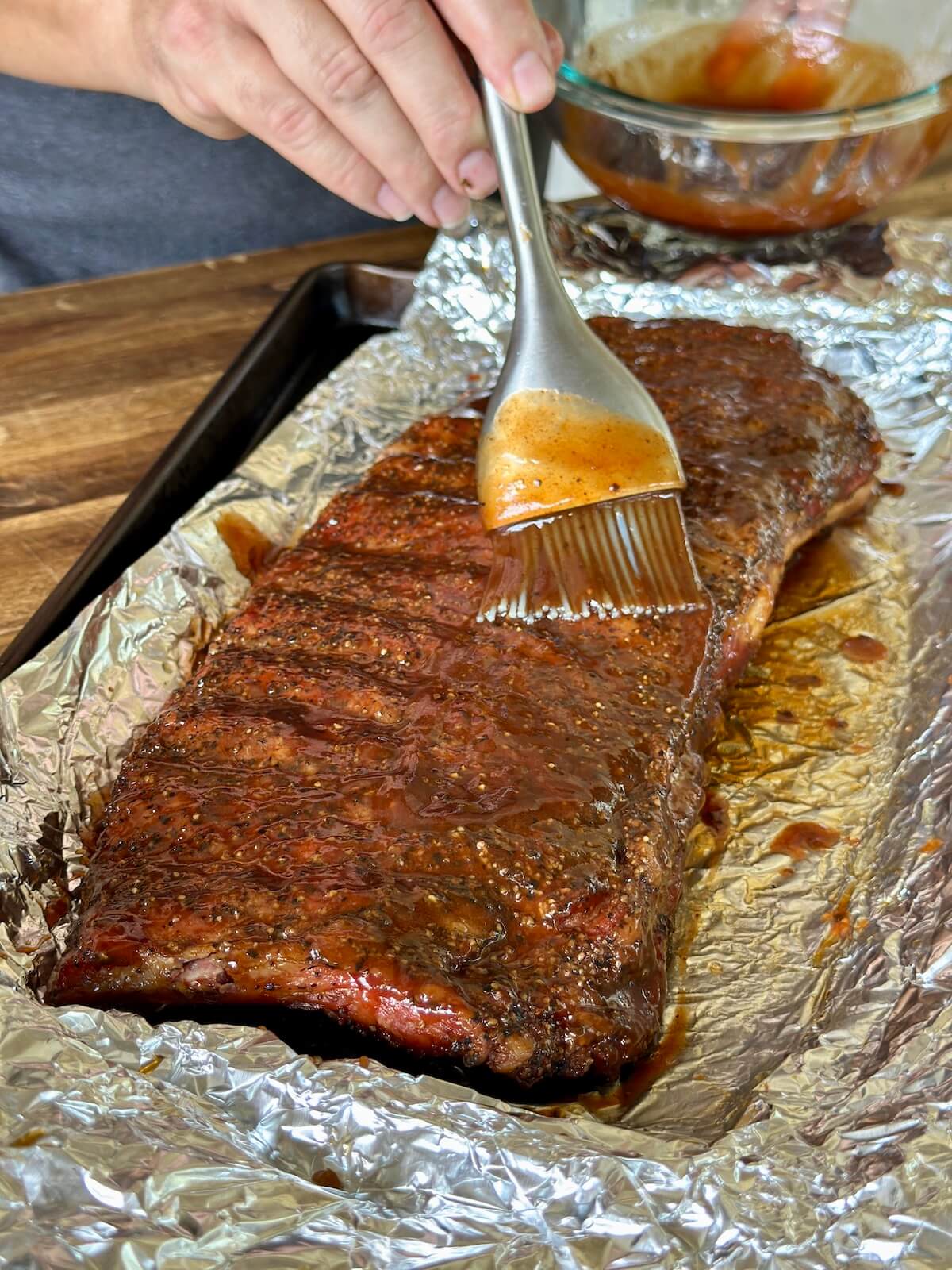
*Optional BBQ sauce –
If you’re going to sauce your smoked ribs, then do that when the internal temperature hits about 190°F. Apply a light coating of your favorite sauce, and let it tack up on the grill. But don’t overdo it – after years of eating fantastic barbecue, a quality spare rib barely needs it.
I also recommend adding a splash or two of apple cider vinegar to your store-bought sauce – most are overly sweet or too thick.
Recipe Tips
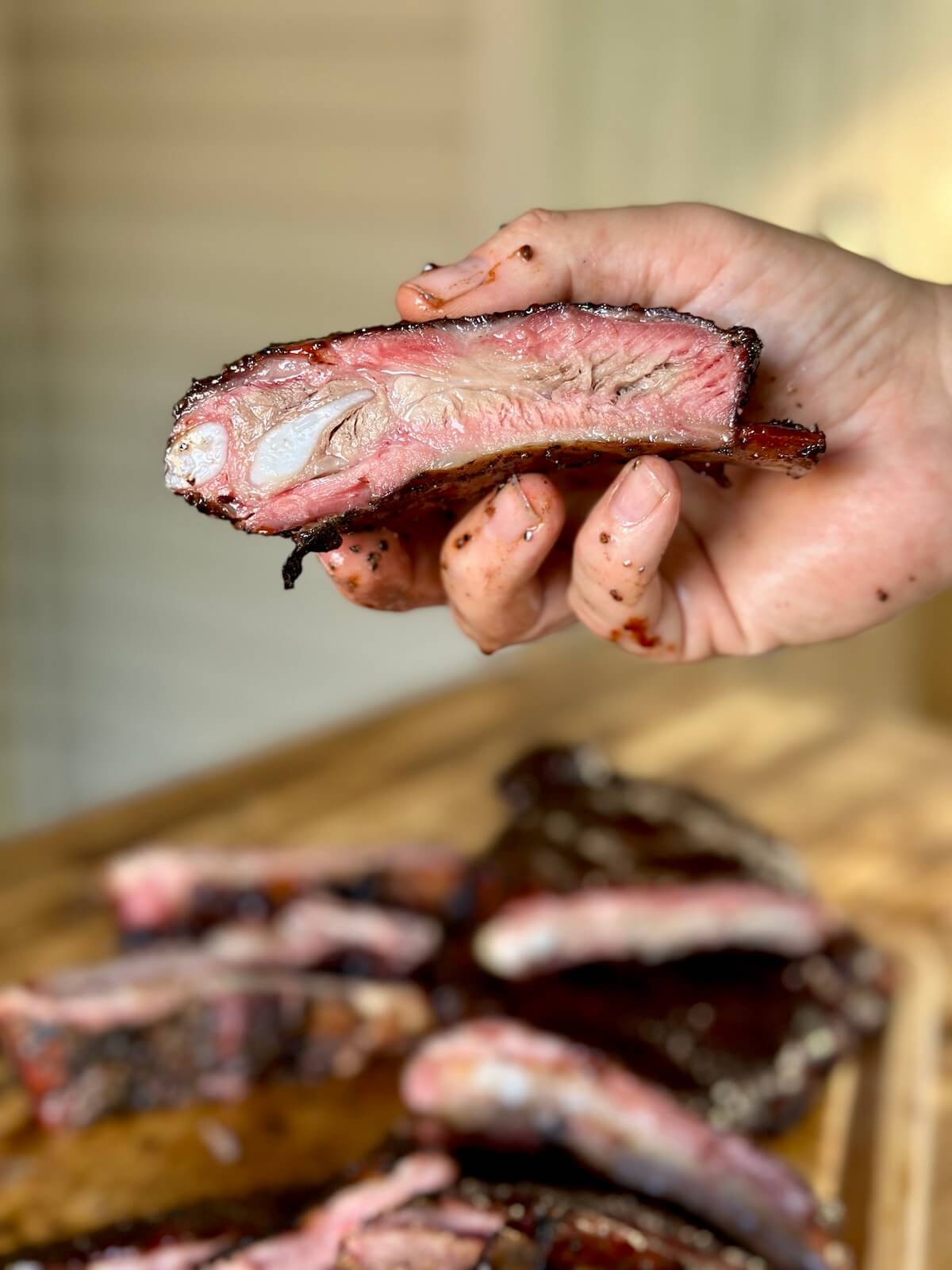
- Cook to temp, always. If there’s one thing you take away from this entire article, it’s this: pull your ribs when they hit temperature, not when a timer goes off. Target 200-203°F internal.
- 275°F is the sweet spot. Don’t be afraid of it. The fat renders better, the texture is superior, and you’ll save time without losing quality. This one came straight from a pro pitmaster with years of competition and catering experience.
- Pellet quality matters. If you’re on a pellet grill, use the best pellets you can get. Premium pellets make a real difference in smoke output and flavor. We swear by Smokin’ Pecan pellets.
- Rotate your slabs. Every time you check the ribs, rotate them left to right. Hot spots are real, especially on reverse-flow smokers where one side runs hotter.
- Spare ribs need more time. If you’re going to do a timed method like 3-2-1 with spare ribs, understand that the standard timing was likely tested on baby backs. Spare ribs are bigger and have more fat to render – they need more time, not less.
- Skip the sweet stuff on the wrap. If you do wrap, keep the liquid neutral — a bit of apple juice and/or apple cider vinegar is plenty. Heavy butter, honey, and brown sugar in the wrap will push the ribs into fall-apart territory fast. Not everyone wants that.
- Let quality do the talking. After years of cooking barbecue, I’ve come around to the idea that a great spare rib, done right, doesn’t need a heavy coat of sauce. Salt, pepper, and good smoke is often enough.
The Bottom Line
Look, if you love 3-2-1 ribs and they come out great for you — keep doing what you’re doing. But if you’ve ever followed the method and wondered why your ribs weren’t quite hitting the mark, now you know why. Time is not the answer. Temperature is.
Fire up the pellet grill. Load it with good quality pellets. Season those ribs simply and let the smoke do the work all the way through. Cook to 200°F internal, wrap to rest, and slice into something you’ll be proud to serve. That’s it.
Smoked Spare Ribs
Ingredients
- 2 slabs pork spare ribs, 3.5 – 4 lbs each
- Texas-style rub
- 'Que That Rub and Seasoning, optional
- ½ cup apple juice or apple cider vinegar (or a 50/50 mix of both), for spritzing
- your favorite BBQ sauce, for a light glaze at the end (optional)
Instructions
- Score the membrane. Remove ribs from the package. Flip ribs bone-side up. Using a knife, score the membrane on the underside in a crosshatch pattern. *You can also fully remove the membrane if you wish, but we have not found there to be a noticeable difference.
- Season the ribs. Season the bone side of each slab lightly with Texas-style rub. Flip over and season more generously on the meat side, finishing with one pass of 'Que That barbecue rub across the top (optional). Let the rub sit and slightly absorb while the grill comes up to temp.
- Prep the grill. Preheat your pellet grill or smoker to about 275°F with your choice of wood or pellets. Allow the grill to fully stabilize at temperature before placing the ribs on.
- Smoke the spare ribs. Place seasoned spare ribs bone-side down directly on the grill grates (on the top rack if you have one). No foil, no wrapping. Close the lid and smoke at 275℉.
- Rotate and sprit the ribs. Around the 2-hour mark, rotate the slabs left to right to account for hot spots and to help the ribs cook more evenly. If you choose to spritz, mix apple juice and vinegar in a spray bottle and apply a light mist every 60–90 minutes starting at hour two, or once the exterior of the ribs is drier and the seasoning has set. *Don’t overdo it – you’re adding moisture, not washing off your rub. I only spritz about 2-3 times total.
- Check temperature, not time. Begin checking internal temperature at the 3 hour mark. Insert your thermometer probe between the bones into the thickest part of the meat – avoid touching bone. Continue smoking until the ribs are about 200-203℉ internal temp. *Total cook time could be anywhere between 4-6 hours, depending on what grill or smoker you have, the size of your ribs, etc.
- Optional BBQ sauce – When the ribs are 190-195°F internal temp, apply a thin, even layer of BBQ sauce across the top of each slab. Continue smoking until the ribs reach the correct internal temperature. *Don’t overdo it – a quality spare rib with good bark doesn’t need to be swimming in sauce.
- Pull and wrap. Once the ribs hit 200–203°F, pull them off the grill. Wrap each slab tightly in aluminum foil, and let them rest on the counter until the internal temp drops to about 150℉ before slicing.
- Slice between each bone and serve. These don’t need a lot of extra sauce — let people add their own at the table.
Video
Notes
- For the rub – We prefer to make a batch of our Texas-style all-purpose rub for all sorts of smoked meats. We mix it in a clean, dry seasoning shaker bottle and we have it on hand for other recipes, like these pork spare ribs. You may substitute your favorite pork rib rub. We also recommend topping the all-purpose rub with a pass of our ‘Que That BBQ rub.
- Why 275°F? Fat renders more efficiently at this temp, you get a better bark, and you’ll save 1–2 hours of cook time compared to 225°F without sacrificing quality. Professional pitmasters consistently favor this range for spare ribs.
- Why no mid-cook wrap? Wrapping traps steam, which speeds up cooking but softens the bark and limits smoke penetration. Smoking straight through gives you better bark and more smoke flavor — especially critical on a pellet grill.
- Baby backs vs. spare ribs: This recipe is dialed in for spare ribs. Baby backs are smaller and leaner and will cook faster — start checking temps at the 2.5-hour mark. *We prefer spare ribs – look for “St. Louis Style Pork Spareribs”.
- Storing leftovers: Wrap cooled ribs tightly in foil and refrigerate for up to 3 days. Reheat in a 300°F oven wrapped in foil for 20–25 minutes, or store sealed in a vacuum seal bag and reheat by sous-vide if you have it.