

This post may contain affiliate links. Please see our disclosure policy.
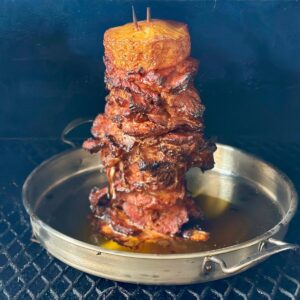
Grilled pork al pastor made with a homemade achiote marinade and thin-sliced pork shoulder. Get crispy charred edges without a rotisserie, plus why the pineapple skewer trick fails.
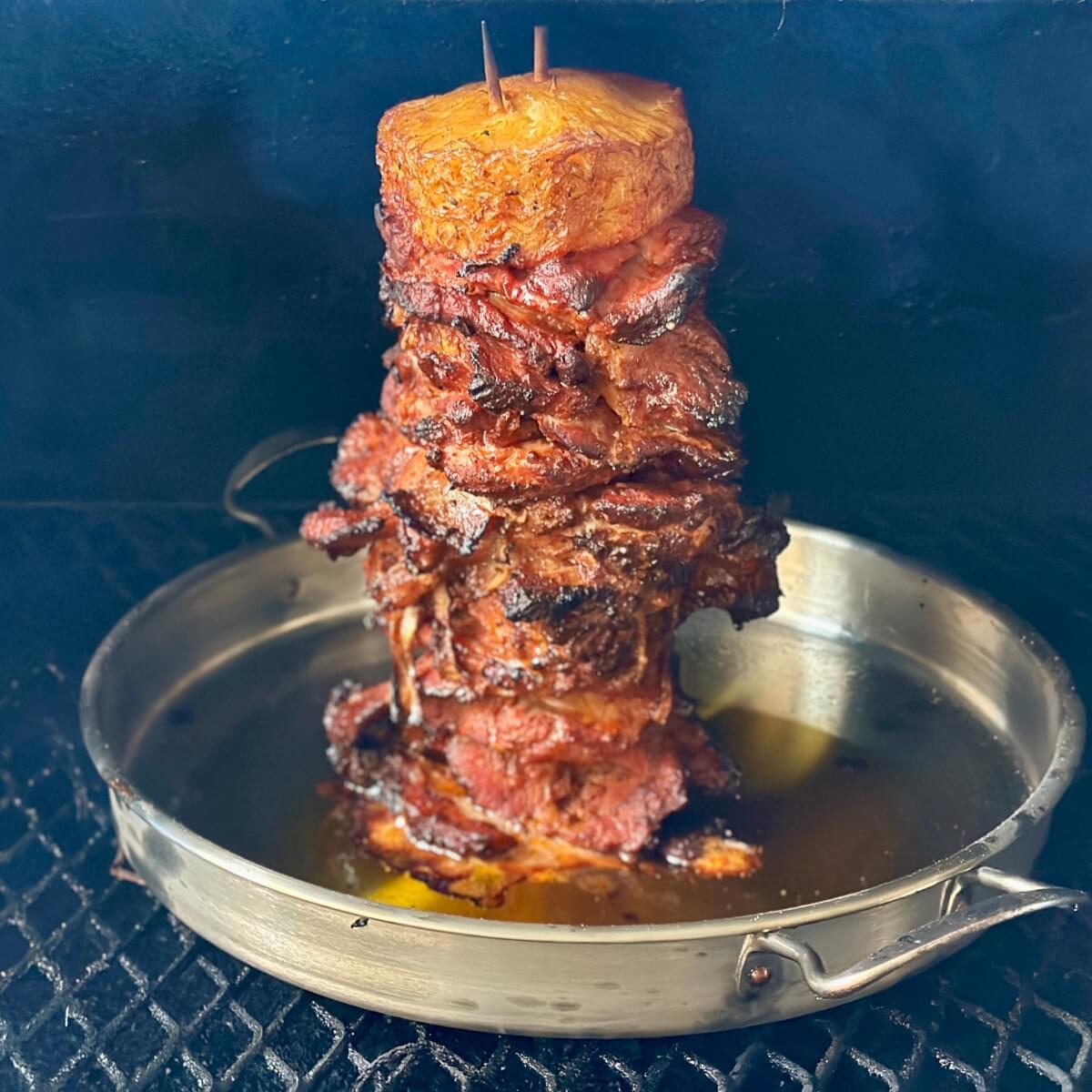
If you’ve ever stood in front of a taco truck watching a giant trompo of marinated pork spinning next to an open flame, you already know why al pastor is one of the best things to come out of Mexican street food. We wanted to bring that same smoky, charred, slightly sweet pork home to the pellet grill – no rotisserie required.
This recipe uses a homemade achiote and chile marinade, thin-sliced pork shoulder, and a vertical skewer setup to mimic that trompo-style char on the edges. We also tried the popular “stack it on a pineapple” method you’ve probably seen all over the internet, and friends, we need to talk about that. It did not go the way the internet promised.
Grab the full recipe below, plus everything we learned (the hard way) about why you should skip the pineapple base and go straight for a real vertical skewer stand.
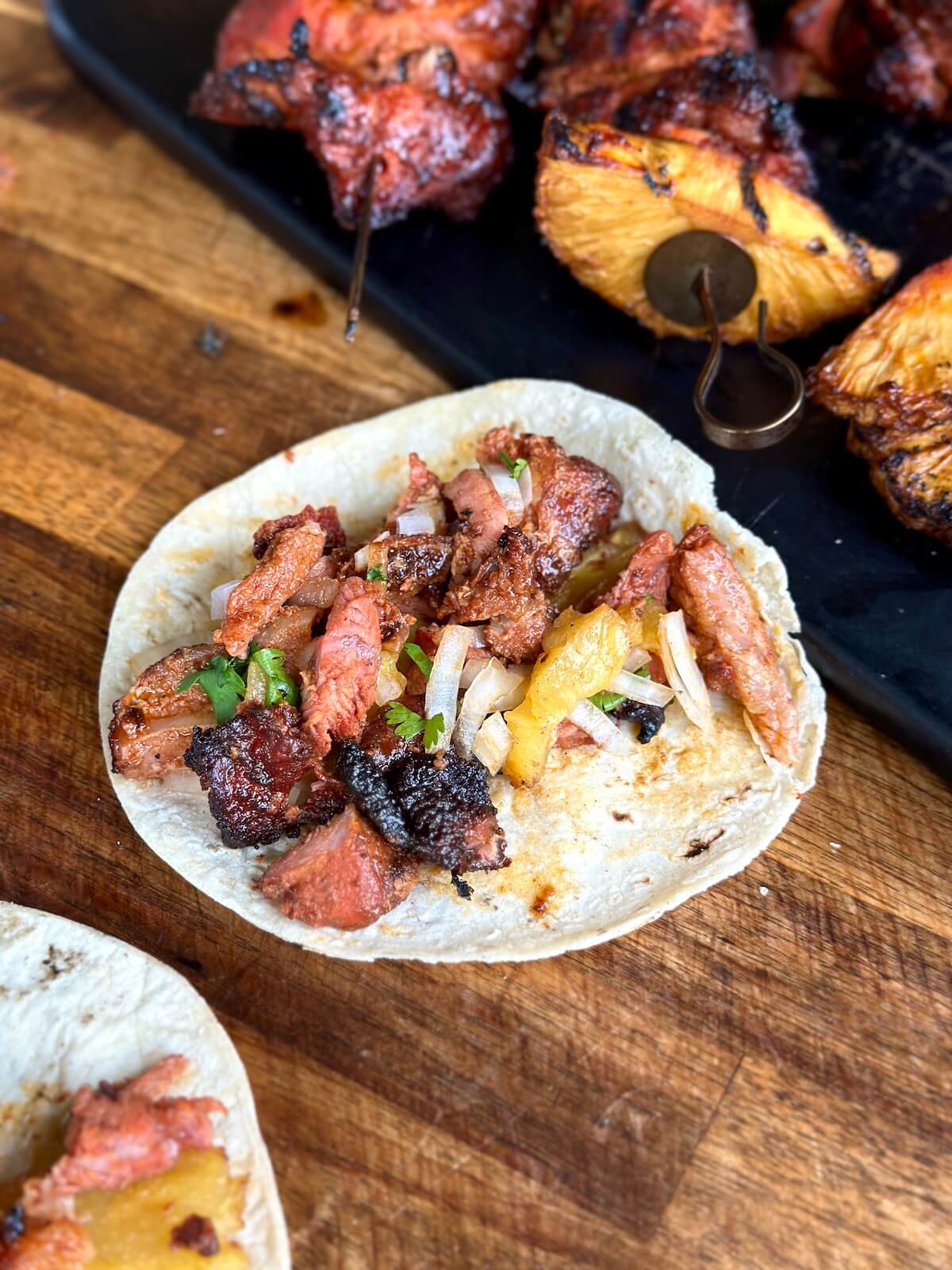
Why You’ll Love This Recipe
- That authentic char. Stacking thin slices of pork on a vertical skewer and letting it cook low and slow on the pellet grill gets you those crispy, caramelized edges that make al pastor so addictive – without needing an actual rotisserie.
- A marinade that’s worth the wait. Guajillo and ancho chiles, chipotles in adobo, achiote, and pineapple juice come together in a delicious, authentic-style marinade. Marinate overnight for the best results.
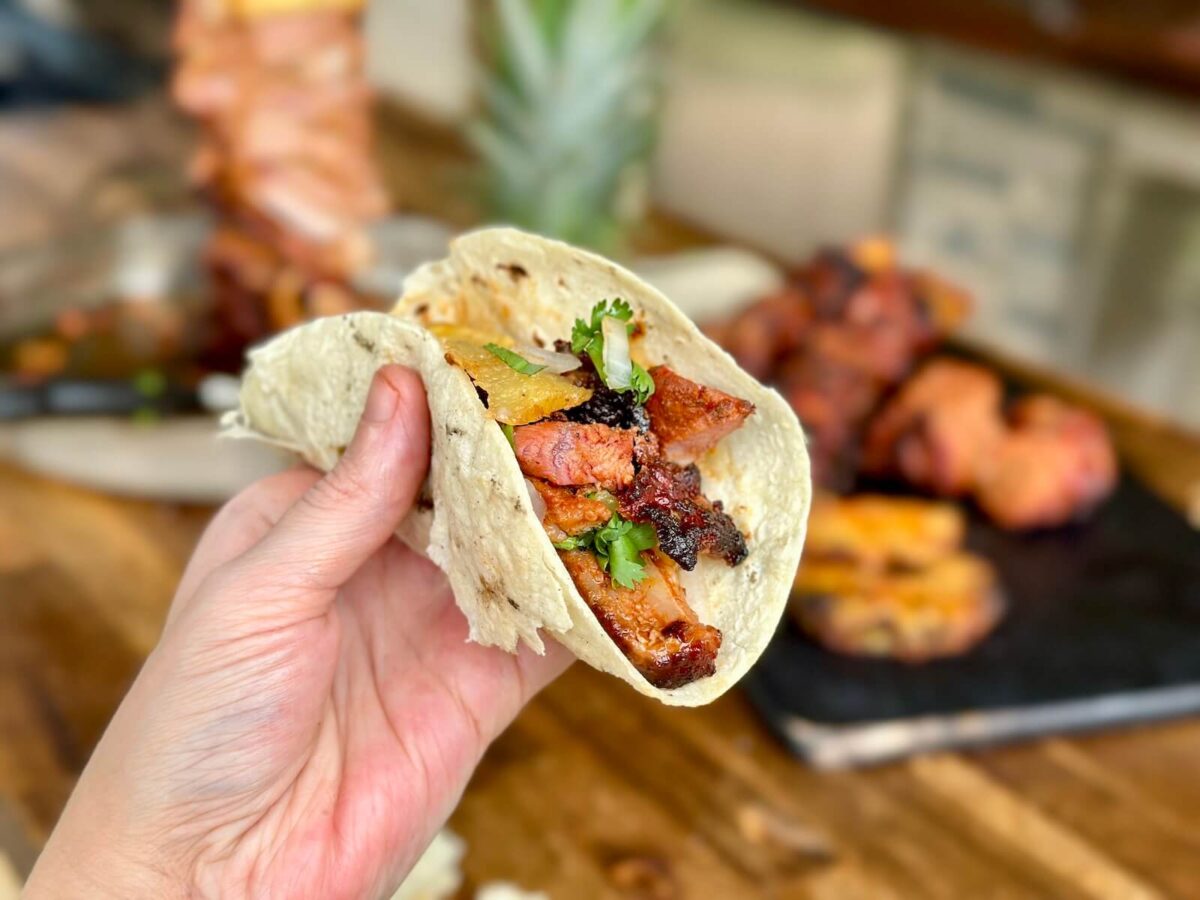
- Every bite is different. Between the char, the sweetness from the pineapple, the smoky pork, the raw onion, and a squeeze of lime, no two bites taste the same – unlike, say, a lasagna where every forkful is identical.
- Great use for your pellet grill beyond the usual smoke. This isn’t a low-and-slow brisket cook. It’s a fun, hands-on way to use your grill for something with real flair.
Ingredients and Notes
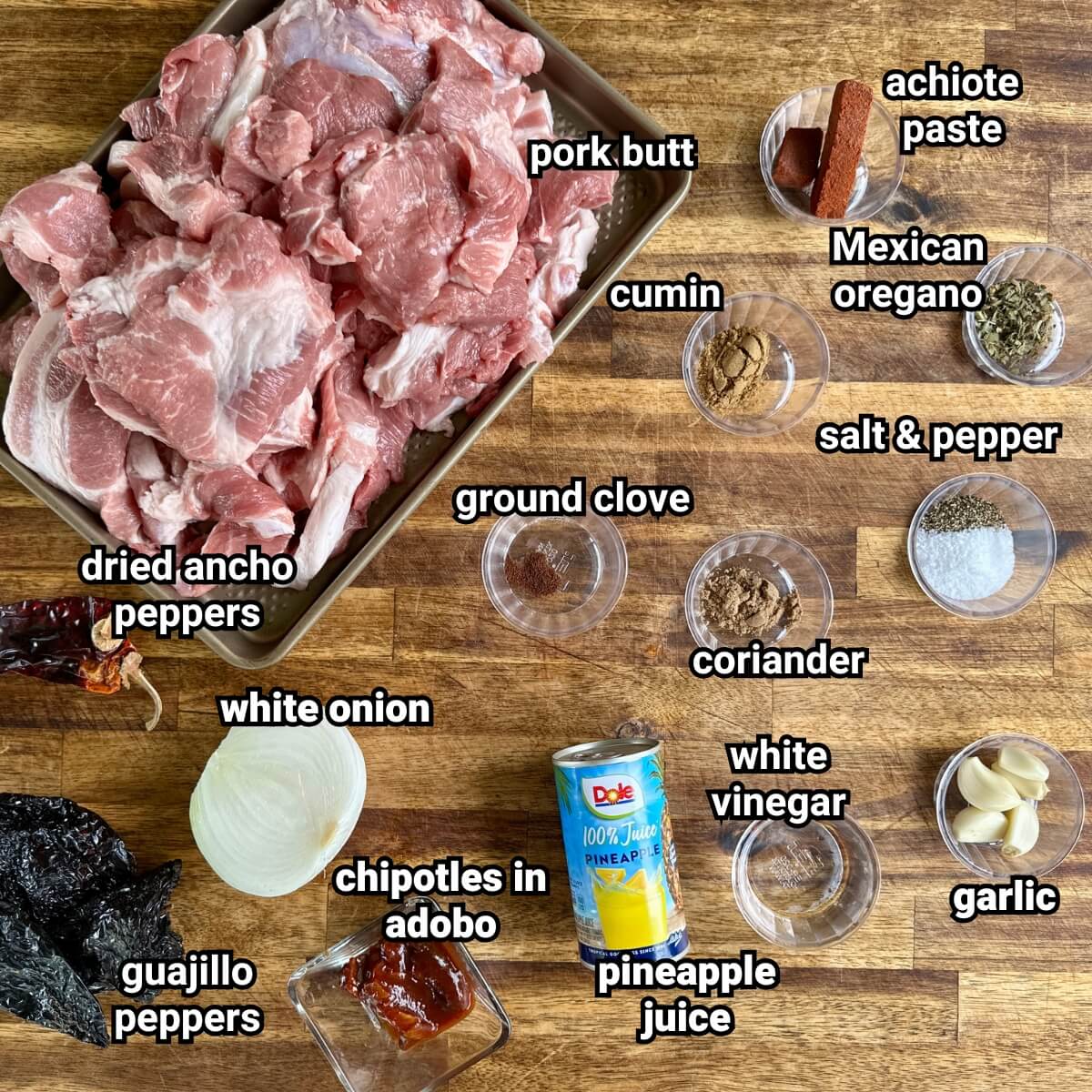
For the Pork
- 4-6 lb pork shoulder – We used a bone-in pork butt, because we can’t readily find boneless. If your grocery store carries boneless pork shoulder, grab that to save yourself some time and trimming.
For the Marinade
- garlic cloves
- canned pineapple juice – See the note below!
- white vinegar
- dried guajillo chiles, deseeded
- dried ancho chiles, deseeded
- chipotles in adobo – The kind that come in a can, plus use a bit of the sauce from the can also.
- achiote paste or powder – You should be able to find this in the Hispanic aisle of the grocery store. Don’t skip it! This is what gives the al pastor that authentic, straight from a Mexican street food vendor taste.
- salt and black pepper
- spices – Including cumin, coriander, Mexican oregano, and ground cloves.
- onion
- cooking oil – For charring the onion and toasting the peppers.
*IMPORTANT – A note on the pineapple juice: Use canned pineapple juice, not fresh. Fresh pineapple juice contains an enzyme that’s aggressive enough to break down the meat too much, especially if you’re marinating overnight. The canning process cooks that enzyme out, so you get the flavor and tenderizing benefit without turning your pork to mush. We used the mini cans of Dole 100% pineapple juice.
For Serving
- Corn tortillas
- Raw white onion, diced
- Fresh cilantro, chopped
- Lime wedges
Why the Pineapple Skewer Method Doesn’t Work
You’ve probably seen this trick online: stand a thick slice of fresh pineapple on its base, push one or two wooden skewers straight up through the middle, and stack your marinated pork on top so it towers up just like a trompo. No special equipment needed. Sounds great, right?
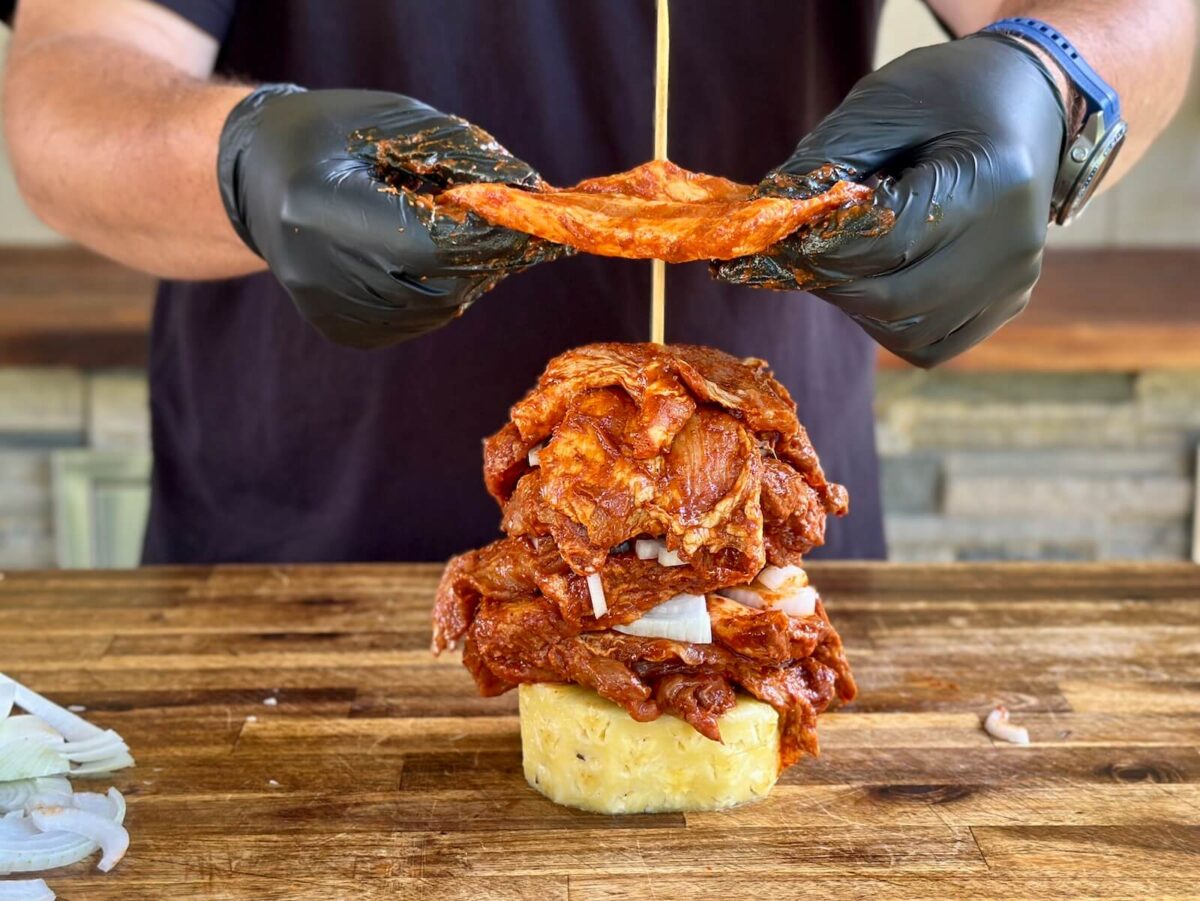
Here’s the problem – pineapple is not a stable building material once it hits heat. For the first 30 minutes or so, it genuinely does hold up fine. But as the pineapple cooks, it starts to soften and tenderize, which is exactly what pineapple does when you cook it. The base that’s supposed to be holding up your entire tower of pork starts losing its shape and structural integrity right underneath the weight it’s supposed to support.
Once that happens, the whole thing starts to lean. We tried propping it back up, wedging pieces of onion underneath, even using butcher twine to tie it up and keep it standing. It held for a while, but eventually the tower gave out completely mid-cook, and we had to scramble to transfer everything over to an actual vertical skewer stand to save it.
If you want to save yourself the trouble (and the mid-cook fire drill), skip the pineapple base entirely and start with a real vertical skewer stand. It’s a small investment, it’s reusable, and it will not soften and collapse on you two hours into the cook.
We used this vertical skewer stand once we made the switch, and it worked great.
Al Pastor without a Vertical Skewer
If you don’t have a vertical skewer stand or a rotisserie, you can also skewer the pork slices in an over-under pattern, piercing each piece with the skewer multiple times and threading it on so that each piece is folded over several times. See photo below.
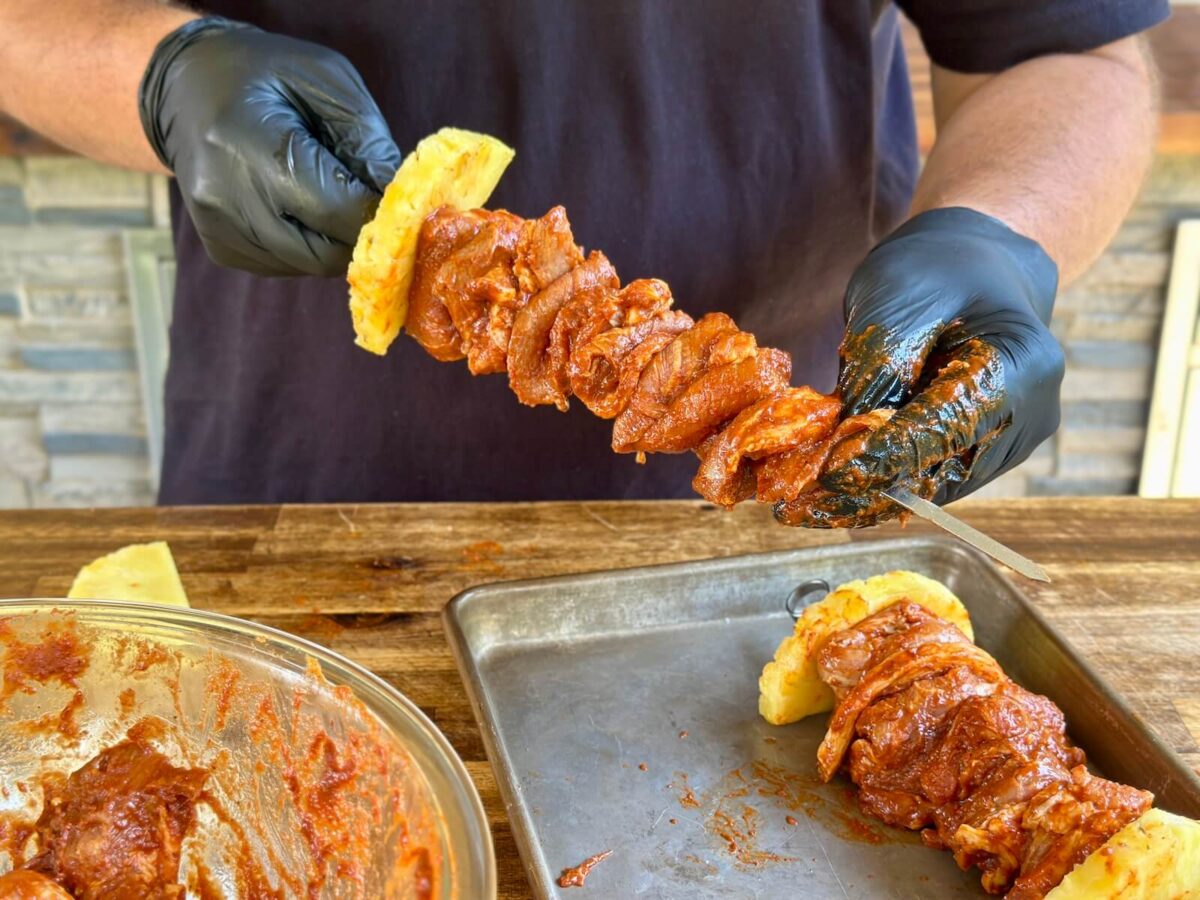
By bunching up the meat like this, you’re able to cook the pork on the grill for longer, developing more char and a deeper grill flavor. *This is similar to how we make our grilled Greek chicken skewers also.
You can also add a chunk of pineapple to the top and bottom of each skewer.
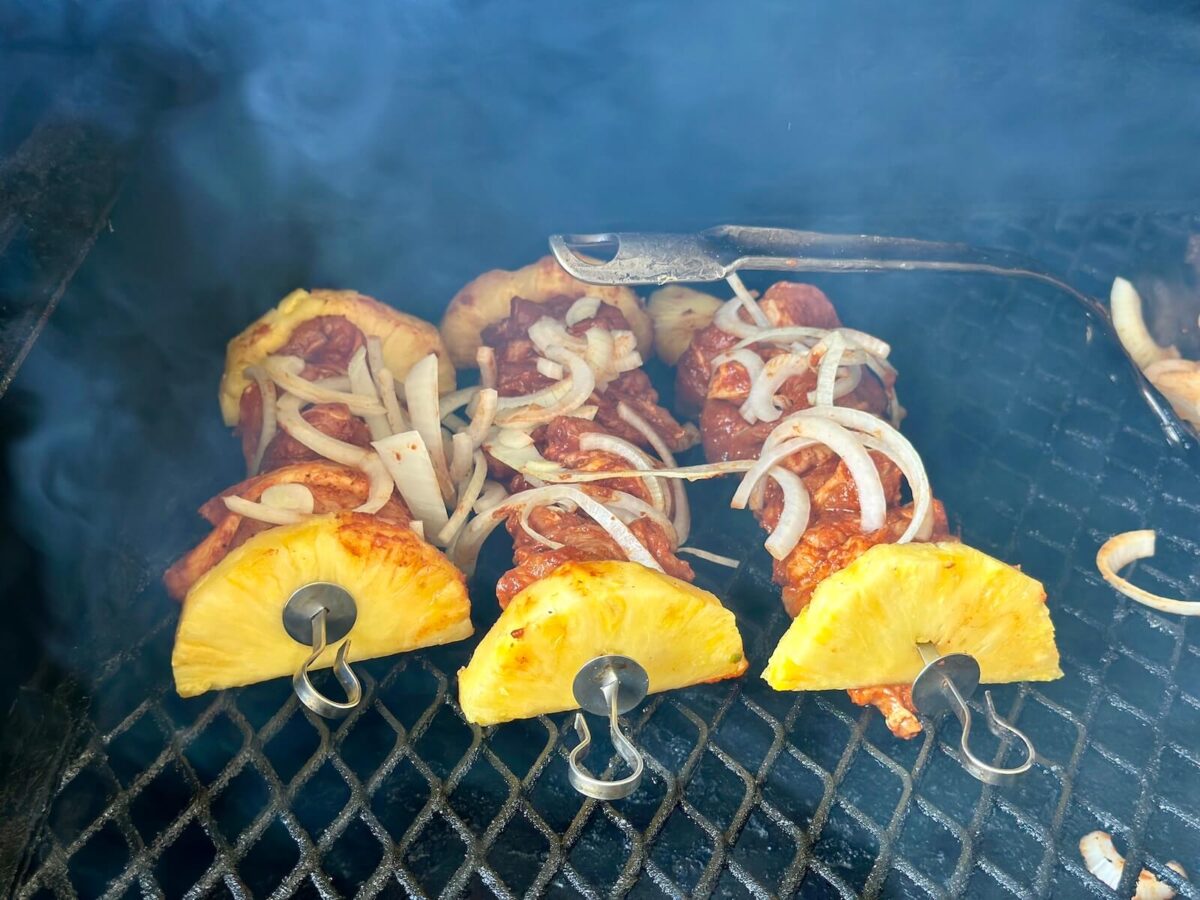
Then, simply lay the skewered pork directly on the grill grates and grill until done. You’ll need to flip the skewers periodically throughout the cook so they char evenly on all sides.
Step-by-Step Instructions
1. Prep the Pork
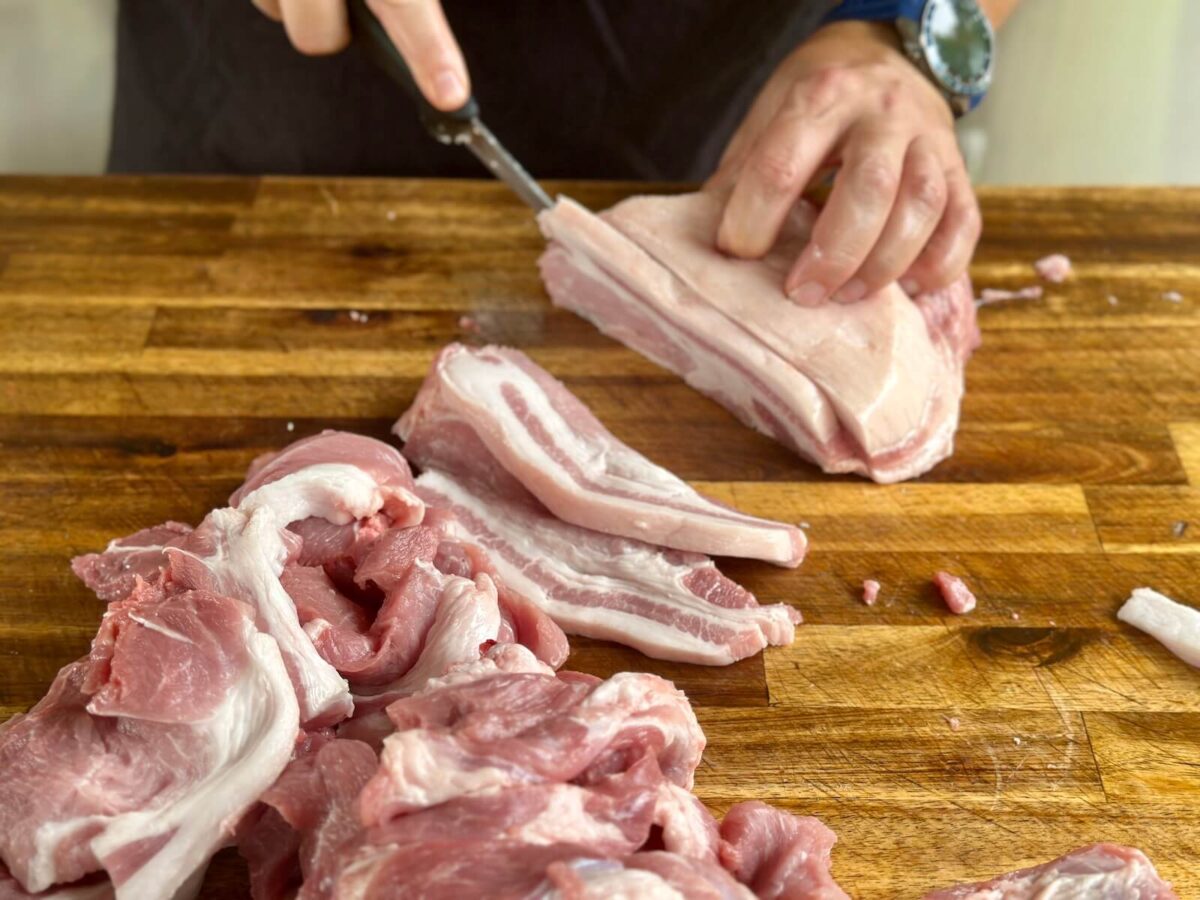
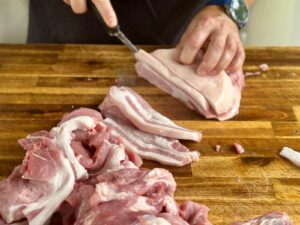
If you’re working with a bone-in pork butt, debone it first by cutting through the pork to the internal bone, and then slicing around the bone with short slices, getting as close to the bone as possible.
Keep the majority of the fat on the pork as you trim – you’re not going for lean here. However, once you get to the part that looks more like bacon (where the slices are mostly fat), you can discard those, or place them on the grill separately to smoke and save for ham and beans or other recipes.
Try to trim the pork butt pieces into a uniform, roundish shape so they stack evenly on the skewer later, and don’t overtrim just to make things look tidy. The fat is what renders down and makes this taste incredible.
Slice the pork into thin pieces, about a quarter-inch thick. A sharp knife works completely fine – the pieces don’t need to be perfectly even since they’ll all cook together anyway.
2. Char the Onion and Toast the Peppers
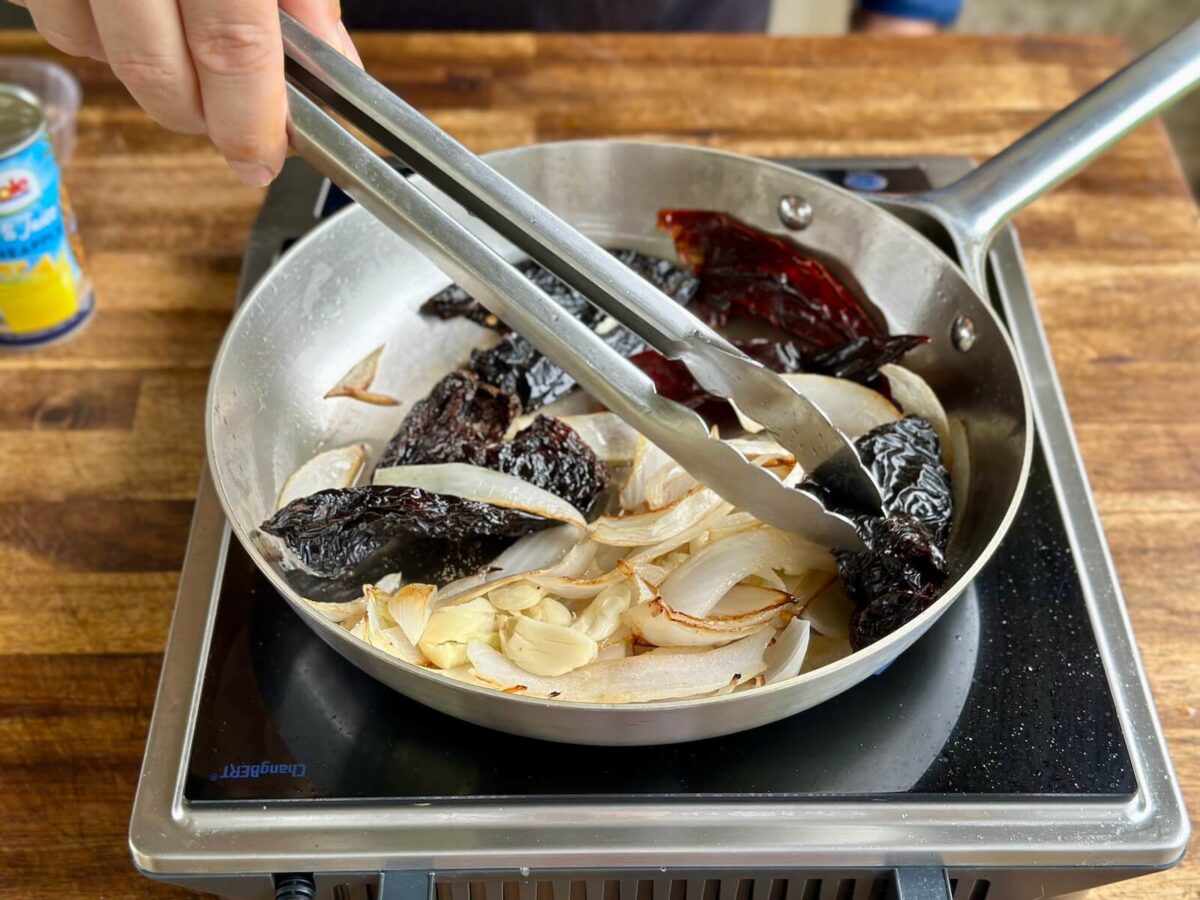
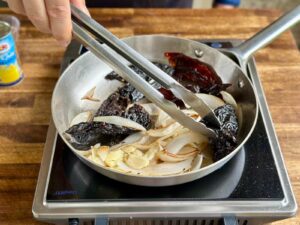
Heat about a tablespoon of oil in a skillet and char the sliced onion. Once it’s got good color, add the deseeded guajillo and ancho peppers to the skillet and toast them for just a minute or two – don’t walk away here, since dry peppers can turn rancid on you fast if they cook too long without moisture. Add the smashed garlic cloves and let everything cook together for another minute or two to release the flavor.
3. Build the Marinade
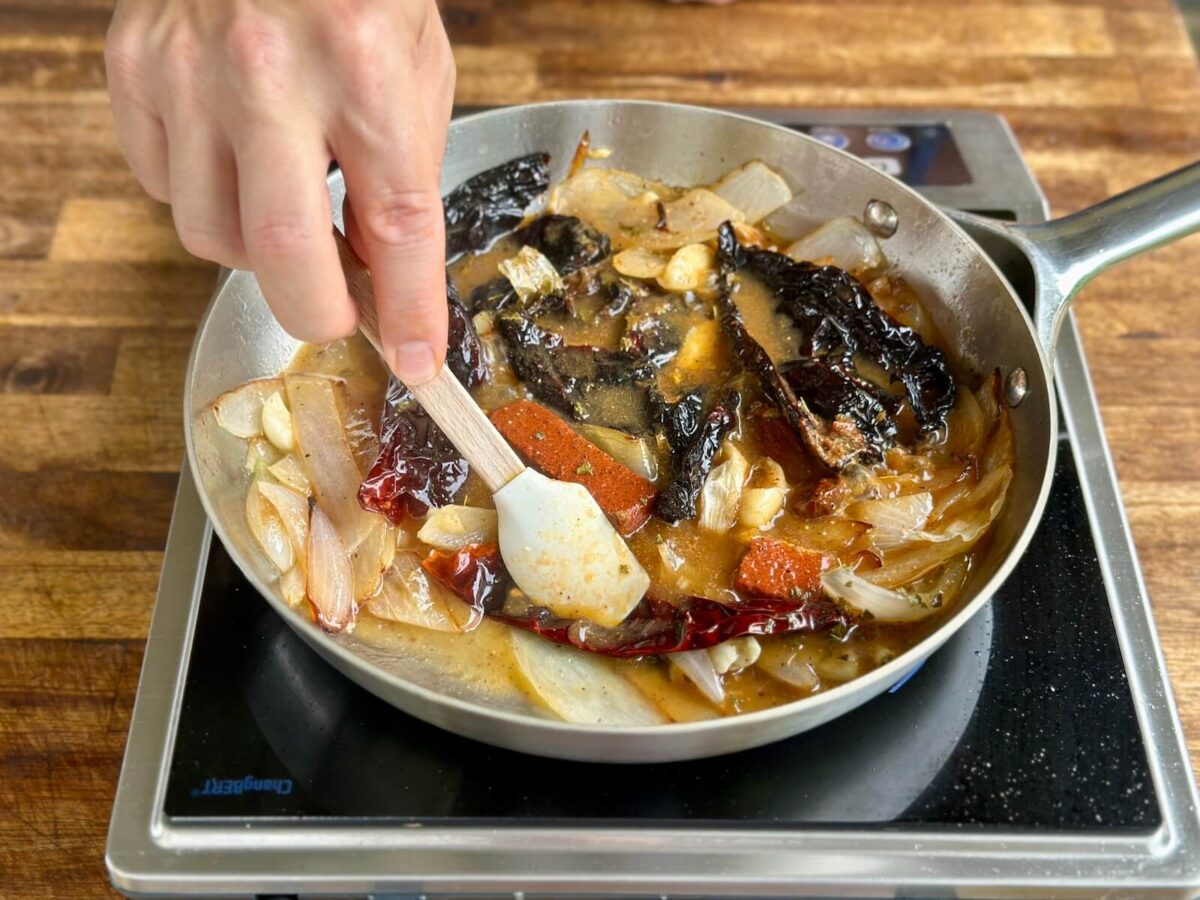
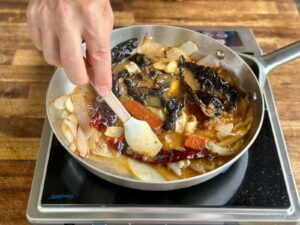
Add the chipotles in adobo, ground cloves, cumin, coriander, salt, black pepper, Mexican oregano, achiote paste, and white vinegar to the skillet with the onions and peppers. Cover and cook on low for 8-10 minutes, until the peppers have softened and rehydrated.
4. Blend and Strain
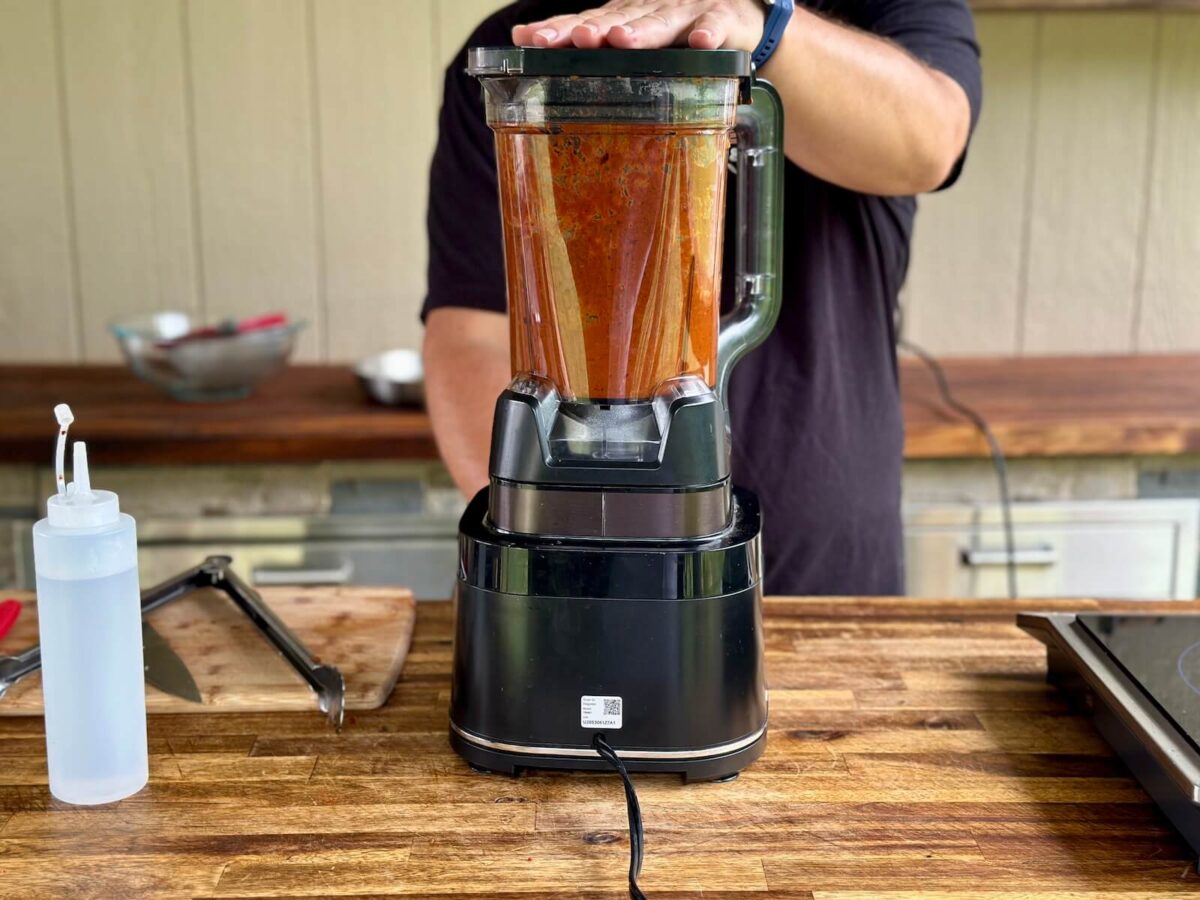
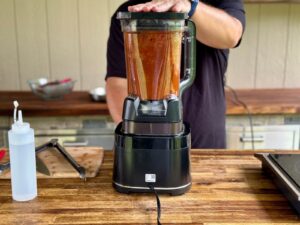
Let the mixture cool slightly, then transfer it to a blender and puree until smooth. If it’s thicker than you’d like, thin it out with a splash of water – about a quarter cup should do it. Let the marinade cool completely before it touches the pork – pouring hot marinade over cold meat pushes it into the temperature danger zone.
5. Marinate the Pork
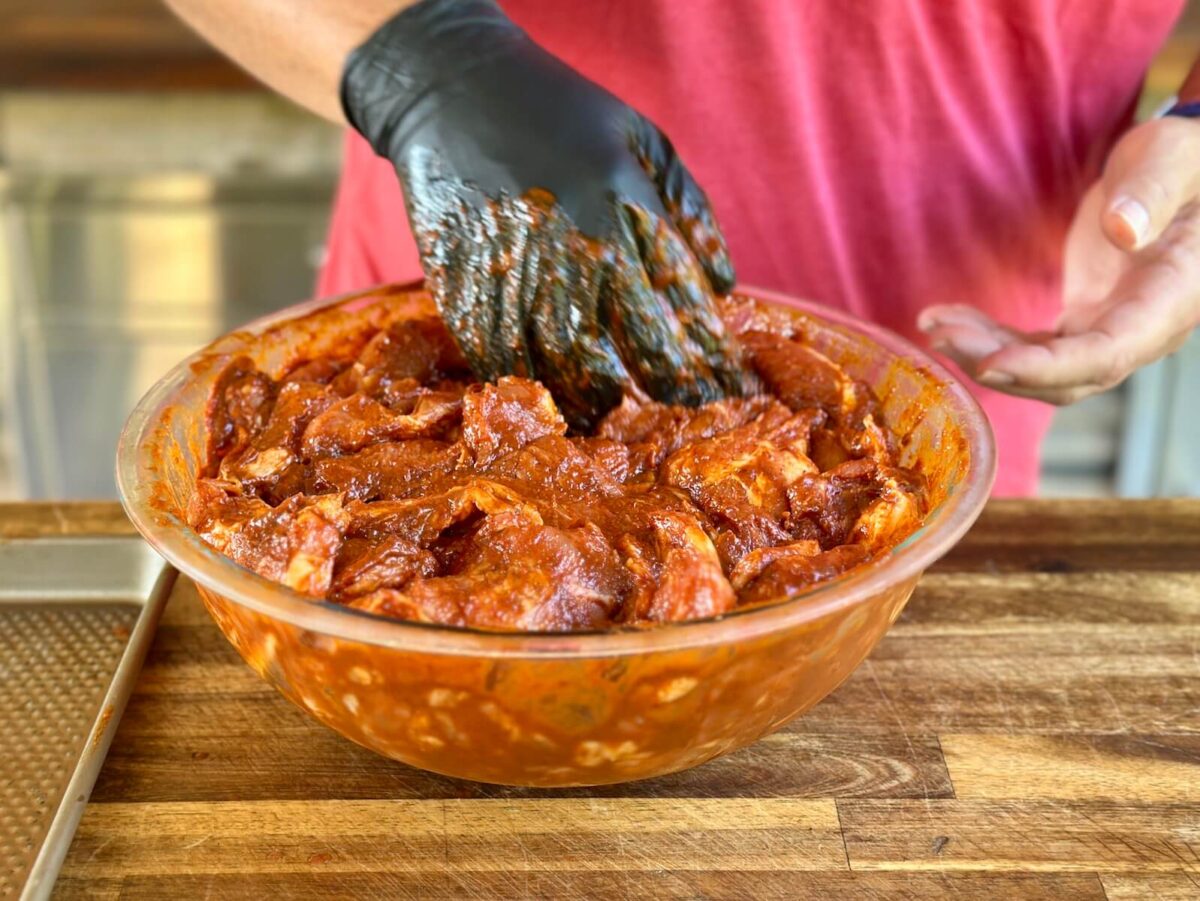
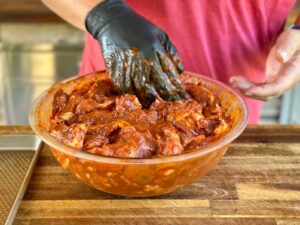
Combine the cooled marinade with the sliced pork, making sure every piece is coated. Cover and refrigerate for at least 4-6 hours, or ideally overnight for maximum flavor penetration.
6. Build Your Skewer
Skip the pineapple base and set up your vertical skewer stand. Start stacking the marinated pork slices, mixing fattier pieces in with the leaner ones so the fat renders throughout. You can tuck in a few chunks of raw onion between layers of pork if you’d like, too.
7. Fire Up the Pellet Grill
Preheat your pellet grill to around 275-300°F. If your grill has a flame broil plate you can open partway to let more direct heat come up – that’s what helps char the outside of the pork the way you want. Of course you can also cook the pork on a charcoal grill.
8. Grill the Al Pastor
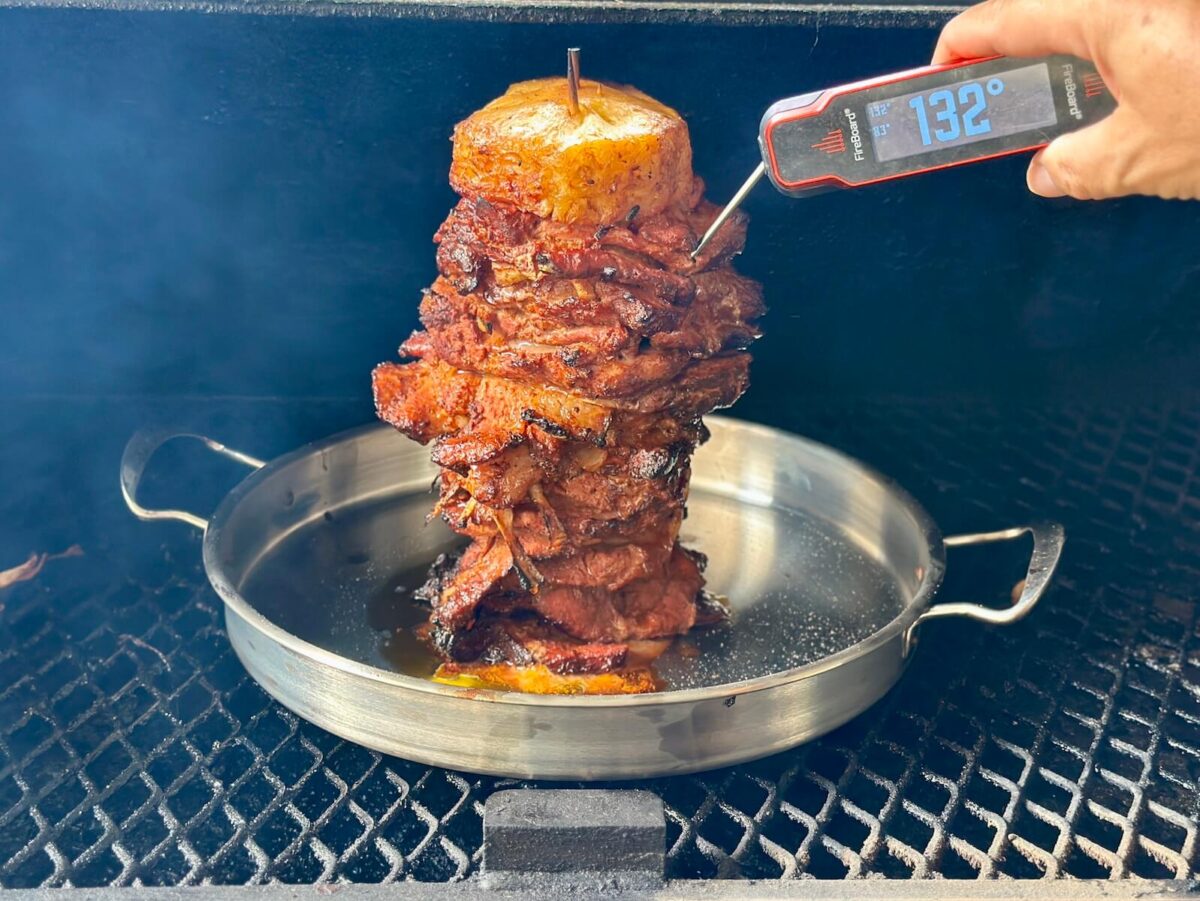
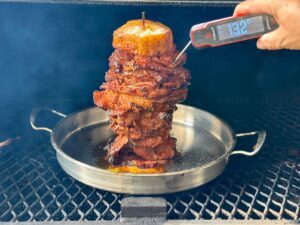
Place the skewer on the grill and let it cook, rotating occasionally so all sides get exposure to the heat. Cook for about 3 hours, until the pork is tender and the edges are nicely charred and crispy.
The cooking time will vary based on the size of your pork slices, the temperature of your grill, and other factors. Our grilled al pastor took about 3 hours to cook, but make sure you check the internal temperature and cook to a safe internal temp of 145°F.
9. Warm Your Tortillas and Slice the Al Pastor
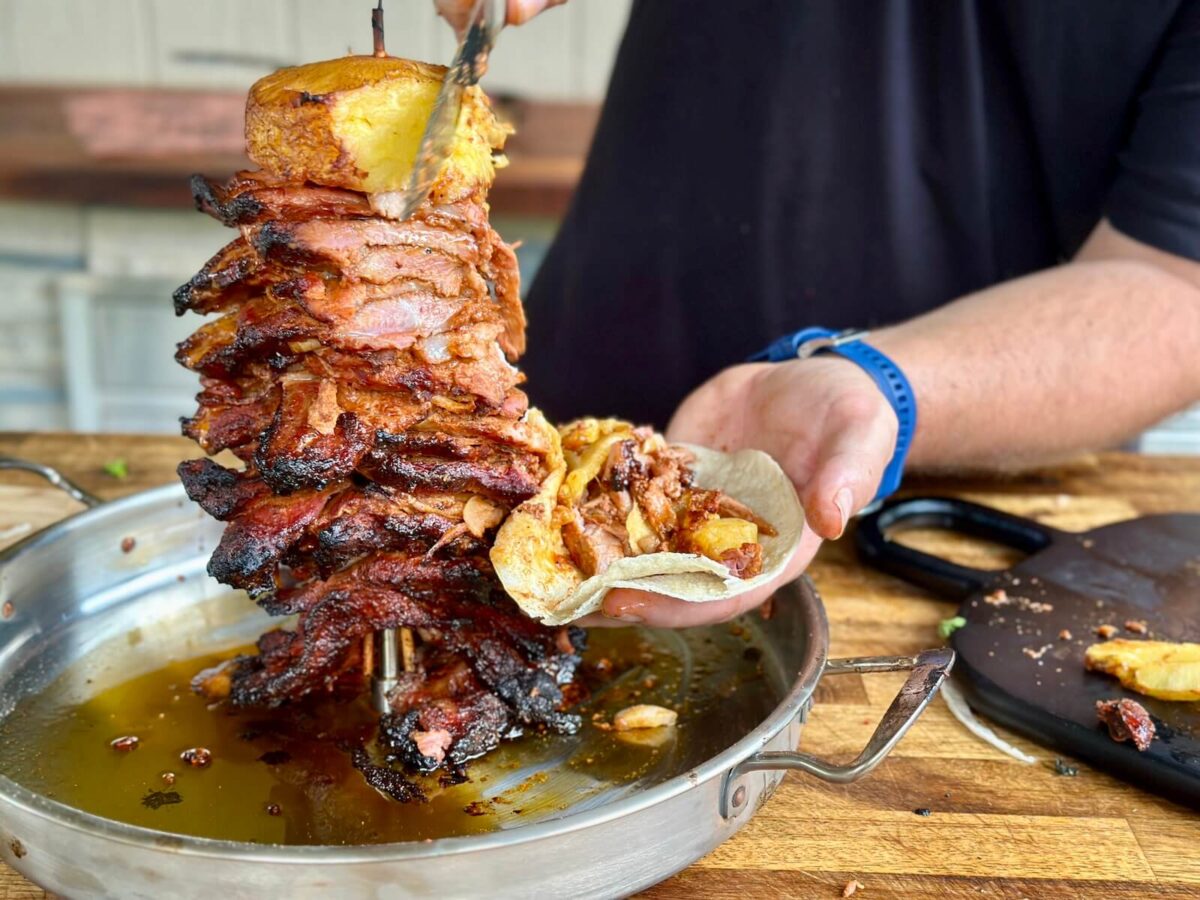
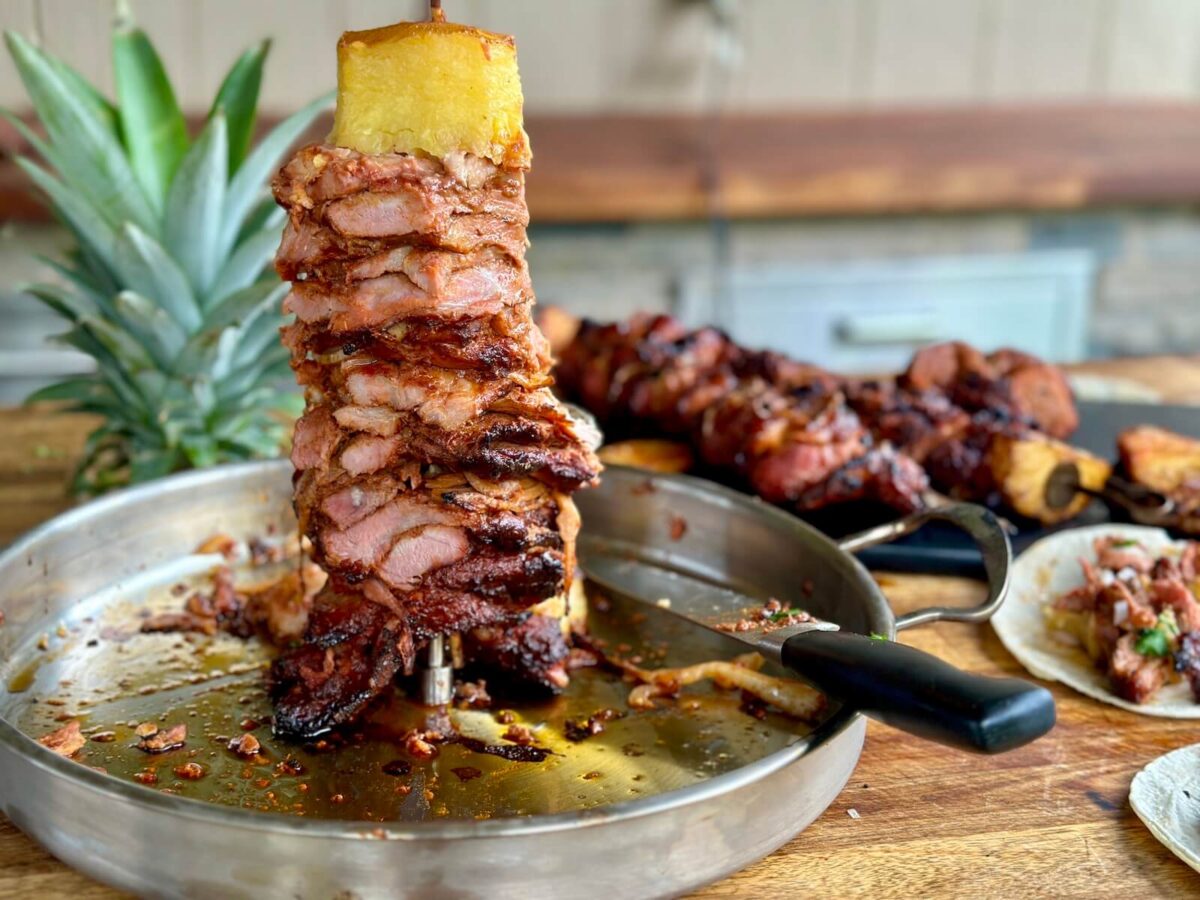
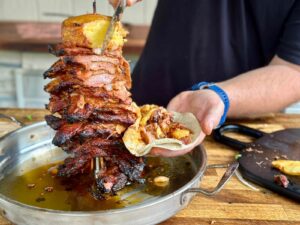
While the pork finishes, warm your corn tortillas on the grill. Once the pork is done, slice it straight down the skewer to get those crispy, caramelized edge pieces into every taco. Don’t forget to slice some of the charred pineapple as well.
Load up warm tortillas with the sliced pork, then top with diced raw white onion, chopped cilantro, and a squeeze of lime.
Recipe Tips
- Don’t overtrim the fat. It renders down over the long cook and adds a ton of flavor – plus it’s fantastic when it chars on the grill.
- Use canned, not fresh, pineapple juice in the marinade so the enzymes don’t over-tenderize the pork, especially if you’re marinating overnight.
- Test the height of your equipment before cook day. If you’re using a vertical skewer stand, check that it fits under your grill lid with room to spare before you’re standing there mid-prep.
- Skip the pineapple base entirely. A real vertical skewer stand won’t soften, lean, or collapse on you partway through the cook.
- Keep the toppings simple. With this much flavor already built into the marinade and char, you don’t need to overdress the tacos – raw onion, cilantro, and lime are all you need.
- This works on charcoal too. If you don’t have a pellet grill, charcoal will give you great results with the same setup – just bank your coals around the perimeter of your kettle grill, and place the skewer directly in the middle on the grill grate.
Frequently Asked Questions
NO. Fresh pineapple juice contains an enzyme that aggressively breaks down meat, and since this pork marinates for several hours (or overnight), fresh juice can turn the texture mushy. Canned pineapple juice has been processed in a way that cooks that enzyme out, so you still get the flavor and tenderizing effect without destroying the meat.
Achiote paste is made from ground annatto seeds and is what gives al pastor its deep red-orange color and earthy flavor. It can be found at most Mexican grocery stores or online, and achiote powder can be used in its place if paste isn’t available.
You can still make this al pastor recipe, just use metal kabob-style skewers instead. Still slice the pork butt thin, and marinate following the same instructions. But instead of stacking the pork pieces flat and vertically, thread the pieces on in an over-under type pattern so that the thin slices are still bunched up together. You should be able to fit about 5-7 slices of pork on each skewer. Bunching up the pieces allows them to cook longer on the grill for more char and grill flavor.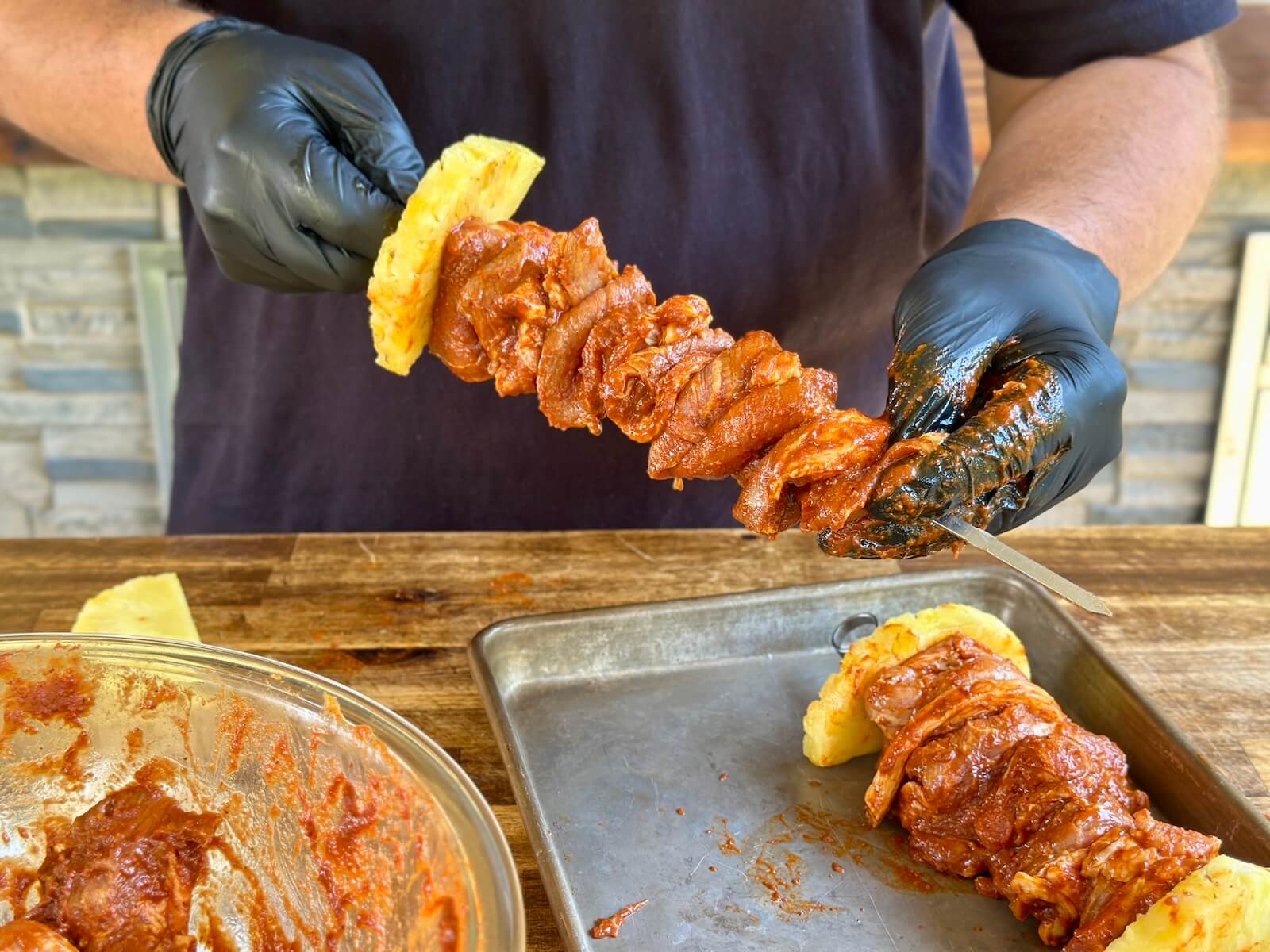
Grilled Pork Al Pastor
Equipment
- vertical skewer stand or metal kabob-style skewers
Ingredients
- 4-6 lb boneless pork shoulder
- 1 tablespoon cooking oil
- 1 onion, sliced
- 2 guajillo chiles, deseeded
- 3 dried ancho peppers, deseeded
- 5 cloves garlic, smashed
- 2 chipotles in adobo
- ¾ cup canned pineapple juice
- ¼ cup white vinegar
- 2 tablespoons achiote paste or powder
- 2 teaspoons kosher salt
- 1 teaspoon black pepper
- 1 teaspoon cumin
- ½ teaspoon coriander
- 1 teaspoon Mexican oregano
- ⅛ teaspoon ground cloves
- ¼ cup water
For Al Pastor Tacos:
- corn tortillas
- ½ white onion, diced (raw, for topping)
- fresh cilantro, chopped
- lime wedges
Instructions
- Debone the pork shoulder if using bone-in. Trim, keeping most of the fat intact and shaping pieces into uniform, roundish cuts. Slice the pork into thin pieces, about 1/4 to 1/3 inch thick. Set the pork slices aside. *See notes.

- Heat about 1 tablespoono cooking oil in a skillet over medium heat. Char the sliced onion until it develops some color, about 4-5 minutes.
- Move the onions to the side of the skillet, and add the deseeded dried guajillo and ancho peppers to the skillet. Toast for 1-2 minutes, watching closely so they don't burn. Then add the smashed garlic cloves and cook another 2 minutes.
- To the skillet with the peppers and onions, add the pineapple juice, chipotles in adobo, ground cloves, cumin, coriander, salt, black pepper, Mexican oregano, achiote paste, and white vinegar. Stir to combine, cover, and cook on low heat for 8-10 minutes, until the peppers have softened.
- Remove from heat and let the mixture cool slightly. Transfer to a blender and puree until smooth, adding up to 1/4 cup water if needed to thin it out. Then allow the marinade to cool completely.
- Combine the cooled marinade with the sliced pork in a large bowl, making sure every piece is coated. Cover and refrigerate for at least 6 hours, or overnight for best flavor.
- Preheat the grill to about 275-300°F. If your grill has a flame broil plate (like a Pit Boss or Lone Star pellet grill), open it about halfway to allow more direct heat.
- Place the skewer on the grill and cook for about 3 hours, until the internal temp of the pork reaches 145℉, rotating occasionally. The pork should be tender with crispy and charred edges.
- Warm the corn tortillas on the grill while the pork finishes cooking.
- Slice the stacked pork slices straight down around the outside of the stack to capture the crispy edge pieces. Build tacos with the warm tortillas, sliced pork, diced raw onion, chopped cilantro, and a squeeze of lime. Serve immediately.
Notes
- Use canned pineapple juice, not fresh – the enzymes in fresh juice can over-tenderize the meat during a long marinate.
- Don’t over-trim the fat from the pork; it renders down and adds flavor throughout the cook.
- Check that your skewer stand fits under your grill lid before cook day.
- Works well on charcoal — just bank the coals around the base of the skewer stand.
- For cutting the pork: Keep the majority of the fat on the pork as you trim. However, once you get to the part that looks more like bacon (where the slices are mostly fat), you can discard those, or place them on the grill separately to smoke and save for ham and beans or other recipes.
- For charcoal grilling: If you don’t have a pellet grill, charcoal will give you great results with the same setup – just bank your coals around the perimeter of your kettle grill, and place the skewer directly in the middle on the grill grate.
- Vertical stand alternative: If you don’t have a vertical skewer stand, you can still make this al pastor recipe, just use metal kabob-style skewers instead. Still slice the pork butt thin, and marinate following the same instructions. But instead of stacking the pork pieces flat and vertically, thread the pieces on in an over-under type pattern so that the thin slices are still bunched up together. You should be able to fit about 5-7 slices of pork on each skewer. Bunching up the pieces allows them to cook longer on the grill for more char and grill flavor.
Nutrition
Nutrition information is automatically calculated, so should only be used as an approximation.

Pin this now to find it later
Pin It



love the videos, tips and suggestions and the honest answers. absolutely love the interaction and banter between you and wife! We have a pan coming to do the alpastor. my question though, is where did you get the anchiote paste? regular grocery store or specialty store?
Hi Tina – I think we actually got ours from Amazon, but if you have a Mexican grocery store nearby, they should have it. Also, some Walmart locations have a pretty extensive Hispanic section, so you could check there. Hope you love the recipe!