This post may contain affiliate links. Please see our disclosure policy.
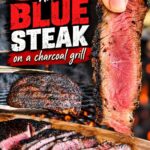
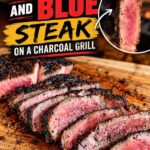
Want a steak with a crusty, almost-black exterior and a cool, blue-rare center? Here’s how we make a Pittsburgh-style black and blue steak on a charcoal grill with a ripping-hot cast iron griddle.
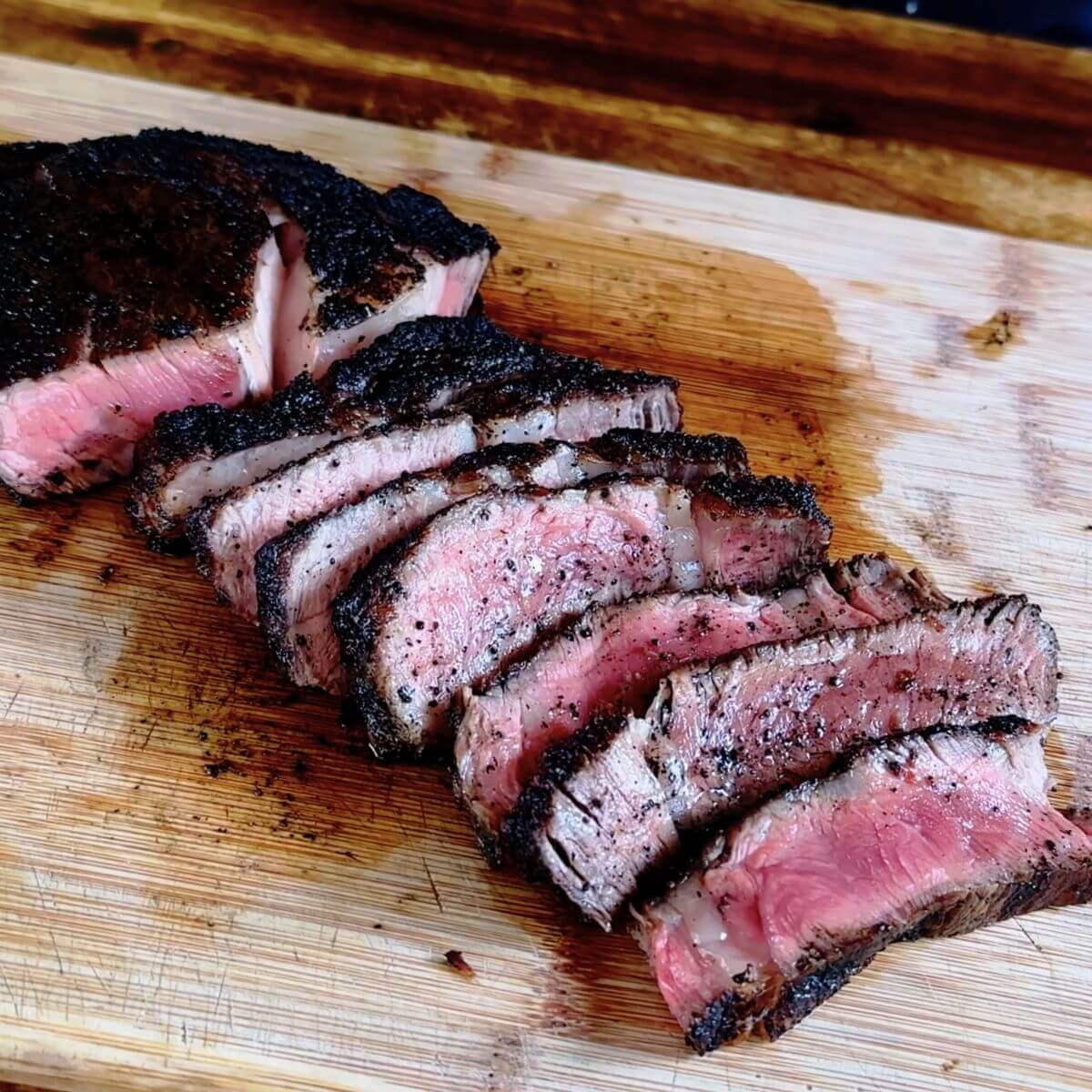
This one started with a casual conversation at our kitchen table. We were discussing our favorite cuts of steak, and a friend of our youngest daughter mentioned that one of her favorite steaks is a black and blue, Pittsburgh-style steak.
Honestly, I’d never heard of a “Pittsburgh steak” before. So I started digging in, and the more I read, the more it took me back to my restaurant days. Every once in a while, someone would order a steak “blue”, and the first time I heard it, I thought, what?
So we put it to the test. We grabbed a gorgeous ribeye, fired up the charcoal grill, and got a cast iron griddle screaming hot. And I’ll tell you what, it was absolutely fantastic. If you love your steak rare or medium-rare, this one’s for you.
Here’s exactly how we did it and how you can make a black and blue steak at home.
What Is Black and Blue Steak?
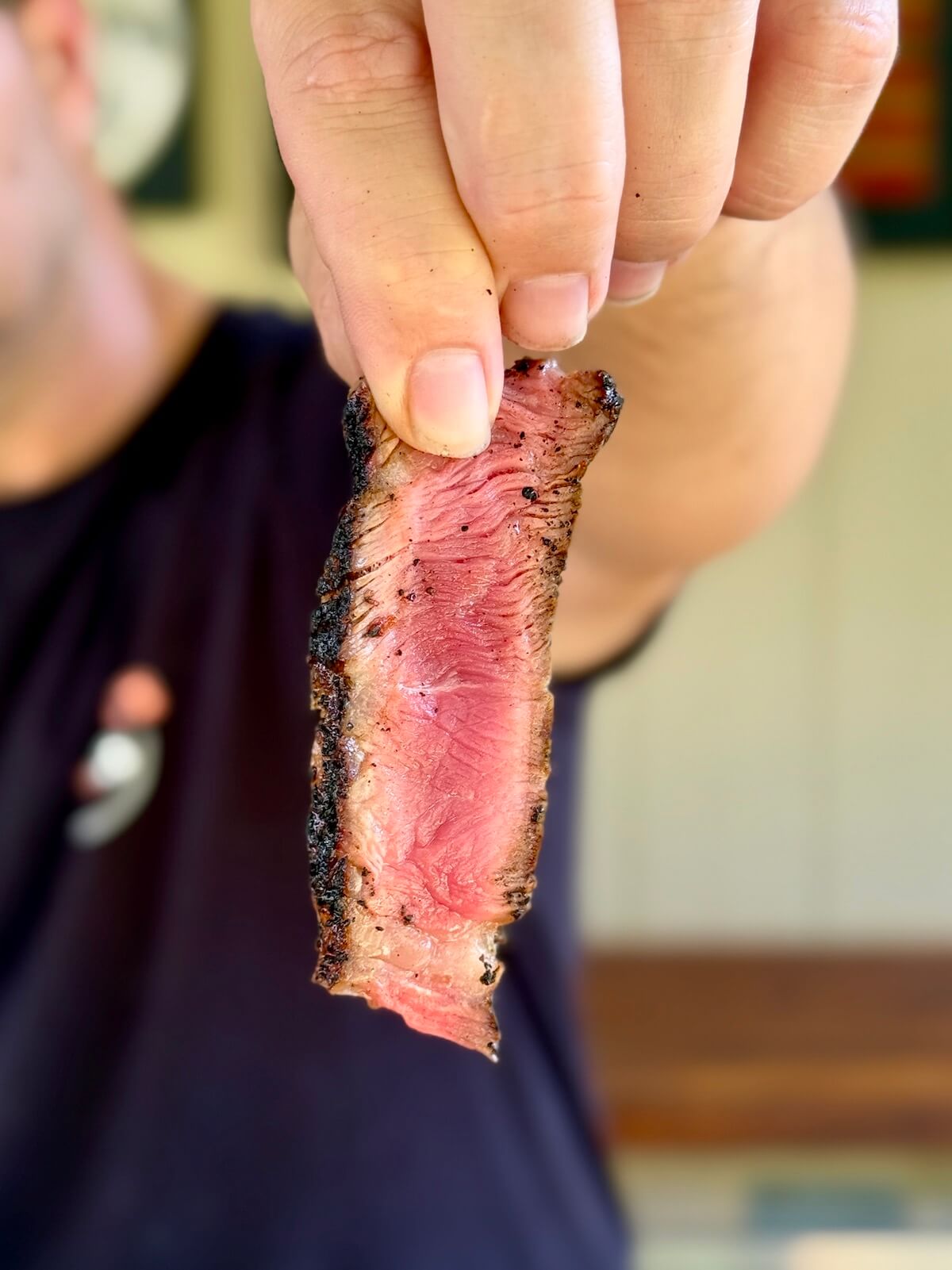
A black and blue steak is all about extreme contrast. The outside gets a deeply charred, almost black crust from a very hot cooking surface, while the inside stays rare, or even “blue rare.” That’s where the name comes from: black on the outside, blue on the inside.
So what’s “blue”? Think of it as the stage before rare or medium-rare. The steak is seared hard on every side, but the center is barely warmed through, still deep red and cool. For reference, we pulled ours at about 100-105°F internal temperature, and then it had some carryover cooking because we cooked it on such a hot griddle.
*Disclaimer – The USDA recommends cooking steaks to an internal temperature of 145°F, which would be medium-well.
A Brief History of Pittsburgh-Style Steak
You’ll hear black and blue steak called “Pittsburgh-style” or “Pittsburgh rare,” and there’s a great story behind it. As the legend goes, steel workers in Pittsburgh’s mills back in the day would heat up the metal they were working with to extremely high temperatures and sear their beef right on it for a quick lunch. The result? A heavily charred outside and a rare inside, cooked in just a couple of minutes.
Whether every detail of that story is true or not, the idea stuck. To pay homage to those steel workers, we used the closest thing most of us have to a slab of red-hot steel in the backyard: cast iron. Cast iron holds heat like a champ, and when you get it ripping hot, that direct surface-to-surface contact gives you an incredible Maillard reaction and a serious crust.
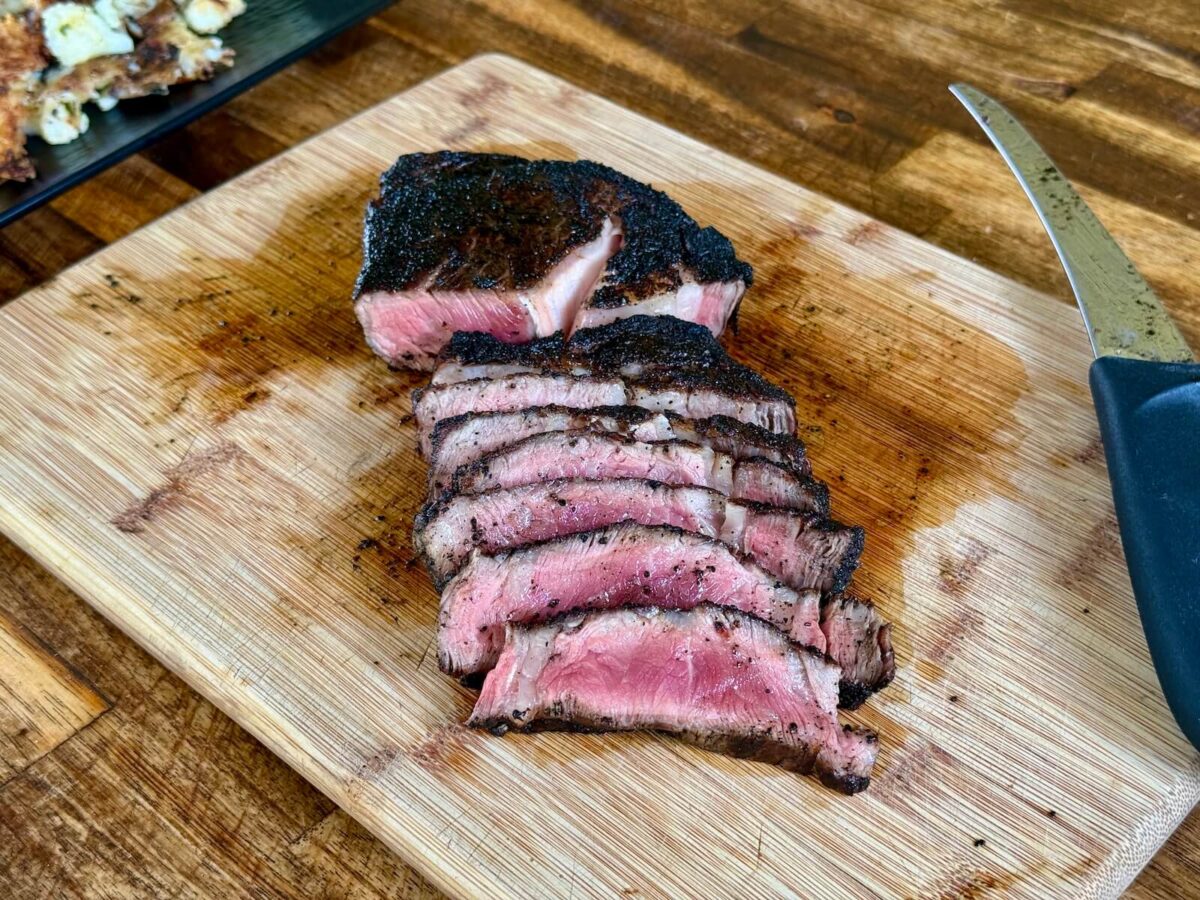
Ingredients You’ll Need
Ribeye steak – Start with a high-quality, well-marbled ribeye. You’ll want a thicker steak, so that it has time to develop that signature dark crust without overcooking in the center.
Charcoal-style steak seasoning – To hedge our bets on that black crust, we used Sure Shot Sid’s Gunpowder seasoning, a charcoal-style seasoning that gives the steak a darker, bolder exterior.
Clarified butter – Regular butter will burn at these temperatures because of its milk solids. Clarified butter has a much higher smoke point, so it helps build the char and sear without turning bitter.
Charcoal – You’ll need a good amount of it. More on that below.
Equipment: A charcoal grill (we used our Weber kettle), a cast iron griddle or skillet, a basting brush, heat-resistant gloves, and a reliable instant-read meat thermometer.
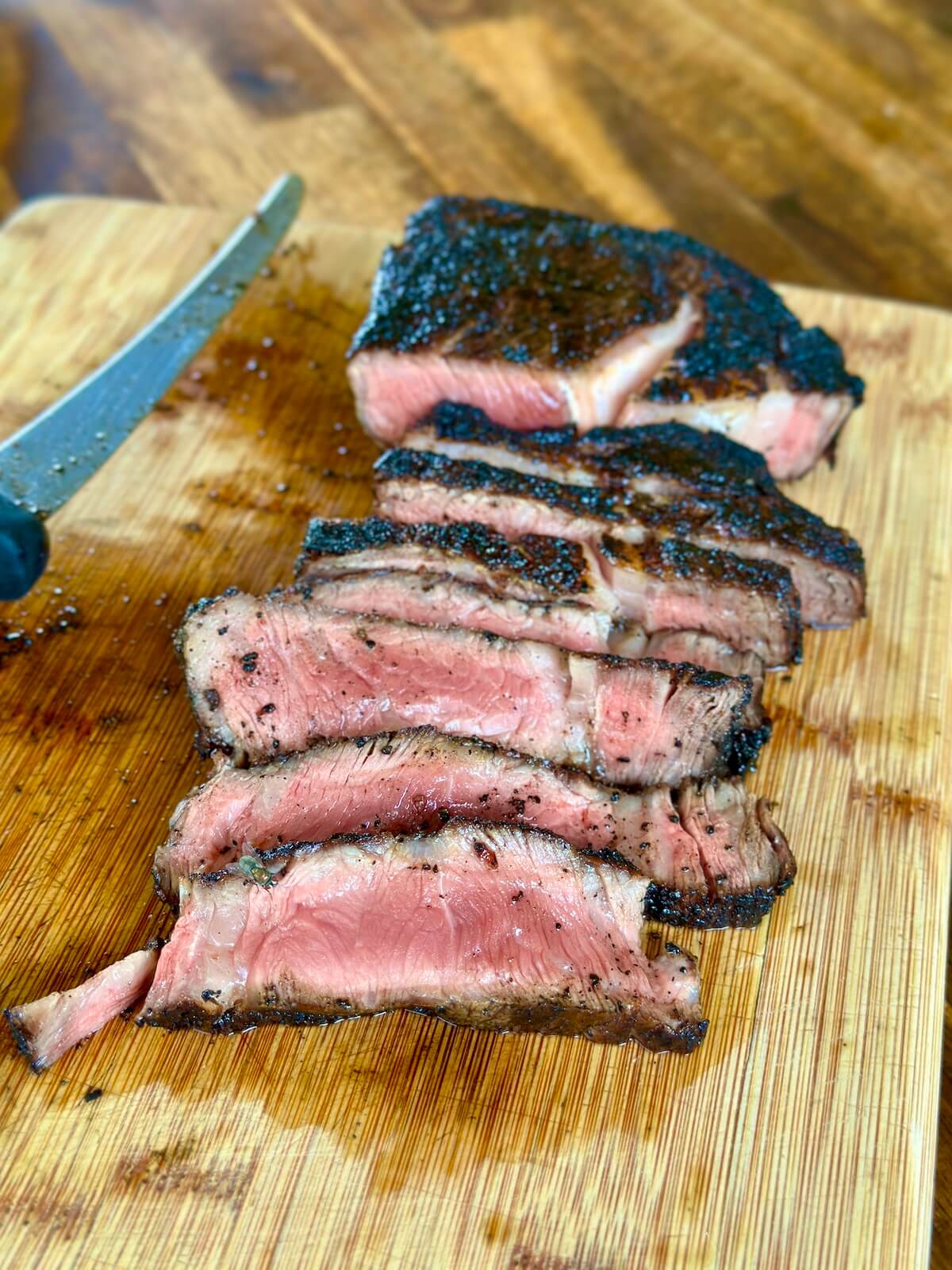
How to Make Black and Blue Steak on a Charcoal Grill
Season the steak. Season the ribeye generously on all sides with your choice seasoning. Let it sit and “sweat in” while you get the grill going.
Build a hot fire. This is where things differ from your typical low-and-slow cook. Instead of lighting a small amount of charcoal and spreading it around the outer edge of the grill, light a good amount of charcoal and pile it right in the center. You want all of that heat concentrated directly under where your cast iron is going to sit.
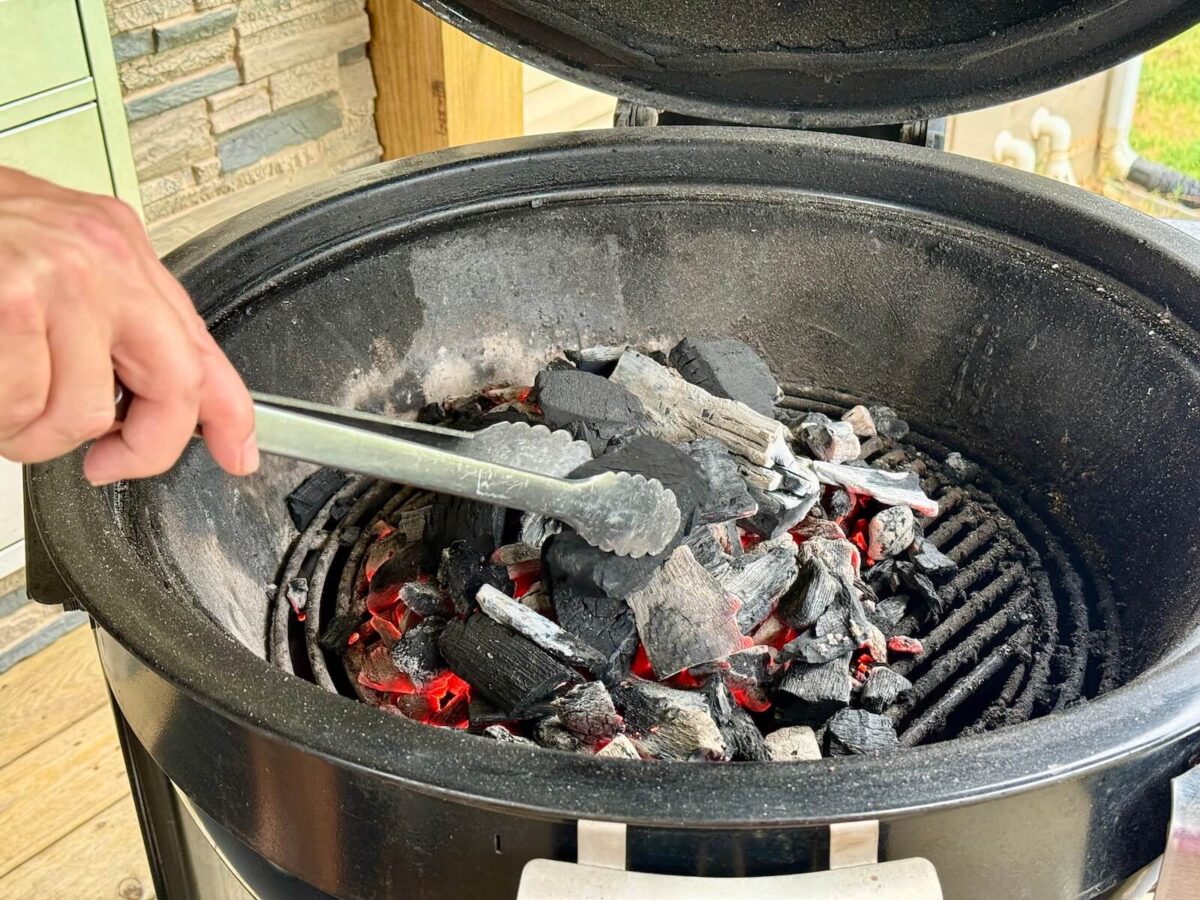
Tip: A charcoal chimney makes lighting a big batch of coals much easier. We use and love this one from Griddle Goods.
Heat the cast iron. Put the grill grate back on and set your cast iron griddle directly on top of the grate over the hot coals. Close the lid and let it get ripping hot. We got our cast iron up to about 650°F, which is perfect for a black and blue steak.
Clarify your butter. While the cast iron heats, set a small pan of butter off to the side of the grill to melt. Skim off the milk solids so you’re left with clarified butter. Set about half of it aside for finishing the steak later.
Sear the first side. Brush a little clarified butter onto the steak and the hot cast iron, then lay the steak down. Leave it alone. When the crust is fully formed, the steak will release from the cast iron naturally. That’s your cue to flip.
*Safety note: There is a real chance the butter flares up and actually catches fire here, not just smokes. Keep your face and hands back, wear heat-resistant gloves, and be careful.
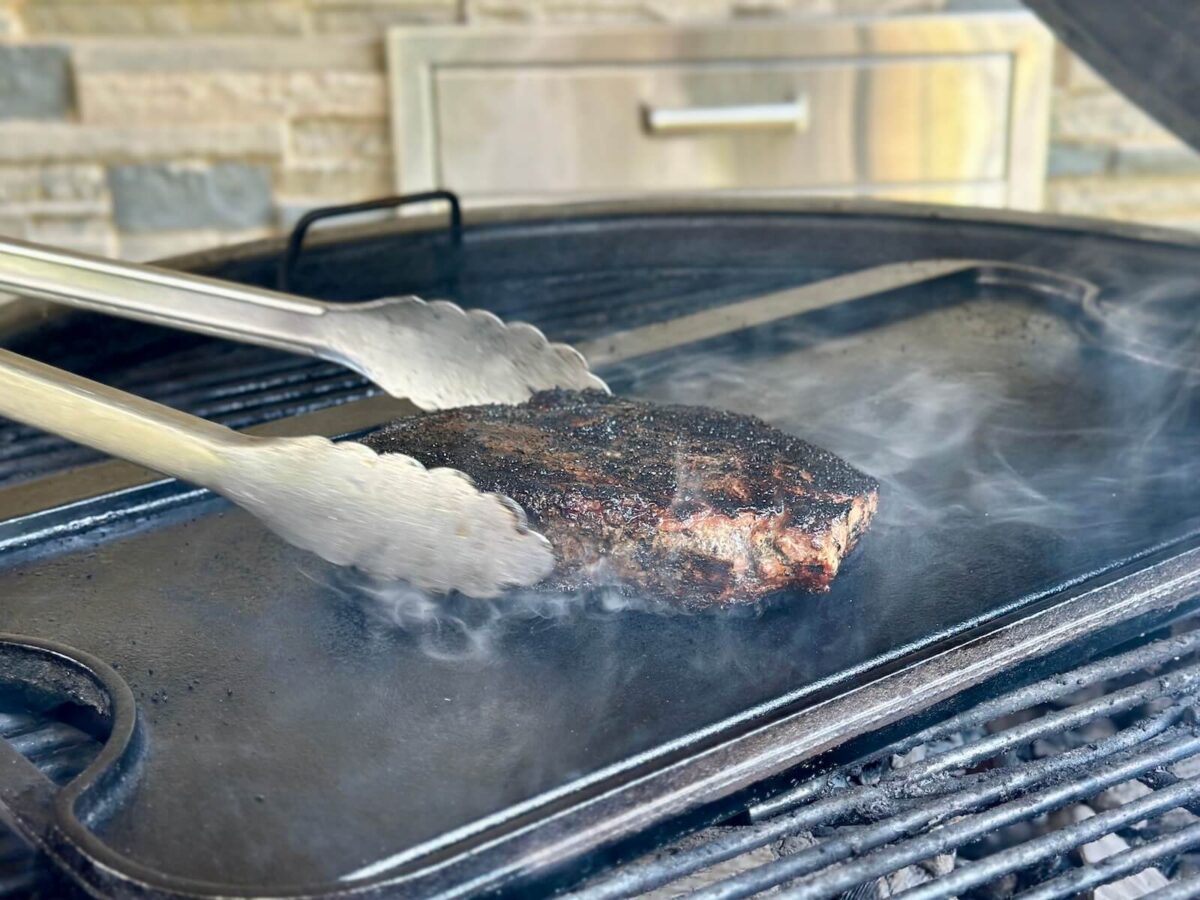
Flip to a new landing zone. Brush a little more butter on top of the steak, then flip it onto a fresh, hot spot on the cast iron rather than back where it was. That fresh area hasn’t lost any heat to the steak yet, so you’ll get just as hard a sear on the second side.
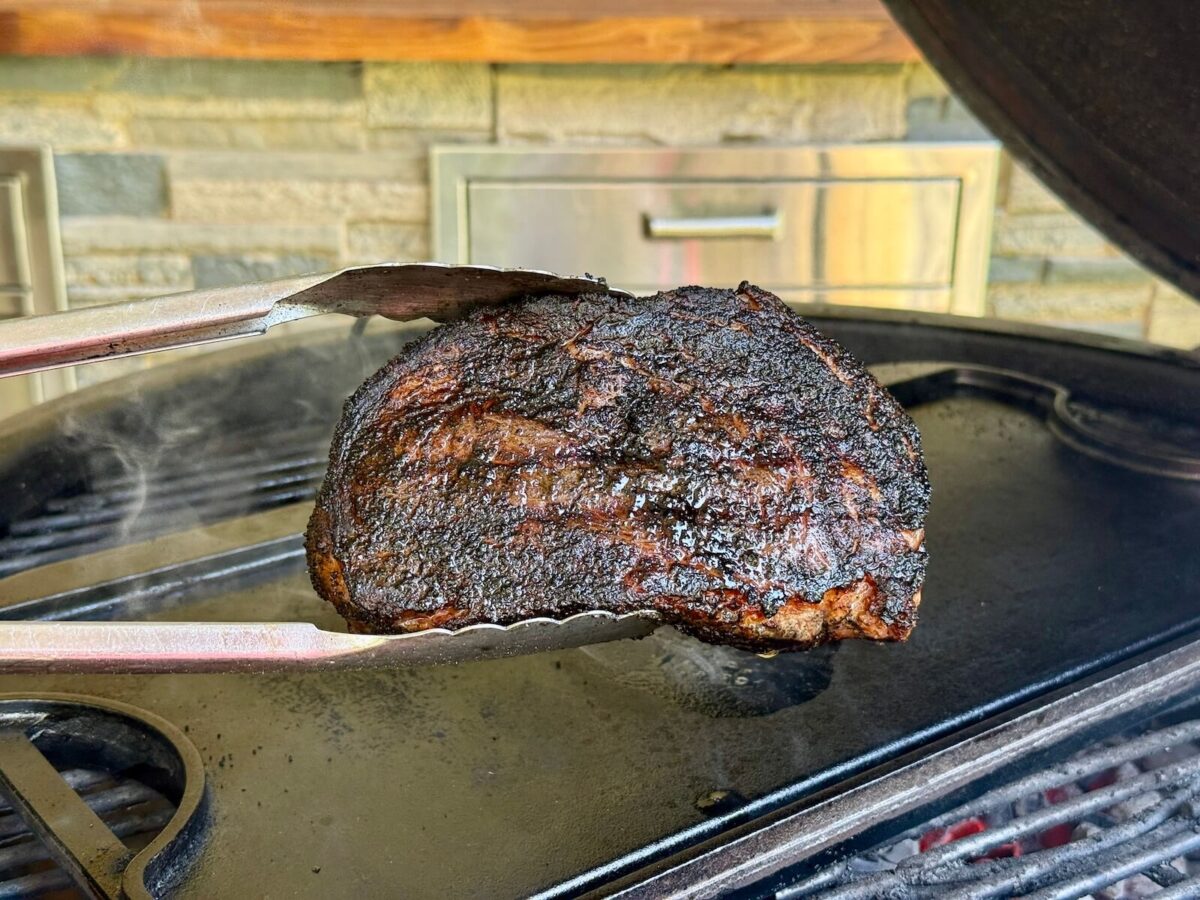
Close the dampers. Once you’ve got a good crust on both sides, shut down all the dampers on your grill. At this point there’s so much residual heat that you don’t need the grill blazing anymore. Closing it down lets the steak come up in temperature slowly after that intense sear, while the charcoal, smoke, and rendering tallow keep building flavor.
This is honestly the whole reason I wanted to cook it this way. When most people think of a charcoal grill, they think of cooking directly over the grates with the fat dripping down on the coals. I don’t think there’s a better way in the world to do it. But cast iron on the charcoal grill is an underutilized method. You get the smoke rolling up around the pan and the surface-to-surface contact for more Maillard reaction.
Flip one more time and pull. Give the steak one more flip and pull it off when it hits about 100-105°F internal for a true black and blue. If you want it closer to a classic rare, let it go a little longer, but not much.
Finish with butter. Brush the steak with the reserved clarified butter, which will have picked up some of that smoky flavor, and serve.
Tip: Temperature, not time, is what determines doneness, especially with a cook this fast. A few seconds can take you from blue to rare, so keep a good instant-read thermometer handy.
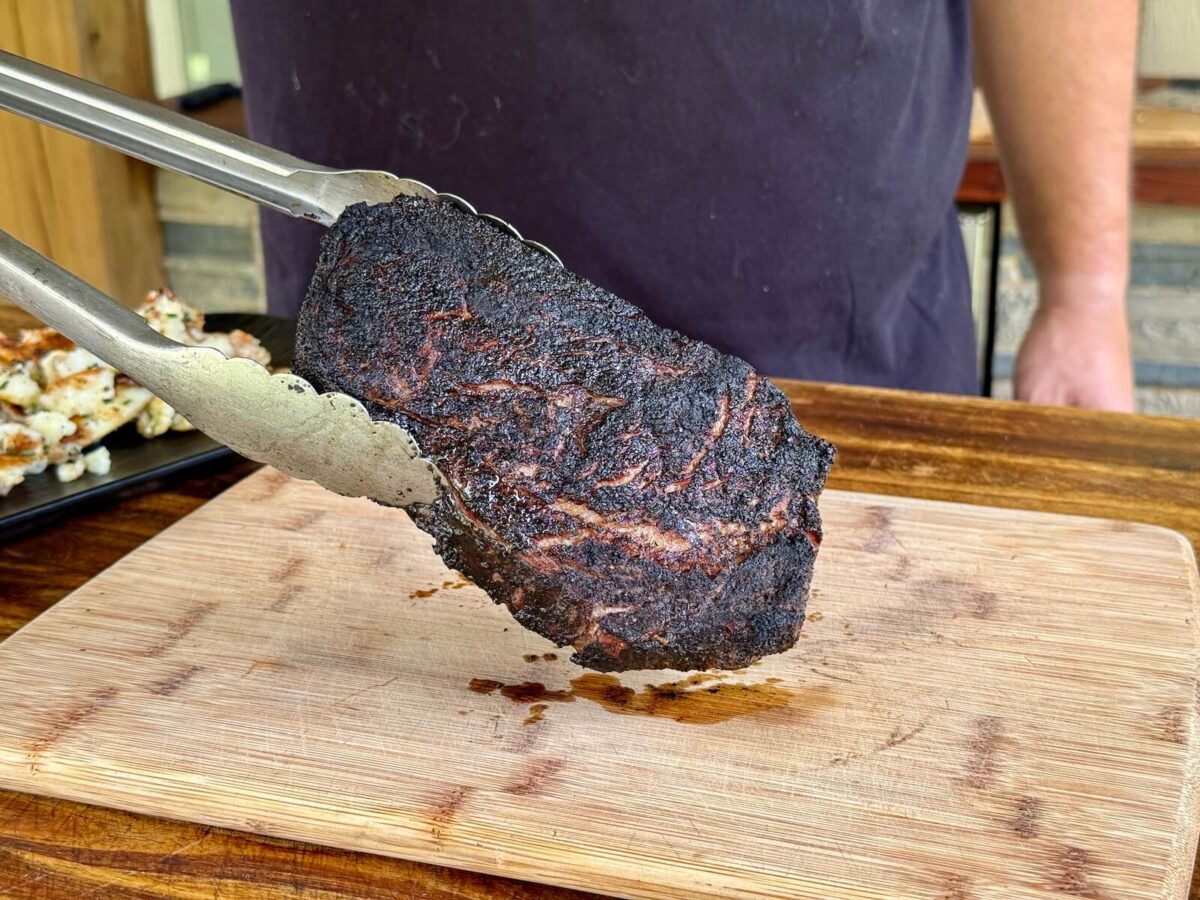
Alternate Cooking Method: Bighorn Infrared Steak Grill
Don’t have a charcoal grill? No problem. You can still make an awesome black and blue steak on the Bighorn Infrared Steak Grill, and we actually made a second steak this way for the video.
The Bighorn is a propane-powered countertop infrared grill (think of it like a mini steakhouse broiler) that heats up in just a few minutes and reaches temperatures up to 1,500°F. That’s exactly the kind of extreme heat a black and blue steak needs. The grill rack is adjustable, so you can move it closer to the flame for that hard sear, or drop it lower to bring the temperature down and finish cooking. Plus, all the components are dishwasher safe, which makes cleanup a breeze.
To cook black and blue steak this way, season your ribeye, preheat the steak grill, and begin cooking your steak on the rack position about 3 down from the heat.
Sear until you have a dark, charred crust, then flip and sear the other side. At these temperatures, this happens fast, so stay right there with it.
If the outside is where you want it but the inside needs a little more time, move the rack to a lower position to finish more gently. For a true black and blue, you may not need this step at all.
Black and Blue Steak (Pittsburgh-Style)
Equipment
- about 1 full chimney of charcoal roughly 5 to 6 lbs
- cast iron griddle pan
Ingredients
- 1 bone-in or boneless ribeye steak, about 1-1½ inches thick (1 to 1½ lbs)
- 1 to 2 tablespoons Sure Shot Sid’s Gunpowder seasoning, or your favorite charcoal-style steak seasoning
- 4 tablespoons unsalted butter, for clarifying
Instructions
- Season the steak: Pat the ribeye dry with paper towels. Season generously on all sides, including the edges, with 1 to 2 tablespoons of charcoal-style seasoning. Refrigerate while you light the grill so the seasoning can sweat into the meat.
- Light the charcoal: Fill a charcoal chimney and light it. When the coals are fully lit and covered with a light layer of gray ash, dump them into a tight pile in the center of the grill, directly where the cast iron will sit. For this cook you want concentrated, high heat, not coals spread around the outer edge like you would for low-and-slow smoking.
- Preheat the cast iron: Put the grill grate on and set the cast iron griddle directly on the grate over the pile of coals. Close the lid with the vents fully open and let the cast iron heat until it reaches about 650°F, roughly 10 to 15 minutes.
- Clarify the butter: While the cast iron heats, place 4 tablespoons of butter in a small heat-safe pan on the edge of the grill away from direct heat. Once melted, skim off the white foam. When the butter is fully liquified, the milk solids will settle at the bottom of the pan. Carefully pour the clarified butter into a small dish, discard the milk solids, and set aside.
- Sear the first side: Brush the steak with some of the clarified butter and brush a little onto the cast iron. Lay the steak on the griddle and leave it alone until a dark crust forms and the steak releases naturally, about 2 to 3 minutes. *Use caution: the butter can flare up and catch fire at these temperatures. Wear heat-resistant gloves and keep your face back from the grill.
- Flip to a fresh spot: Brush the top of the steak with more clarified butter, then flip it onto a fresh, hot area of the cast iron. Sear until the second side has an equally dark crust, about 2-3 minutes.
- Close the dampers: Close the grill lid and shut all of the top and bottom dampers. Let the steak cook gently in the residual heat and smoke for 2 to 4 minutes, until the internal temperature begins to climb.
- Flip and pull at about 105°F: Flip the steak once more and check the internal temperature in the thickest part. Pull the steak off the grill when it reaches about 105°F for black and blue (blue rare). For a classic rare steak, pull at 115 to 120°F. *Keep in mind, there will be some carryover cooking after you remove the steak from the grill.
- Finish and serve: Brush the steak with the reserved clarified butter. Rest about 5 minutes. Then slice against the grain and serve right away.
Notes
- Cooking times: Times are a guide only and will vary based on the thickness of your steak, how much charcoal you use, and your grill. Always cook to internal temperature, not time. At these temperatures, a few seconds matters, so keep a thermometer handy.
- Why clarified butter: Regular butter contains milk solids that burn quickly at high heat. Clarifying the butter raises its smoke point so it can help build the char and crust without turning bitter.
- Choosing a steak: Use a high-quality, well-marbled cut. A thicker steak (at least 1 to 1½ inches) gives you more time to build a dark crust while keeping the center blue.
- Doneness: Black and blue steak is cooked very rare in the center. If you prefer your steak cooked more, this method still gives you a fantastic crust; just let the steak stay on longer with the dampers of the kettle grill closed.
Pin this now to find it later
Pin It