This post may contain affiliate links. Please see our disclosure policy.
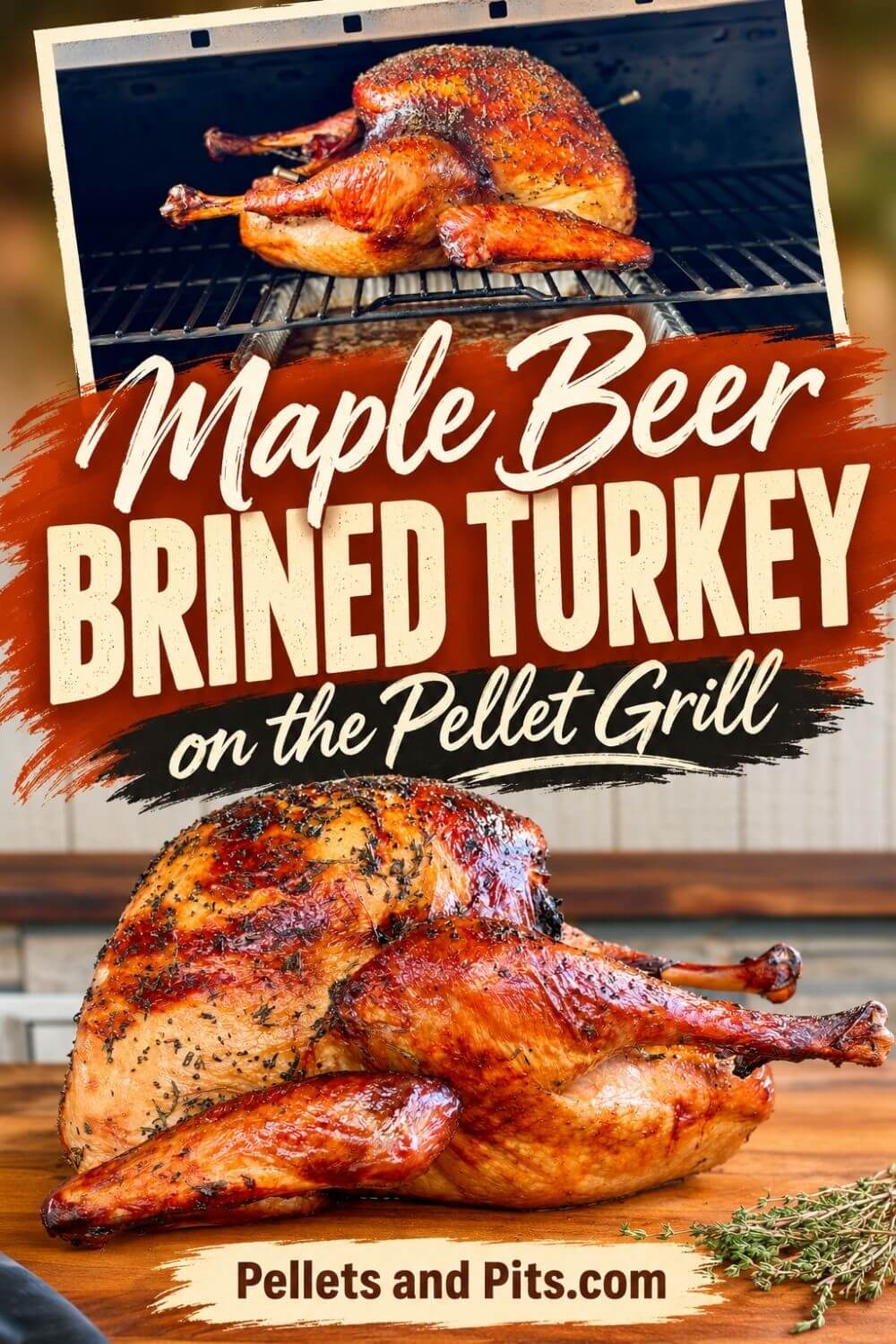
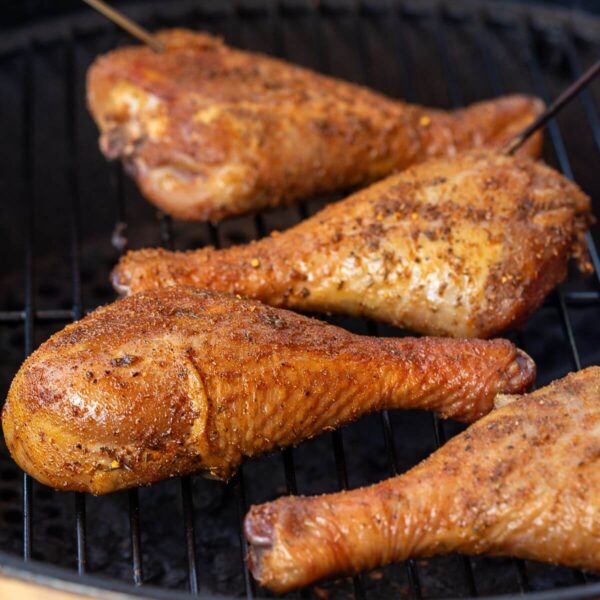
This maple beer brined smoked turkey soaks overnight in a brine made with stout, hard cider, maple syrup, and fresh herbs, then gets slathered in a homemade maple herb butter before hitting the pellet grill. The result is an incredibly juicy turkey with the faintest hint of ale, a little touch of maple sweetness, and skin that’s absolutely on point. My wife says it’s the best turkey I’ve ever made… and it’s exactly what we’re smoking for our own family Thanksgiving this year!
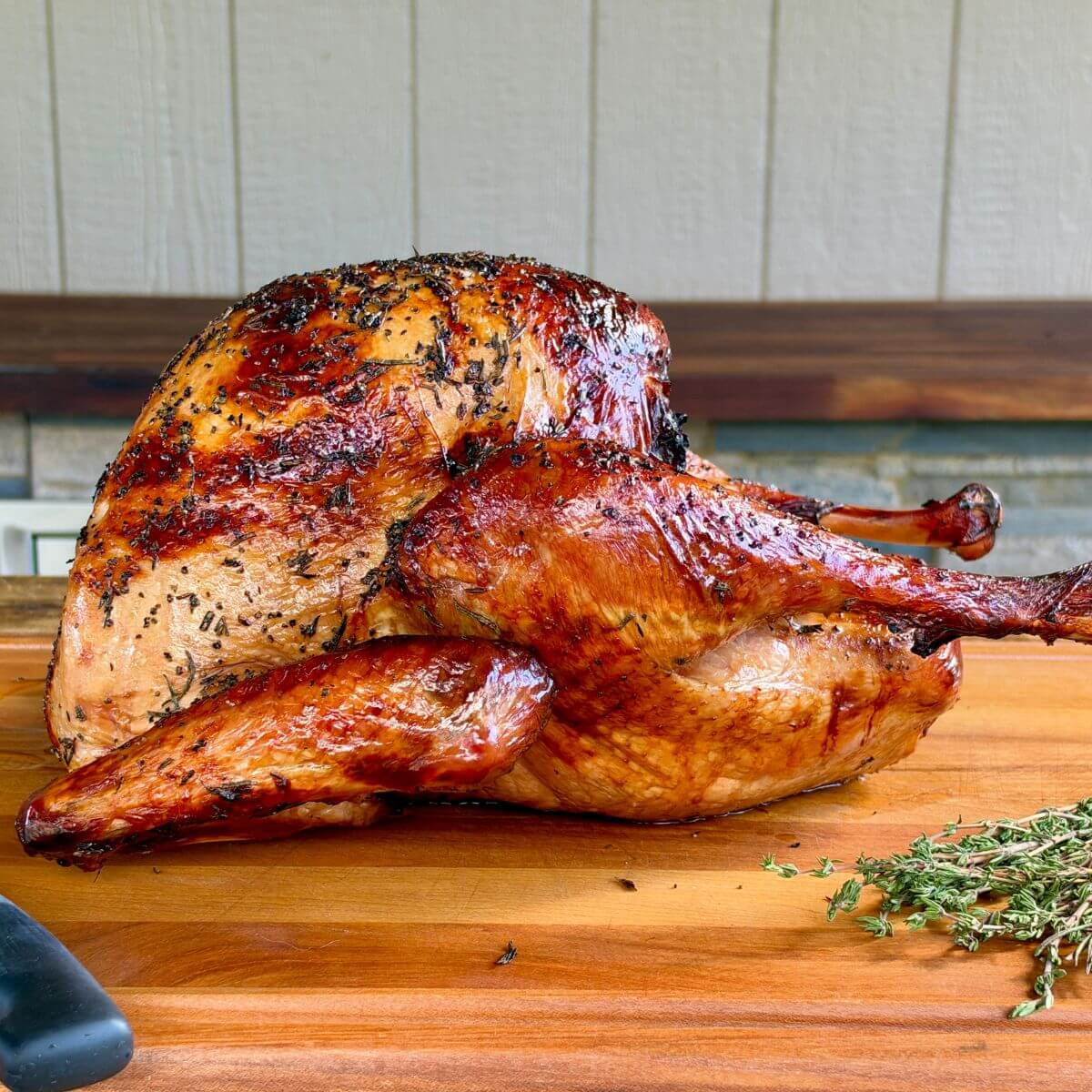
Turkey season is upon us, and around here that means one thing… it’s time to brine some birds.
Over the years, we’ve tested just about every way there is to prep a turkey: dry brine, no brine, wet brine. And through all of those tests, I keep coming back to the wet brine. We’ve done a fall-flavored Smoked Apple Cider Brined Turkey (still one of our all-time top 5), an Orange Glazed Smoked Turkey with Orange Juice Brine, and a spicy Cajun Smoked Turkey. And if you’re team dry brine, my Rotisserie Turkey on the Grill is a great one to try.
But this year, I wanted to change up the game with the flavor. So I swapped out the sugar for maple syrup, added a few cans of beer and hard cider, and finished the bird with a maple herb compound butter on the outside. I had a feeling this one was going to be a home run before we even started… but you never truly know until you cut into the turkey.
Spoiler alert: it’s a home run. This one is officially on the Mount Rushmore of brined turkeys.
Here’s how to make my maple beer brined smoked turkey on the pellet grill:
Why You’ll Love This Beer Brined Turkey
- It’s ridiculously juicy. Between the overnight wet brine and pulling the turkey at the right temperature, this bird was dripping with moisture. You will not be worried about dry turkey this year.
- The flavor is perfectly balanced. You get the smallest tang of ale and just a tiny bit of maple sweetness. It enhances the turkey without overpowering it. Honestly, if you didn’t know it was beer brined, you might not guess it.
- The maple herb butter is a game changer. Instead of fighting with room-temperature butter, we melt it with maple syrup and fresh herbs, then let it thicken up. It grabs onto the cold turkey skin and gives you an incredible mahogany color.
- Crispy skin, no rubbery skin. Air-drying the brined turkey in the fridge plus smoking at 300°F (and bumping the heat at the end) renders the fat and crisps up that skin.
- It’s mostly hands-off. The brine and the dry time do the heavy lifting. Once it’s on the pellet grill with a good wireless thermometer, you can go handle the rest of your Thanksgiving dinner.
- The leftovers are next level. This turkey doesn’t even need gravy. Slice some up the next day with a little mayo and cracked black pepper for one of the best turkey sandwiches you’ll ever have.
How to Make a Homemade Beer Brine for Turkey
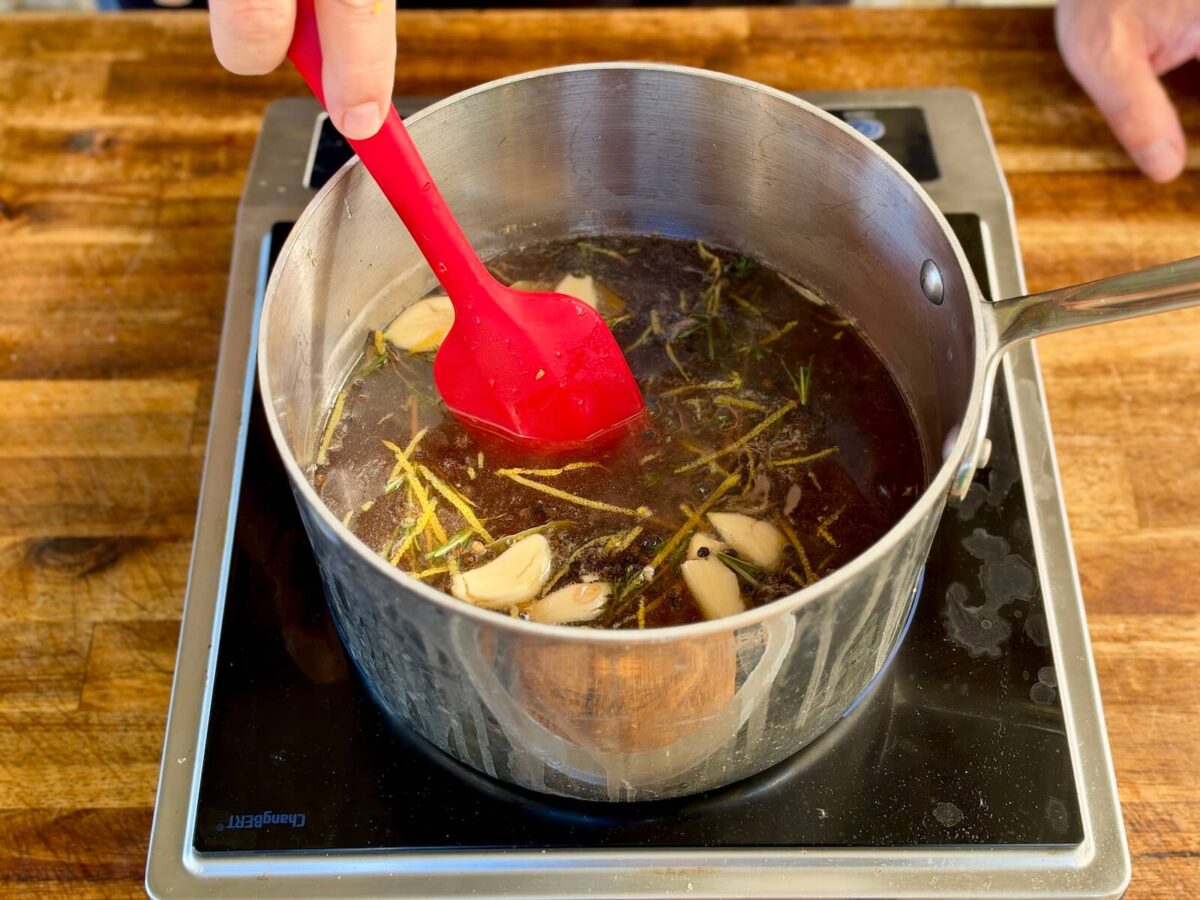
This beer brine is as easy as any brine I’ve ever made… if you can dump some ingredients in a pot and warm them up, you can make this brine. The real goal on the stovetop isn’t just dissolving the salt. It’s opening up the flavors: softening the peppercorns and releasing the oils from the herbs, garlic, lemon zest, and bay leaves.
Beer Brine Ingredients
- beer – We used 2 cans of Guinness and 2 cans of hard cider. The beer is completely up to you! A mix of a dark beer with something lighter (or a cider) melds together really nicely. We’ve done an apple cider brine before and loved it, so I had to sneak some hard cider in here.
- kosher salt – I use Diamond Crystal kosher salt, and that’s important. Do NOT use table salt. Table salt (and even other brands of kosher salt like Morton) is a lot saltier by volume, so if you swap it 1-for-1, you’ll end up with a very salty bird.
- maple syrup – This replaces the brown sugar or white sugar you’d normally see in a turkey brine. Use real maple syrup, not pancake syrup.
- fresh garlic
- fresh rosemary, thyme, and bay leaves – I like to use fresh versus dried for my turkey brines.
- Zest of 1 lemon – No zester? Use a vegetable peeler to peel off strips of the skin.
- whole black peppercorns
- water and ice – You’ll need a good amount of both for cooling the brine and creating enough volume to completely submerge the turkey.
You’ll also need a large turkey brining bag. These bags are one of your best friends during the holidays. They keep the brining process sanitary and make clean-up so much easier.
How to Make the Beer Brine
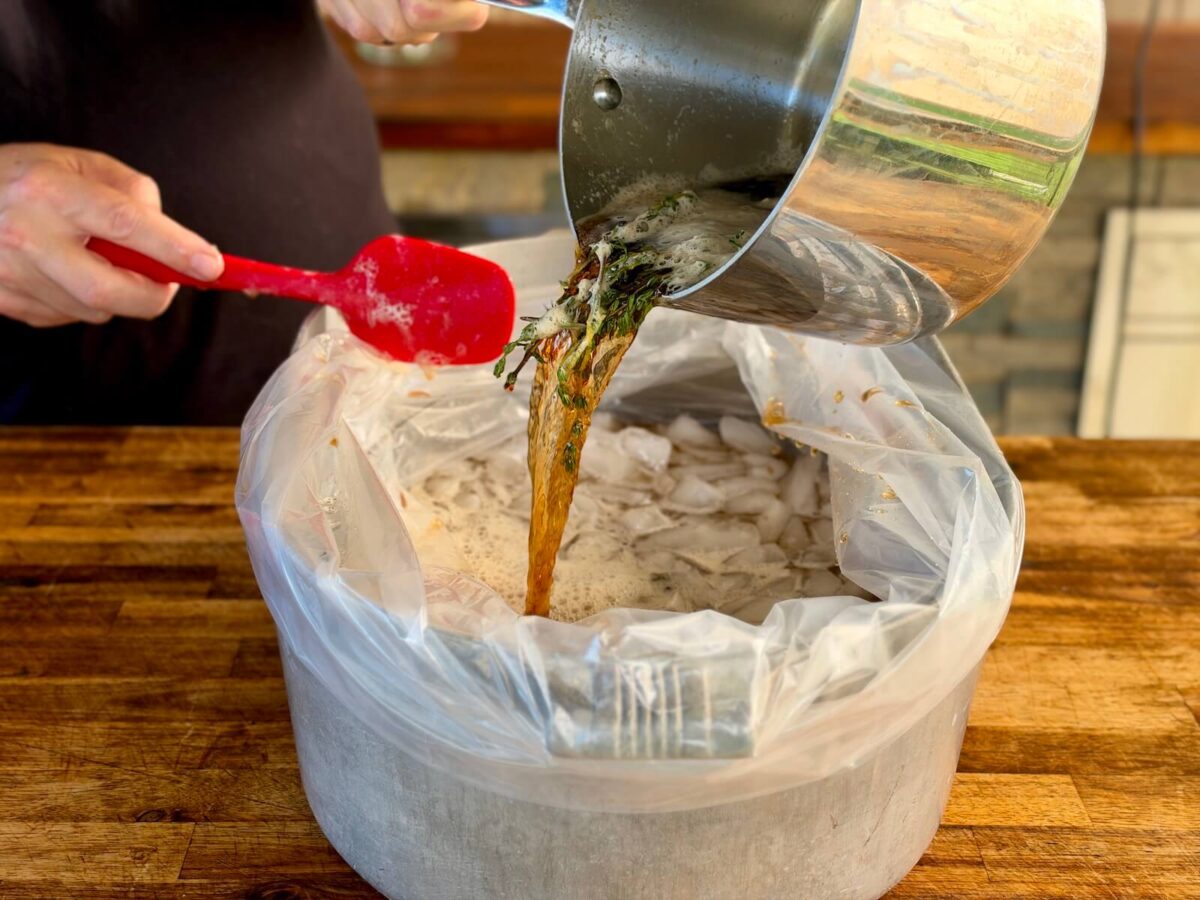
- Warm the brine base. In a large saucepan, add 4 cups of water, the kosher salt, maple syrup, smashed garlic, rosemary, thyme, lemon zest, bay leaves, and peppercorns. Heat it until it’s just about to boil, stirring occasionally so the salt dissolves.
- Cool it down with the beer. Remove the pot from the heat and pour in all 4 cans of cold beer and/or hard cider. The cold beer helps cool the brine down pretty quickly.
- Add the ice and brine. Add 8 cups of ice to the bottom of a large brining bag, then pour in the brine. *I like to place the brine bag in a large pot or roaster, and fold the sides over the pot before adding the ice and the brine. The pot helps to make the bag more sturdy while you’re pouring the brine in.
- Top it off with water. Add another 4 cups of cold water so you have enough liquid to cover the turkey, and give everything a stir.
- Check the temperature. Before the turkey goes in, you want your brine cold, right around refrigerator temp (about 40°F). If your brine is too warm, it can start cooking the outside of the turkey and keep the bird in the danger zone, and that’s a no-no. If it’s still warm, add a little more ice (just know that every extra cup dilutes the brine a bit). Or you can place the brine in the refrigerator to chill down for a bit.
How to Smoke the Perfect Beer Brined Turkey
This whole process takes about 3 days from start to finish, so plan ahead: 24 hours in the brine, 24 hours drying in the fridge, and then smoking day. If you want to serve it on Thanksgiving, start brining Tuesday morning before Turkey Day.
Step 1: Make the beer brine.
Follow the steps above to make the maple beer brine, and make sure it’s completely cold before the turkey goes in.
Step 2: Brine the turkey for 24 hours.
Place the turkey breast side down in the brining bag. Work the brine around and get it inside the cavity of the bird, too. Then tie the bag closed and refrigerate it overnight, for about 24 hours.
*Tip: If your turkey lays flat in the container and only half the bird is covered, find a way to jack up one side of it. We just used a container lid to prop it up so the liquid covered just about the whole turkey. You can also brine in a cooler with plenty of ice if your fridge is packed with holiday sides.
Step 3: Air-dry the turkey for another 24 hours.
The next day, take the turkey out of the brine and discard the brine. Set the turkey on a wire cooling rack on top of a sheet tray and put it right back in the refrigerator, uncovered, for another 24 hours.
This step is the secret to crispy skin. You’ll be amazed at how much moisture comes out of the turkey overnight. And do NOT add any more salt! The turkey is already seasoned from the wet brine, so there’s no need to triple-do it.
Step 4: Make the maple herb butter.
One of the biggest problems with buttering the outside of a turkey is that room-temperature butter usually isn’t soft enough to spread evenly. So I melt it instead.
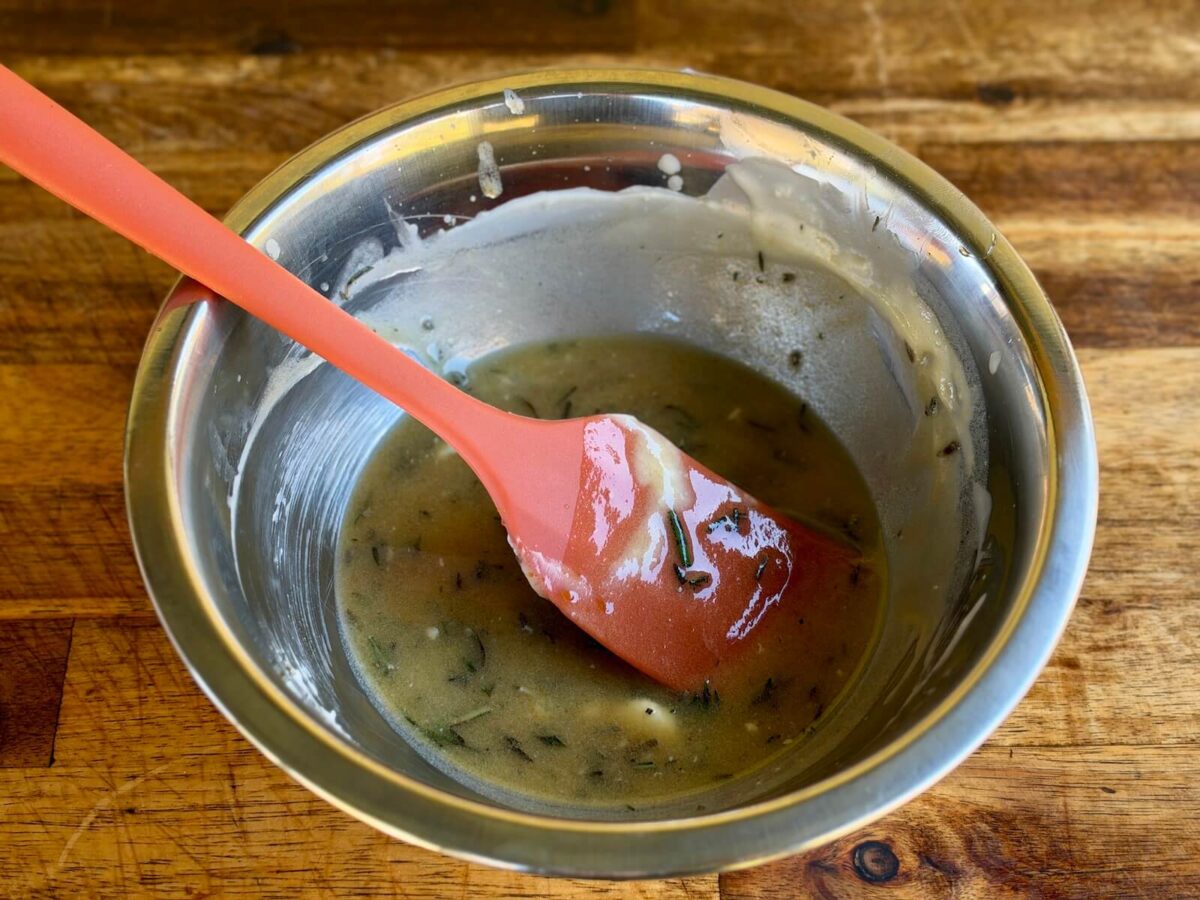
In a small saucepan, melt 1 stick of butter with some maple syrup, fresh chopped rosemary leaves, and fresh thyme leaves. Give it a mix, then pull it off the heat and let it cool slightly. As it cools down, it thickens back up, which makes it way easier to control. You want it thick enough that it doesn’t just run right off the turkey.
Step 5: Slather the turkey in butter and season with pepper.
While the butter cools, preheat your pellet grill to 300°F.
Pat the turkey dry really well with paper towels, especially anywhere the butter is going. Then slather the maple herb butter all over the outside of the skin. Watch how the butter firms up as soon as it hits that cold turkey. That’s exactly what you want. Finish it off with a good sprinkle of coarse black pepper.
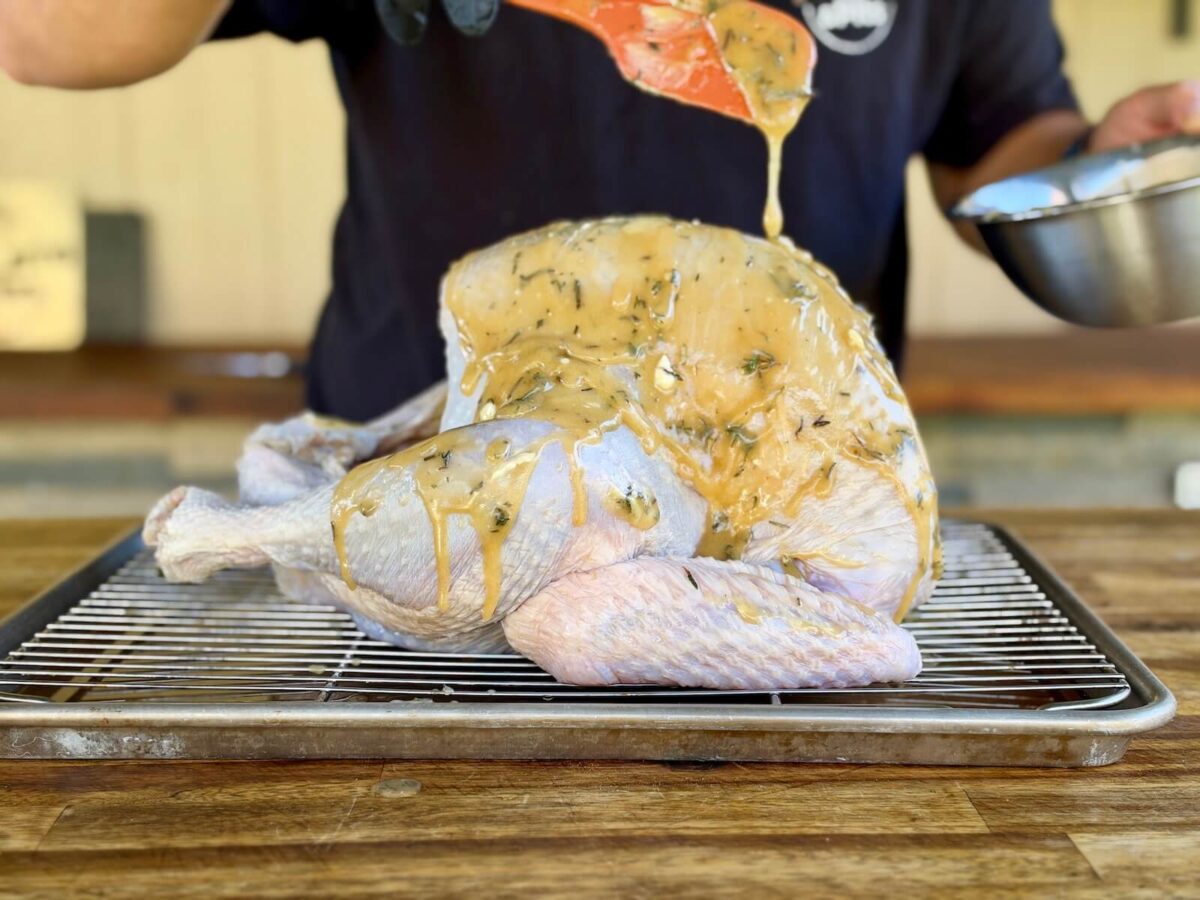
*Why not put the butter under the skin? We can argue about this until the cows come home, but I’m not a fan. When you slide butter under the skin, gravity takes over as it melts, and it all ends up pooling at the lowest point instead of keeping your breast meat moist. Butter on top of the skin gives you color, flavor, and crispiness.
Step 6: Smoke the turkey at 300°F.
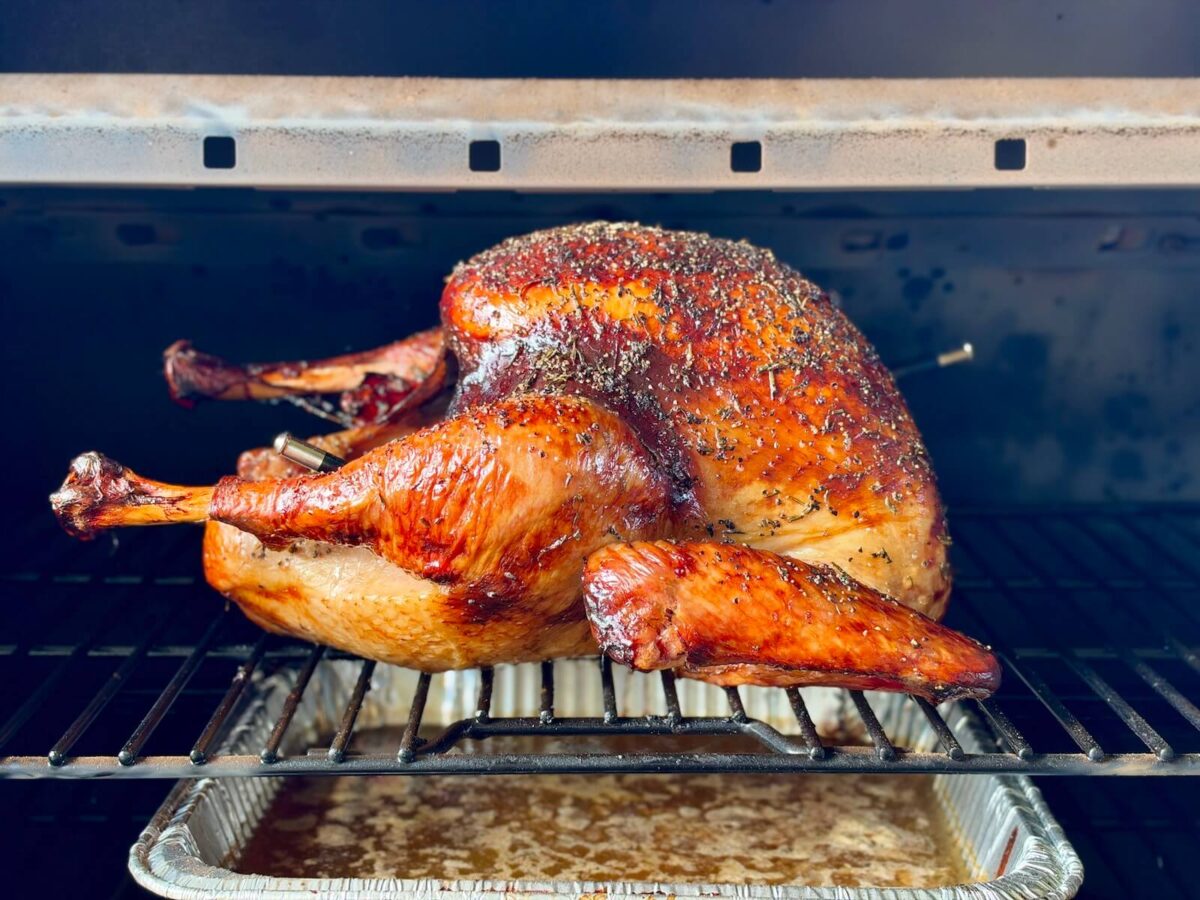
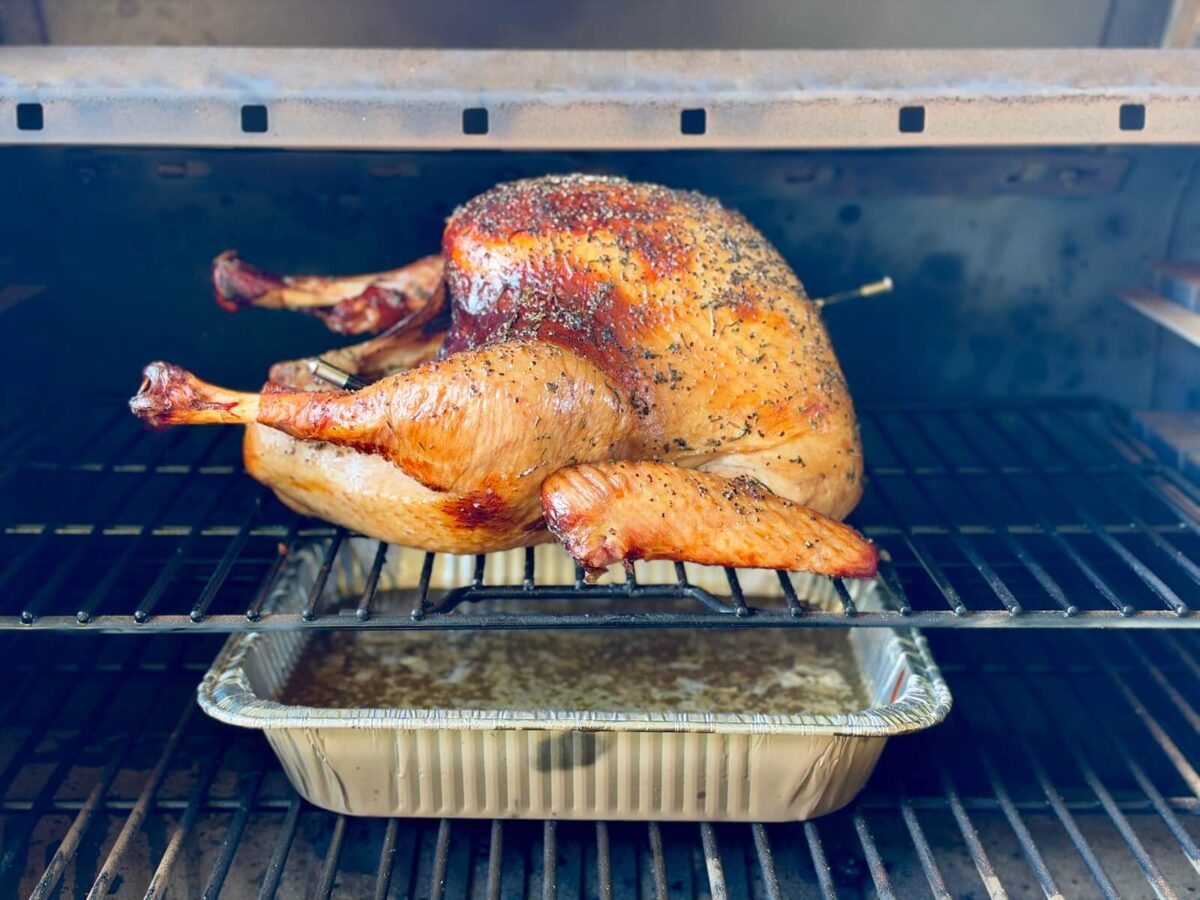
Place a water pan in the hottest spot of your pellet grill to give the turkey a little protection during the long cook. Then place the turkey on the grill.
Smoke at 300°F until the internal temperature of the thickest part of the breast reaches about 130°F.
Step 7: Bump up the heat to finish.
When the breast reaches about 130°F, bump the grill temperature up to around 350°F to help crisp up the skin. Keep in mind that the maple and beer give this turkey a darker, mahogany color than a traditional bird, so don’t panic. That color is exactly what you’re looking for.
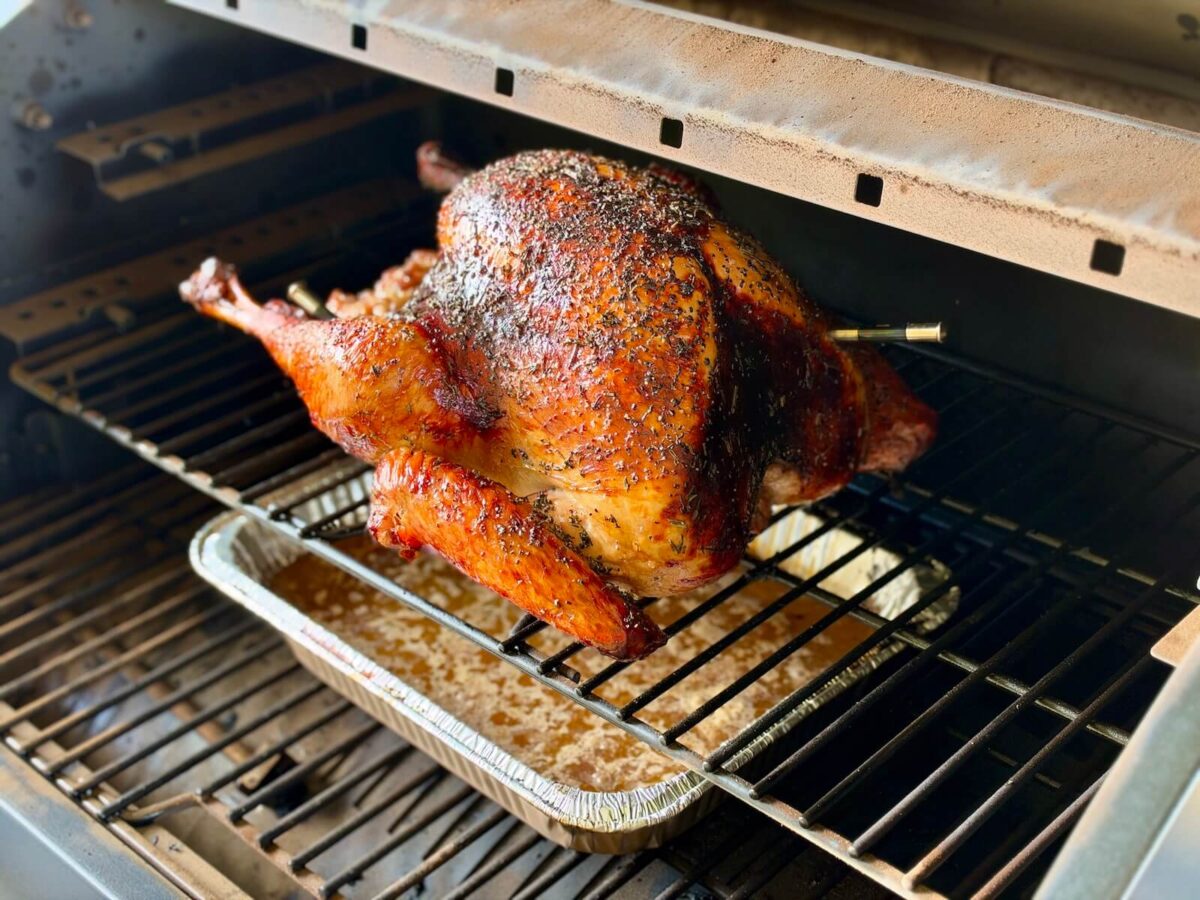
Step 8: Pull the turkey and let carryover cooking finish the job.
I pulled my turkey off the grill when the breast was at about 153°F, knowing that carryover cooking would bring it up several more degrees as it rested. The USDA recommends cooking turkey to 165°F in the thickest part of the breast, the innermost part of the thigh, and the wing. If you’re not comfortable pulling it early, take it off at 160–162°F and let it climb to 165°F as it rests.
Whatever you do, leave your thermometer in while the turkey rests! It shows you exactly how high the temperature climbs, when it plateaus, and when it starts dropping. That’s how you know your bird is done and ready to carve.
Step 9: Rest, carve, and enjoy.
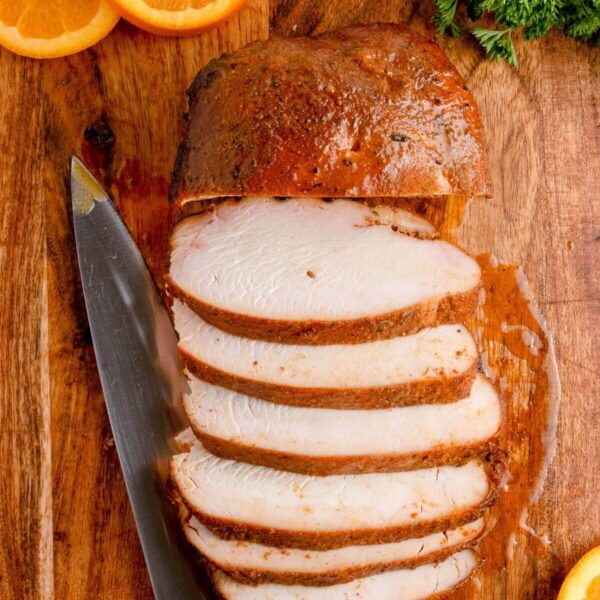
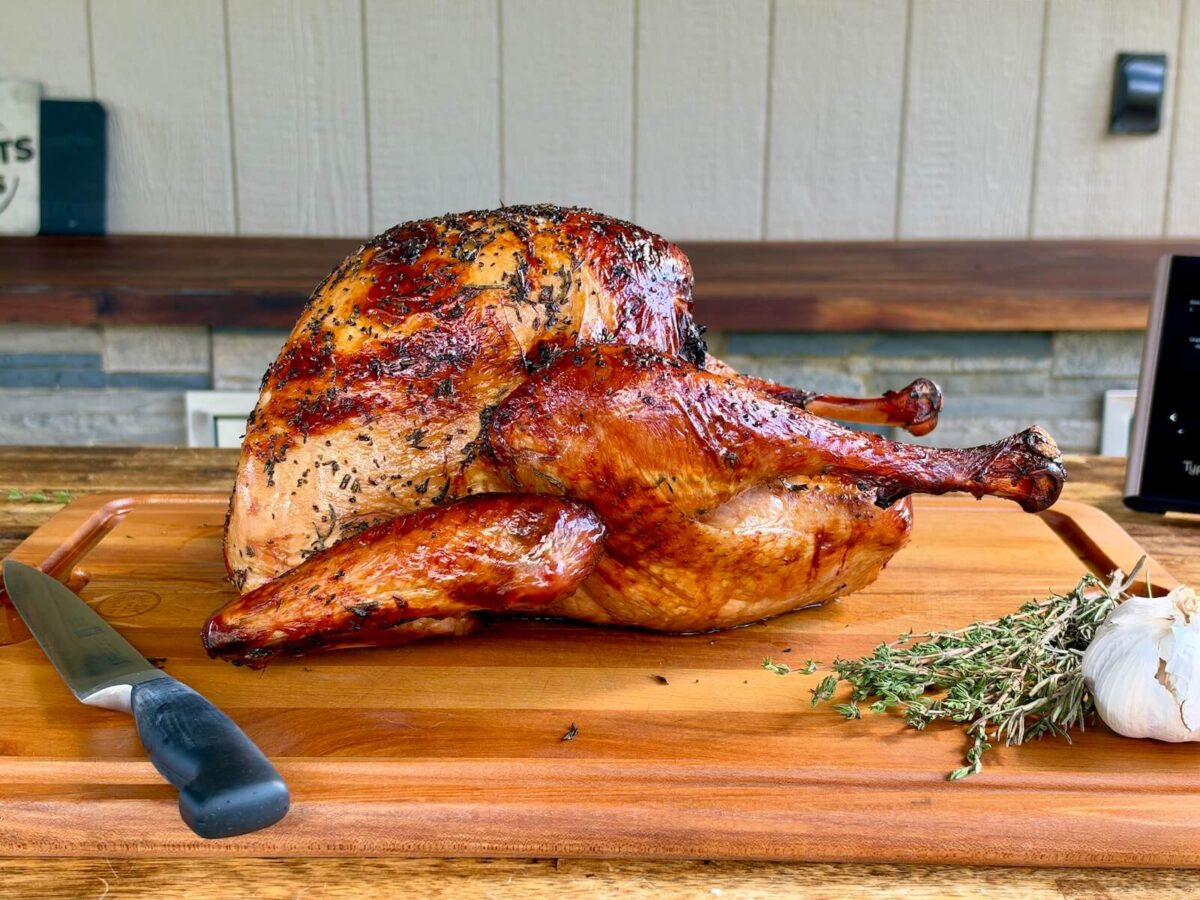
Let the turkey rest for at least 30 minutes before carving. When you slice into that breast, you’ll see what I mean about juicy. This turkey doesn’t even need gravy… but we won’t judge if you make some with those drippings.
Frequently Asked Questions
Any beer you like to drink! We used 2 cans of Guinness and 2 cans of hard cider, and the combination of the dark stout with the slightly sweet cider was fantastic. A mix of a light beer and a dark beer works great too. Just avoid super hoppy IPAs, which can turn bitter.
Not really. It has the faintest tang of ale, and the maple mellows it out. If someone tells you it’s beer brined, you’ll pick up on it. If they don’t, you probably wouldn’t guess. It mostly just tastes like a really juicy, really flavorful turkey.
About 16-24 hours (overnight) is the sweet spot for a 12–16 pound turkey. I don’t recommend going much longer than that, or the turkey can start to get too salty and the texture can get a little spongy.
We don’t rinse ours. We just pull it out of the brine, let it drain, and let it air-dry uncovered in the fridge for 24 hours. Then we pat it dry before adding the butter. Just don’t add any extra salt since the brine already took care of the seasoning.
Brining adds a lot of moisture to the turkey skin, and wet skin won’t crisp up. Letting it air-dry uncovered on a rack pulls that surface moisture out so you get crispy, golden skin instead of rubbery skin.
I smoke turkey at 300°F, then bump it to around 350–375°F toward the end. Smoking poultry at lower temps like 225°F gives you more smoke but almost always leaves you with rubbery skin.
Absolutely! Follow the same brining, drying, and buttering steps, then roast it in the oven at 300°F, bumping it to 350–375°F at the end. You won’t get the smoke flavor, but you’ll still get a juicy, flavorful bird.
Maple Beer-Brined Smoked Turkey
Ingredients
For the turkey:
- 1 whole turkey, 12 to 16 lbs, fully thawed, neck and giblets removed
- coarse black pepper, for seasoning
For the maple beer brine:
- 4 cups water
- 1 cup Diamond Crystal kosher salt, see notes
- 1 cup pure maple syrup
- 4 cloves garlic, smashed
- 1 sprig fresh rosemary
- 5 sprigs fresh thyme
- zest of 1 lemon
- 2 bay leaves
- 2 tablespoons whole black peppercorns
- 4 16 oz cans cold beer , (we used 2 cans Guinness and 2 cans hard cider)
- 8 cups ice
- 4 cups cold water, plus more as needed to cover the turkey
For the maple herb butter:
- ½ cup butter, (1 stick)
- 2 tablespoons pure maple syrup
- 1 tablespoon fresh rosemary, finely chopped
- 1 tablespoon fresh thyme leaves, chopped
Instructions
- Make the brine. In a large saucepan, combine 4 cups water, kosher salt, maple syrup, garlic, rosemary, thyme, lemon zest, bay leaves, and peppercorns. Heat over medium-high heat, stirring occasionally, until the salt dissolves and the brine is just about to boil. Remove from the heat.
- Cool the brine. Pour the 4 cans of cold beer and/or hard cider into the saucepan to help cool the brine down quickly.
- Prepare the brining bag. Add 8 cups of ice to a large brining bag. Pour in the brine, then add 4 cups of cold water and stir. Make sure the brine is completely cold (about 40°F) before adding the turkey.
- Brine the turkey. Place the turkey breast side down in the brine, working some of the liquid into the cavity. Add more cold water if needed so the turkey is mostly covered, or prop one side up so the liquid covers the bird. Tie the bag closed, removing most of the air from the bag, and refrigerate for 24 hours.
- Air-dry the turkey. Remove the turkey from the brine and discard the brine. Place the turkey on a wire cooling rack set on top of a sheet tray. Refrigerate, uncovered, for another 24 hours to dry out the skin. Do not add any more salt.
- Preheat the grill. On smoking day, fill your pellet grill hopper and preheat to 300°F. Place a water pan in the hottest area of the grill.
- Make the maple herb butter. In a small saucepan, melt the butter with 2 tablespoons maple syrup, rosemary, and thyme over low heat. Stir, then remove from the heat and let cool for a few minutes, until it starts to thicken and is spreadable but not runny.
- Butter and season the turkey. Pat the turkey completely dry with paper towels. Slather the maple herb butter all over the outside of the skin, then season with coarse black pepper.
- Smoke the turkey. Set the turkey on the grill grates. Smoke at 300°F until the thickest part of the breast reaches about 130°F.
- Crisp the skin. Increase the grill temperature to 350°F. Continue cooking until the thickest part of the breast reaches 155°F and the thigh reaches at least 160°F. *See notes.
- Rest the turkey. Remove the turkey from the grill and let it rest for 30-45 minutes, leaving the thermometer probes in place. Carryover cooking will bring the breast up to 165°F. *See notes.
- Carve and serve. Carve the turkey and serve.
Notes
- Salt: Diamond Crystal kosher salt is much less salty by volume than table salt or Morton kosher salt. If using Morton kosher salt, use ½ cup. Do not use table salt.
- Beer: Use any beer or hard cider you like. A mix of dark and light works great. Avoid very hoppy IPAs, which can turn bitter.
- Timing: To serve on Thanksgiving Day, start brining on Tuesday morning.
- Internal temperature: The USDA recommends cooking turkey to 165°F in the thickest part of the breast, the innermost part of the thigh, and the wing. However, most chefs will tell you to pull the turkey off the grill when the breast reaches about 150-155°F, and then rest the turkey until after the internal temp climbs, plateaus, and then starts coming back down. This could be about 40 minutes to 1 hour of resting, depending on the size of your bird. Always cook to temperature, not time.
- Cook time: Cooking times are approximate and vary based on the size of your turkey, the outside temperature, and your grill.
- Oven method: Follow the same steps and roast in the oven at 300°F, increasing to 350 to 375°F to finish.