This post may contain affiliate links. Please see our disclosure policy.
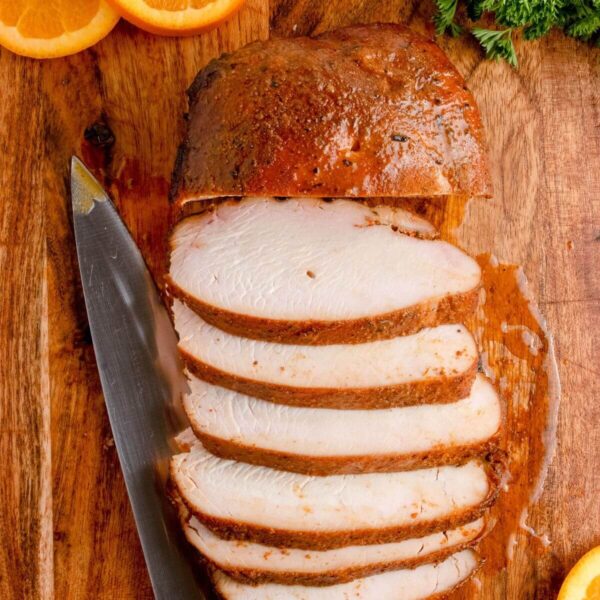
This smoked rotisserie turkey is dry brined and then cooked to perfection on the pellet grill. An easy and incredibly juicy Thanksgiving turkey recipe that delivers on flavor (and saves you some oven space)!

One of the biggest reasons why I love my Weber grills, whether the Weber kettle charcoal grill or the Weber Searwood XL pellet grill, is because of the rotisserie attachments. In my opinion, nobody does a rotisserie better than Weber. And with Thanksgiving right around the corner, we decided to try a smoked rotisserie turkey!
With a simple dry brine and a butter and herb basting, this grilled rotisserie turkey was one of the best turkeys that we’ve ever made. Rotisserie cooking provides consistent heat distribution as the turkey rotates, ensuring every part of the bird is evenly cooked. And combined with the smoky flavor of the pellet grill or smoker, this method results in a flavorful, juicy, and mouthwateringly delicious turkey!
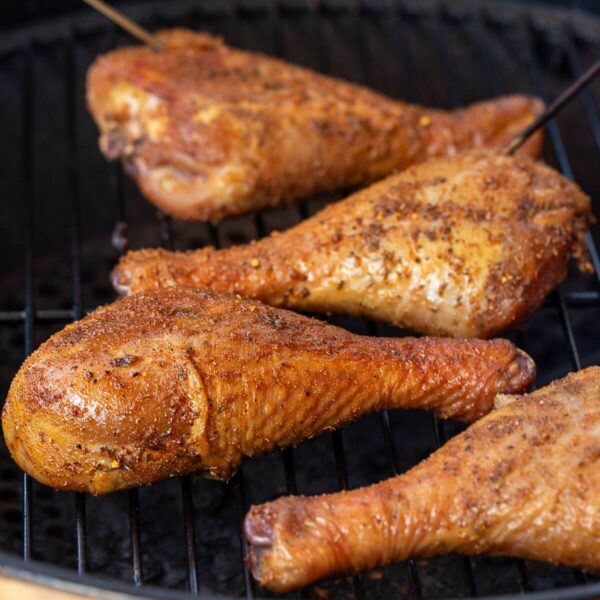
*Be sure to check out some of our other fantastic smoked turkey recipes, like this apple cider brined smoked turkey and this Cajun smoked turkey!

Table of Contents
- What You Need to Cook a Rotisserie Turkey
- Rotisserie Turkey Video
- Dry Brining the Turkey
- How to Put the Turkey on the Rotisserie Rod
- How to Cook Rotisserie Turkey on the Grill
- Tips for Rotisserie Smoked Turkey
- How do I know when my rotisserie turkey is done cooking?
- How long does it take to cook a rotisserie turkey on the grill?
- Can I do a wet brine with a rotisserie turkey?
- Dry-Brined Rotisserie Turkey on the Grill Recipe
What You Need to Cook a Rotisserie Turkey
Grill with Rotisserie Attachment
To cook a smoked rotisserie turkey, you’ll need a pellet grill or other type of grill equipped with a rotisserie attachment. This specialized setup allows the turkey to rotate continuously, ensuring even exposure to heat and smoke for perfectly cooked, juicy meat and golden, crispy skin.
A rotisserie attachment typically includes a motorized spit rod that plugs into power and prongs to secure the bird in place. Not all pellet grills come with this feature, so check your model for compatibility or consider purchasing a rotisserie kit designed for your grill. Then you can also make other delicious rotisserie-style meals, like rotisserie chicken or rotisserie prime rib – both of which we’ve made on our Weber grills with fantastic results!
For this smoked rotisserie turkey, I used the Weber Searwood XL with the rotisserie attachment. You can also try this method using a Weber kettle grill outfitted with the appropriate rotisserie kit.

Butcher’s Twine
You will definitely need butcher’s twine to tie the turkey around the rotisserie shaft so that it stays in place. Any twine made for cooking or trussing meat will work, but make sure that you have plenty. I tied my rotisserie turkey in three different areas to keep it secure.
Wireless Meat Thermometer
Though this isn’t technically a necessity, it does help to monitor the temperature of your turkey as it’s cooking on the grill.
For rotisserie turkey, you definitely don’t want to use a wired meat thermometer (with the probes that are connected to the base by a wire), because the wires would get tangled up as the rotisserie turns.
*Alternatively, you could check the internal temperature of the turkey with an instant read thermometer, but that doesn’t allow you to keep a close eye on the temp throughout the smoking process.
Rotisserie Turkey Video
Dry Brining the Turkey
You have a TON of options when it comes to prepping and seasoning your turkey before it goes on the rotisserie. But after making over 50 different Thanksgiving turkeys, we SWEAR by the brining method.
We typically do a wet brine, like this apple cider brined turkey, but to switch things up we tried a dry brine for this smoked rotisserie turkey. The benefits of the dry brine method over the wet brine is that it’s much less messy, and because you don’t have to worry about completely submerging the bird in liquid, the dry brine method also takes up less space in the fridge.
To start, remove the giblets from the turkey and pat it dry with paper towels. Place the turkey on a wire cooling rack on top of a sheet tray. *TIP – Make sure that you clear enough space in your refrigerator to accommodate the size of the sheet tray and the height of the turkey.

Then prepare the dry brine. Simply mix the zest of one lemon with kosher salt, rosemary, thyme, black pepper, and garlic powder in a bowl.
Mix the dry brine ingredients well, and simply sprinkle liberally all over the entire turkey. Place the sheet tray with the turkey in the refrigerator uncovered to brine overnight, preferably for 24 hours.

How to Put the Turkey on the Rotisserie Rod
After the 24 hour brining period, it’s time to get the turkey trussed up on the rotisserie and ready for the grill. Your rotisserie grill attachment should have two sets of pronged forks, one for either side, to hold the turkey in place on the rotisserie shaft.
Position the first rotisserie fork attachment on the rotisserie rod, and tighten it into place with the screw. Then, insert the rotisserie rod through the turkey and carefully press the forks into the bird. You’ll want to insert the prongs into the meat as far as you can so that the turkey stays in place as its rotating on the grill.
*TIP – I suggest inserting the shaft through the turkey cavity so that the forks get inserted into the breasts first. There is more meat and surface area on this side, so it’s easier to insert the forks.

Then, once the rod is through the turkey, slide on the second set of rotisserie prongs and press into the meat. Use butcher’s twine to tie the legs up and around the prongs, holding it in place on the rotisserie rod. Then, tie up the wings so that they are snug against the side of the turkey.
*TIP – You may want to add multiple pieces of twine to keep the bird more secure, especially around the legs. I found that the leg side of the turkey loosened on the rotisserie a few times during the cooking process, and I had to stop the rotisserie and re-tie.
How to Cook Rotisserie Turkey on the Grill
Once the turkey is firmly secured, attach the rotisserie rod to your grill and start the rotation.
Depending on what grill you have and the size of your turkey, you may need to remove the grill grates under the bird to allow for enough space for it to turn freely. Obviously, the downside of this is that you won’t be able to put a pan underneath to catch the drippings for your turkey.

Cook at your desired temperature, probably between 250-325°F, depending on how much smoke flavor you want and what your time frame is for getting the turkey on the table.
After the first hour or so on the grill, start basting the turkey with a simple melted butter and poultry herb mixture. You can even use a sprig of rosemary as the “basting brush” to paint on the delicious herbed butter as the turkey rotates. Continue to baste the turkey with the butter every 30 minutes or so until it’s done cooking.

*TIP – Be sure to save enough of the herbed butter for one last basting when the turkey comes off the smoker.
Then, it’s all about cooking to the correct internal temperature. Be sure that you keep an eye on your wireless thermometer, especially as the turkey gets closer to done.
Once your turkey is done, stop the rotisserie rotation, and remove the full rotisserie shaft from the grill – be sure to use heat-proof gloves because the metal will be HOT! Remove the turkey from the rod and allow it to rest for at least 30-45 minutes before slicing and serving.

Tips for Rotisserie Smoked Turkey
- Weight Considerations – Ensure your turkey is within the weight capacity of your rotisserie kit.
- Balancing the Turkey – A well-balanced turkey prevents motor strain and ensures even rotation. Adjust prongs and tie securely with multiple pieces of butcher’s twine.
- Check Temps Regularly – Use a wireless meat thermometer to monitor the turkey’s progress.
- Adjust the turkey on the rotisserie as needed – As the turkey cooks, it will get very slightly smaller because of fat rendering, etc., causing the twine to loosen. You may need to adjust the rotisserie prongs or the turkey trussing if the bird starts to get looser on the rotisserie rod.
Pinterest User? Do us a favor and PIN this to your board for smoker recipes or Thanksgiving recipes. This is a GREAT way to support us!

How do I know when my rotisserie turkey is done cooking?
When it comes to poultry, the best way to check for doneness is with an instant read thermometer. Even if you’re using a wireless meat thermometer to monitor the temperature of your turkey throughout the cooking process, you should still use an instant read thermometer to probe multiple parts of the bird to check for doneness.
*You can see the meat thermometers that I use and my other favorite pellet grill accessories here!
The turkey is done when a thermometer inserted into the thickest part of each breast reads about 162-163°F. This allows for a few degrees of carryover cooking while the turkey rests. The internal temperature of the thighs will be a bit higher, probably around 175°F.
*NOTE – The USDA recommends cooking turkey and other poultry to a minimum internal temp of 165°F.
How long does it take to cook a rotisserie turkey on the grill?
ALWAYS cook to the proper internal temperature, NOT to a certain time. Different grills maintain heat differently, and the grill temperature can vary drastically (by 50 degrees or more) from where your grill’s internal thermometer is versus where you place the meat on the grill grates – top or bottom grate, middle or end of the grill, etc.
That being said, my 12-14 pound rotisserie turkey took about 3.5 hours to cook at 325°F.
The times provided in any smoked turkey recipe are a guide only. You should always cook your meats to the proper internal temperature above all else.
Can I do a wet brine with a rotisserie turkey?
Absolutely! And in fact, I recommend it because we personally prefer a wet brine over a dry brine – like this fantastic apple cider brined turkey! The process to tie the bird to the rotisserie and cook it on the grill is the same. Just be sure to pat the turkey dry with paper towels when you remove it from the wet brine, and before attaching it to the rotisserie rod.

Dry-Brined Rotisserie Turkey on the Grill
Equipment
- grill with rotisserie attachment
- butcher's twine
- wireless meat thermometer or instant read probe thermometer
Ingredients
- 12-14 lb turkey, thawed and giblets removed
For the Dry Brine:
- 3 tablespoons kosher salt
- 1 tablespoon black pepper
- 1 teaspoon dried rosemary
- ½ teaspoon dried thyme
- ½ teaspoon garlic powder
- zest of 1 large lemon
For Basting:
- 1 stick butter
- 1 package fresh poultry herb blend, *These typically come in .5 oz packages in the produce section – rosemary, sage, and thyme.
Instructions
- Prepare the dry brine. Add all dry brine ingredients to a small bowl and mix together well.
- Brine the turkey. Place the turkey on a wire cooling rack on top of a sheet tray. Pat dry with paper towels. Sprinkle the dry brine liberally all over the entire turkey. Place the sheet tray with the turkey in the refrigerator uncovered to brine overnight, preferably for 24 hours. *TIP – Make sure that you clear enough space in your refrigerator to accommodate the size of the sheet tray and the height of the turkey.
- Preheat pellet grill or smoker. After the 24 hour brining period, remove the turkey from the refrigerator. Preheat grill to 325°F with your choice of wood or pellets. Set up the rotisserie motor/attachment on the grill.
- Truss the turkey on the rotisserie rod. Slide the rotisserie rod through the turkey cavity and press the forks into the turkey (one fork on either end). Tighten the screws of the forks, or prepare the rotisserie according to manufacturer's instructions. Use butcher’s twine to tie the legs up and around the prongs, holding the turkey in place on the rotisserie rod. Then, tie up the wings so that they are snug against the side of the turkey.
- Attach the rotisserie spit to the grill. Attach the rotisserie rod to the motor/attachment according to instructions. Start the rotation and close the lid to begin cooking.
- Make the basting butter. Finely chop the fresh thyme and sage. In a small saucepan, heat one stick butter with the thyme and sage until melted.
- Baste and cook the rotisserie turkey. About 1½ hour into the cooking time, begin basting the turkey. Use a sprig of rosemary as a brush, dip into the melted butter, and brush on the turkey as it rotates. Close the lid and continue to cook. Baste the turkey with the herb butter every 30-40 minutes until it's done cooking. *TIP – Be sure to save enough of the herbed butter for one last basting when the turkey comes off the smoker.
- Cook rotisserie turkey until done. Cook the rotisserie turkey on the grill until the internal temperature of the thickest part of the breasts reaches about 162°F. This allows for carryover cooking during the resting period.
- Rest and serve. When the turkey reaches the correct internal temp, carefully remove the rotisserie rod from the grill using heat-proof gloves. Transfer turkey to a cutting board, cut off the twine, and allow the turkey to rest for at least 30 minutes. Then carve and serve.
Video
Notes
- Trussing the turkey – You may want to add multiple pieces of twine to keep the bird more secure, especially around the legs. I found that the leg side of the turkey loosened on the rotisserie a few times during the cooking process, and I had to stop the rotisserie and re-tie.
- Adjust the turkey on the rotisserie as needed – As the turkey cooks, it will get very slightly smaller because of fat rendering, etc., causing the twine to loosen. You may need to adjust the rotisserie prongs or the turkey trussing if the bird starts to get looser on the rotisserie rod.
- Turkey doneness – The turkey is done when a thermometer inserted into the thickest part of each breast reads about 162°F. This allows for a few degrees of carryover cooking while the turkey rests. The internal temperature of the thighs will be a bit higher, probably around 175°F. *The USDA recommends cooking turkey and other poultry to a minimum internal temp of 165°F.
- Cooking time – ALWAYS cook to the proper internal temperature, NOT to a certain time. Different grills maintain heat differently, and the grill temperature can vary drastically (by 50 degrees or more) from where your grill’s internal thermometer is versus where you place the meat on the grill grates – top or bottom grate, middle or end of the grill, etc. My 12-14 pound rotisserie turkey took about 3.5 hours to cook at 325°F. The times provided in any smoked turkey recipe are a guide only. You should always cook your meats to the proper internal temperature above all else.