This post may contain affiliate links. Please see our disclosure policy.
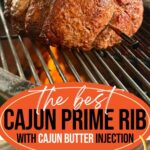
Move over traditional prime rib – this Cajun prime rib brings BOLD flavor to your holiday table! Injected with Cajun butter and coated in spicy seasoning, this prime rib roast is packed with flavor from edge to edge, not just on the crust. After smoking hundreds of prime rib roasts, this is hands down the most flavorful one we’ve ever made!
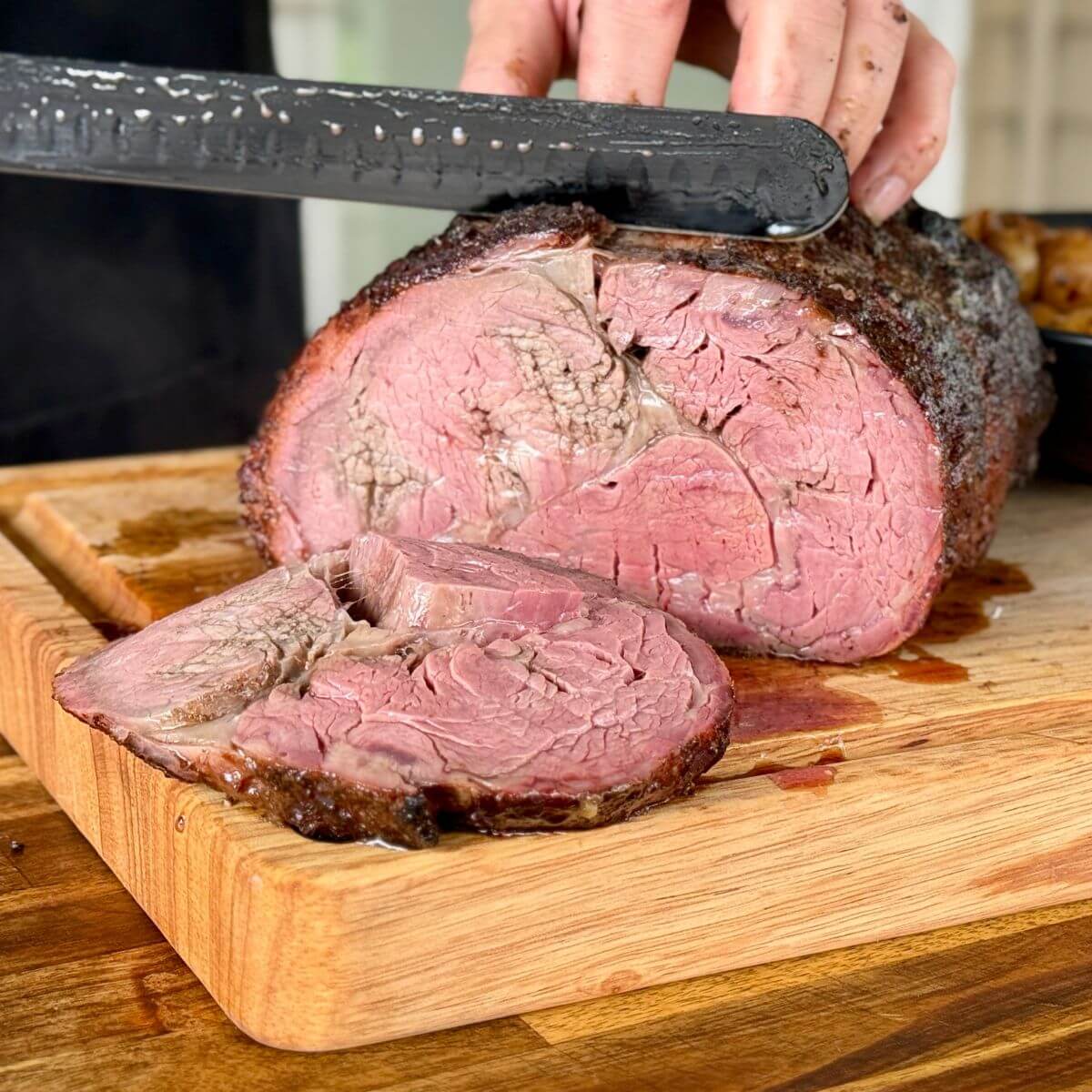
If you’re tired of the same old prime rib routine year after year, it’s time to shake things up with some serious Cajun flair. This Cajun smoked prime rib recipe takes everything you love about a classic prime rib and cranks up the flavor dial to eleven.
My mother-in-law absolutely loves a Cajun or blackened style ribeye, and we don’t make it for her nearly enough. So this Cajun butter smoked prime rib is all for her – and let me tell you, it did NOT disappoint! If this doesn’t earn me son-in-law points, I don’t know what will.
*And be sure to check out our classic smoked prime rib recipe and our rotisserie prime rib!
What Makes this Cajun Prime Rib Different?
Let me be honest with you – most prime rib roasts, even really good ones, only have flavor on the outside where you’ve seasoned the crust. The inside is just pure beef flavor, which is why we typically serve it with creamy horseradish sauce or au jus for extra punch.
But THIS Cajun smoked prime rib? It’s completely different. By injecting the roast with a simple store-bought Cajun butter marinade AND seasoning the outside generously, you get flavor all the way through. Every single bite has that spicy, buttery, Cajun goodness.
This isn’t your grandmother’s prime rib – unless your grandmother is from Louisiana, in which case, she already knows what’s up.
Choosing Your Prime Rib Roast
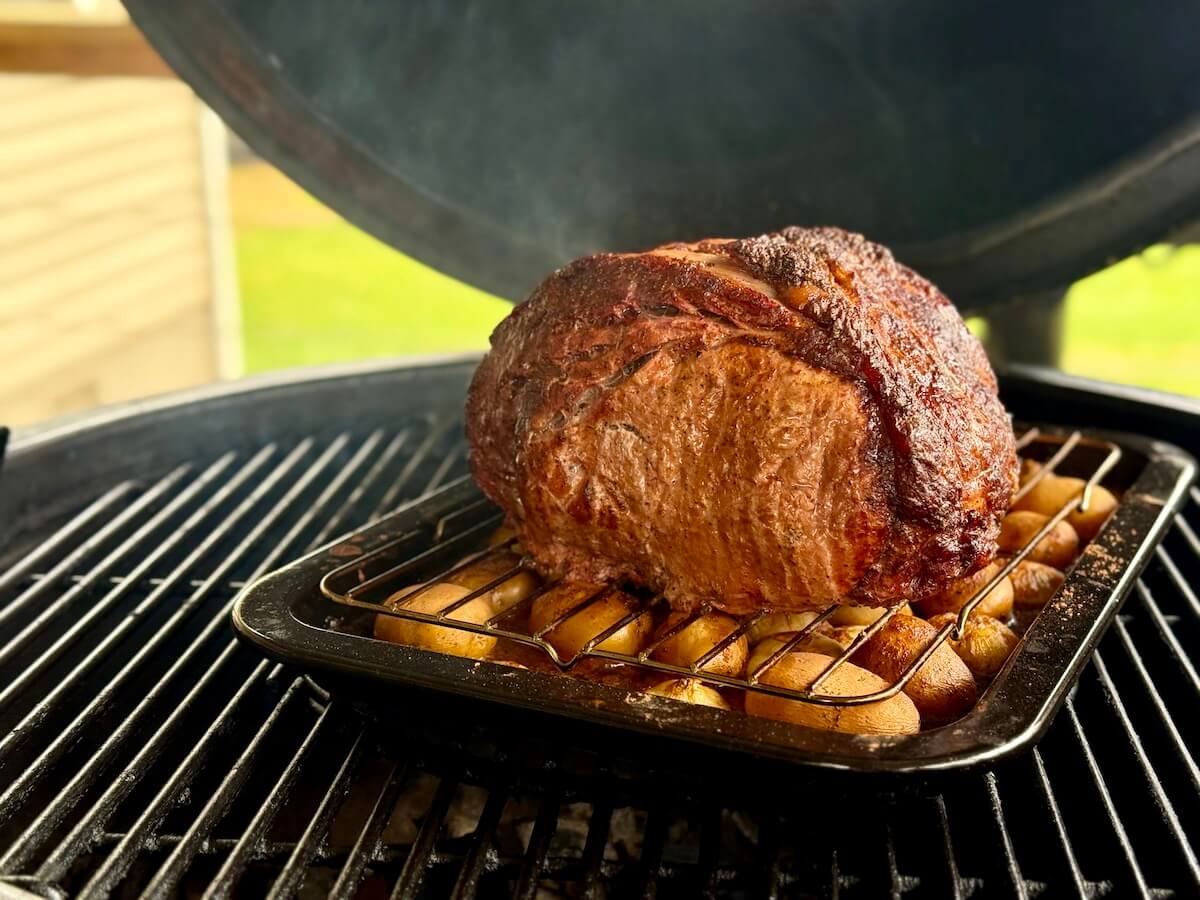
For this recipe, I picked up a boneless prime rib roast from Costco at $10.99 per pound. Now, there are pros and cons to boneless versus bone-in roasts.
Boneless vs Bone-In
Bone-in advantages:
- Bones add extra flavor
- Bones protect the meat during cooking
- Makes for a more impressive presentation
Boneless advantages:
- Often less expensive per pound since you’re not paying for bone weight
- Easier to carve
- Still makes an incredible roast when properly prepared
At the end of the day, both work great for this recipe. Just remember – whether you go boneless or bone-in, you MUST truss it.
Why Trussing is Essential
This is very important: Even without bones, you need to truss your prime rib roast with butcher’s twine. Here’s why –
- Prime rib has a fatty area that separates the spinalis (the outer cap) and the eye of the ribeye. Under heat, especially when injecting moisture like for this Cajun butter prime rib, the separation can cause the spinalis to lift apart.
- Trussing the prime rib roast helps the meat to cook more evenly, and it prevents the gray ban from forming so that you have a beautiful roast that is pink all the way through.

I trussed my roast in three places to keep everything together, and it made all the difference in maintaining the roast’s shape during the cook.
Simply use butcher’s twine to tie the roast up tightly in three different cross sections, with the twine spaced out evenly. For a larger roast, you may need to tie it more than three times, about every 2″.
How Much Prime Rib Per Person
Plan on about 1 pound of bone-in prime rib per person, or about 3/4 pound per person for boneless. For this recipe, a 6-7 pound boneless roast will easily feed 8 people, especially if you serve it with the baby potatoes and onions, which I highly recommend.
Ingredients for Cajun Smoked Prime Rib
The beauty of this Cajun prime rib recipe is in its simplicity. You don’t need a ton of exotic ingredients to create something incredibly flavorful.
For the Roast:
- Prime rib roast – 6-7 pounds, boneless or bone-in
- Cajun butter injection – Store-bought works great! I used this Cajun butter injection that you can find at most grocery stores. Another popular choice is the Tony Chachere’s Creole Style Butter Injectable Marinade.
- Cajun seasoning – Use your favorite. Many Cajun or Creole seasonings are pretty salt-forward, so they act as a dry brine in this recipe. Plus, the Cajun seasoning gets added to butter for an easy Cajun butter coating.
- Butter – You’ll need one stick of butter. I recommend using unsalted butter since most Cajun seasonings are fairly salty.
- Butcher’s twine – For trussing
For the Potatoes and Onions (Optional but Recommended):
- Baby yellow potatoes
- Cipollini onions – Or you can use a large sweet onion cut into chunks
For the Blue Cheese Sauce (Optional):
- Roasted garlic – About 5-6 cloves
- Heavy cream – 1/2 cup
- Blue cheese crumbles
Grilling Notes
- Pellet Grill/Smoker Temp – About 250°F until the internal temp of the prime rib roast reaches about 117-118°F; then increase the grill temperature for searing
- Wood Used – Hickory
- Grill Used – Weber Summit Charcoal Grill (you can use any pellet grill, charcoal grill, or smoker)
- Smoking Time – About 3-4 hours total at 250°F, then an additional 10-15 minutes for the sear
- Internal Temperature – Pulled at 120°F, rose to about 125-126°F after resting (perfect medium-rare)
How to Make Cajun Prime Rib
The Day Before: Truss and Dry Brine
Step 1: Truss the roast. Before you do anything else, truss your prime rib roast in three places with butcher’s twine. This keeps the spinalis from separating during the cook.

Step 2: Apply Cajun seasoning generously. Remember, this is a LARGE piece of meat, and Cajun seasoning is typically very salt-heavy. This is intentional – it’s acting as a dry brine. Season all sides of the roast liberally with your Cajun seasoning, working it into every surface.
Step 3: Refrigerate overnight. Place your seasoned and trussed prime rib roast on a wire rack set on top of a sheet tray and refrigerate overnight. This allows the salt to penetrate the meat, adding extra flavor throughout and helping to tenderize the roast.
Day Of: Inject and Prep
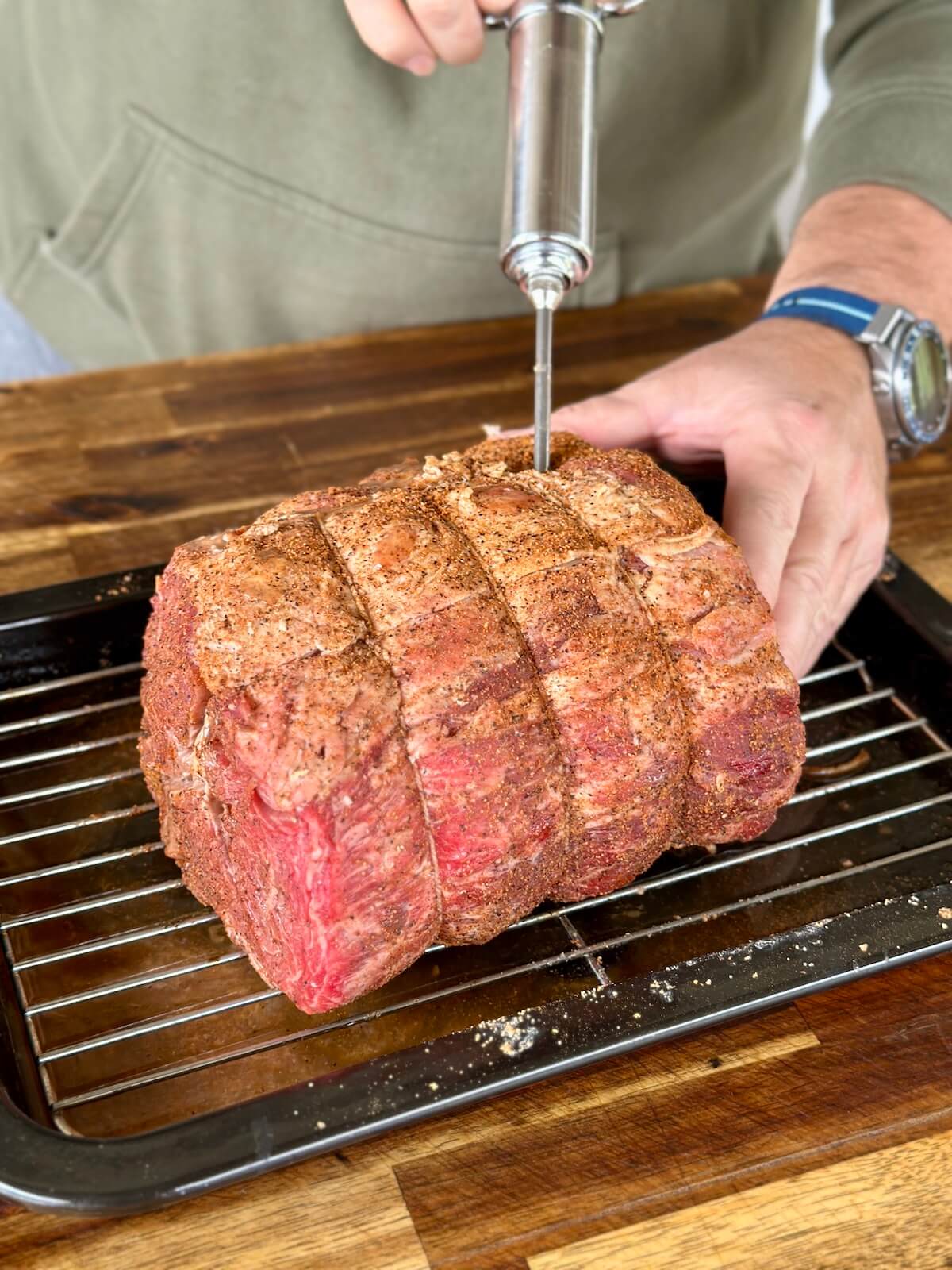
Step 4: Inject with Cajun butter. Using a meat injector, inject the roast with Cajun butter in multiple spots. I used about 3/4 to 1 cup total of the injectable Cajun butter marinade for my 6.5 pound roast.
*Pro Tip – Use the same hole for multiple injections at different angles to avoid poking your roast full of holes. I used about one full syringe per quarter section of the prime rib roast.
Step 5: Prepare your vegetables. If you’re making the potatoes and onions (highly recommended!), prep them now. Wash your baby yellow potatoes and peel your Cipolline onions. Or you could substitute one medium sweet onion cut into bite-sized chunks if you can’t find Cipolline onions.
Step 6: Set up your cooking vessel. Place your vegetables in the bottom of a roasting pan or baking sheet. Set a wire rack on top. This setup catches all those incredible Cajun butter drippings from the prime rib, which will flavor the potatoes and onions as the roast cooks. Trust me, don’t skip this step!

Making the Cajun Butter Rub
Step 7: Prepare the Cajun butter mixture. This step is simple but crucial. In a small bowl, mix one stick of softened butter with a generous amount of your favorite Cajun or Creole seasoning. Mix it well.
Step 8: Coat the roast with Cajun butter. Start with the bottom of the roast first, because you want to prepare the top of the prime rib last for a beautiful presentation. Slather that Cajun butter all over the roast, making sure to get butter evenly on all sides. The butter will drip down into those potatoes and onions during cooking – that’s pure flavor gold!

Smoking the Cajun Prime Rib
Step 9: Prep your grill or smoker. Preheat your pellet grill, charcoal grill, or smoker to 250°F. I cooked my Cajun prime rib on a charcoal grill and I added chunks of hickory wood for extra smoke flavor, but you could also use oak, pecan, or a fruit wood if you prefer a milder smoke flavor.
*For my Weber charcoal grill, I used the lazy man snake method with cut up hickory chunks added in. Start your coals on one end and let them burn through slowly for consistent heat.
Step 10: Smoke the prime rib. Place your roasting pan with the rack and prime rib on the grill. Close the lid and let it smoke at 250°F until the internal temperature reaches about 117-118°F. For my 6.5 pound roast, this took about 3.5 hours.
During this time, resist the urge to constantly check on it. Low and slow is the name of the game here.
The Final Sear (Reverse Sear Method)
Step 11: Remove the roast and crank up the heat. When your roast hits 117°F internal temperature, remove the entire sheet pan from the grill. *This is crucial – do NOT leave it on the grill while you’re raising the grill temperature, because then your roast won’t have as long to sear for the beautiful crust.
Increase your grill temperature to a higher heat for searing. While the grill is heating up, you can leave the potatoes on to continue to cook if needed. I found that my Cajun prime rib cooked more quickly than the potatoes. This is why it’s handy to have the prime rib set on a wire rack on top of the vegetables – you can easily remove the roast so that the potatoes can continue to cook by themselves.

Step 12: Sear the roast. Once your grill is hot, put the prime rib directly on the grill grates on the hottest part of the grill, and sear it on all sides. This should only take about 10-15 minutes total, or until the roast reaches your desired doneness. You’re looking for a beautiful, caramelized crust.
*Pro Tip: Because we’re searing at such a high temperature, there will be MORE carryover cooking than if you finished it at low heat. Plan accordingly!
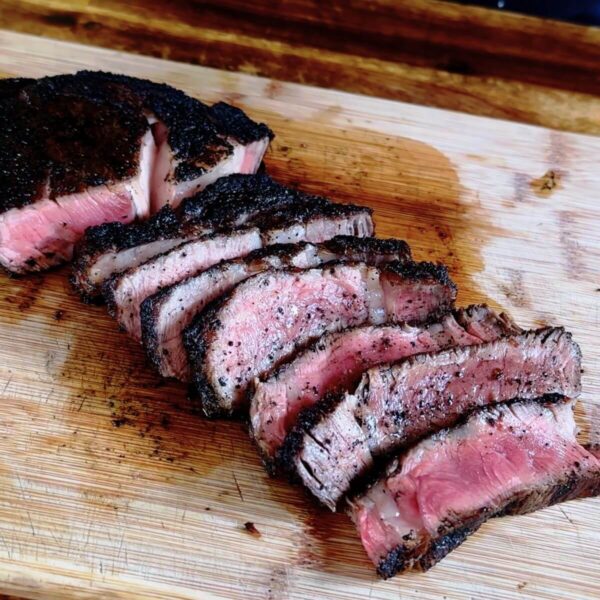
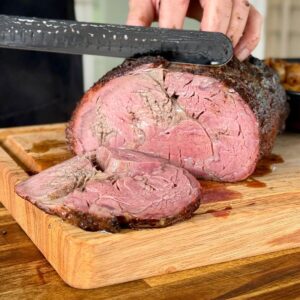
For a perfect medium rare, I removed my roast from the grill once it reached 120°F internal temperature. My Cajun prime rib roast went from 120°F to about 125-126°F during the 15-minute rest, which was exactly the medium-rare I was looking for.

Carving and Serving
Step 13: Remove the twine and carve. After the rest period, carefully remove the butcher’s twine. Use a sharp carving knife to cut the prime rib into steaks about 1/2″ to 1″ thick, depending on preference.
Serve the Cajun prime rib with those incredible Cajun butter potatoes and onions on the side. Drizzle the blue cheese sauce over the top or serve it on the side for dipping. Or serve your Cajun prime rib with this creamy horseradish sauce.
Making the Blue Cheese Sauce (Optional)
While the prime rib is resting, you can whip up this incredible blue cheese sauce, which we love for serving with blackened or Cajun-style beef:
In a small saucepan, combine about 1/2 cup of heavy cream with 5-6 cloves of mashed roasted garlic. Warm over medium heat, stirring occasionally. Once warmed through, add blue cheese crumbles and stir until melted and combined.
This is a super easy 3 ingredient sauce that’s absolutely phenomenal with the Cajun flavors. You can also add a little horseradish to make it a horseradish roasted garlic blue cheese sauce if you want!

Serving Suggestions
Those potatoes that cooked underneath the roast? They’re like cowboy butter potatoes with Cajun seasonings. They’re honestly so good, you could serve them as a standalone side dish.
For a complete meal, consider adding:
- The blue cheese sauce (recipe above)
- A simple green salad
- Roasted asparagus
- Horseradish sauce for those who want extra kick
- Dinner rolls to soak up all that Cajun butter
- Smoked twice baked potatoes
Important Note about the Cajun Injector Marinade
Full transparency here – when we made this recipe for the first time, we injected the roast with the Creole butter marinade the night before, and then we refrigerated it with the Cajun seasoning to dry brine overnight. However, we noticed some discoloration in the smoked prime rib when we cut into it. After talking with some folks, we think it might have been a chemical reaction from injecting the night before. The Cajun butter injection had citric acid in it, which may have “cooked” some of the meat similar to how ceviche works.
The good news? The prime rib was incredibly tender – probably the most tender prime rib we’ve ever made. So there might be a catch-22 with the acid breaking down the meat.
We recommend seasoning the roast and brining it overnight as instructed, but save the Cajun injection for the day of cooking, about 2-3 hours before it goes on the grill.
Cajun Prime Rib Roast
Equipment
- butcher's twine
Ingredients
For the Prime Rib:
- 6-7 pound prime rib roast, boneless or bone-in
- 1 cup bottled Cajun butter injection marinade, like Zatarain's or Tony Chachare's
- 1/4 cup Cajun or Creole seasoning, for dry brining roast
- ½ cup unsalted butter, softened
- 2 tablespoons Cajun or Creole seasoning, for the butter mixture
For the Potatoes and Onions:
- 1½ pounds baby yellow potatoes, washed and dried
- 8-10 Cipolline onions, peeled (or 1 large sweet onion, peeled and cut into chunks)
Optional Blue Cheese Sauce:
- 1/2 cup heavy cream
- 5-6 cloves roasted garlic, mashed
- 3-4 oz blue cheese crumbles
Instructions
Day Before:
- Truss the roast. Tie the prime rib roast with butcher's twine in three places (or about every 2") to keep it together during cooking.
- Season generously. Cover all sides of the roast with about ¼ cup of Cajun seasoning spread out evenly. This acts as a dry brine.
- Refrigerate overnight. Place the seasoned prime rib roast on a wire cooling rack on top of a sheet tray. Place in the refrigerator uncovered overnight.
Day Of:
- About 2-3 hours before cooking, inject the roast with Cajun butter. Using a meat injector, inject the roast all over with Cajun butter marinade, using about one full syringe per quarter section. Use the same hole for multiple angles to avoid over-poking the meat. Total amount of injectable marinade should be about 1 cup for a 6-7 pound roast.
- Prepare the roasting tray. Place baby potatoes and onions in the bottom of a roasting pan or deep-sided sheet tray, spread out in a single even layer. Set a wire rack on top. This catches the drippings and flavors the potatoes and onions.
- Make and apply the Cajun butter. Mix 1 stick of softened butter with 2 tablespoons Cajun seasoning until well combined. Slather the Cajun butter mixture all over the prime rib roast, making sure to coat all sides generously. Place the roast on the wire rack over the vegetables.
- Preheat grill or smoker. Heat your pellet grill, charcoal grill, or smoker to about 250°F with your choice of wood or pellets.
- Smoke the prime rib. Place the sheet pan with vegetables and prime rib roast on the grill. Close the lid and smoke at 250°F until internal temperature reaches 117-118°F, about 3-4 hours depending on size and grill temperature.
- Remove and increase heat. When the roast reaches 117°F, remove the wire rack with the roast from the grill. Increase grill temperature for searing. *NOTE – If the potatoes are not done yet, you can leave the tray with the potatoes and onions on the grill while the grill is heating to a higher temp. Use an instant-read thermometer to check potatoes – they should reach 208-210°F.
- Sear the roast. Once the grill is very hot (about 400-450℉), return the prime rib to the grill and sear on all sides until a nice crust forms and internal temp reaches 120°F, about 10-15 minutes total. *NOTE – Removing the Cajun prime rib at 120℉ allows for about 5-6 degrees of carryover cooking for a perfect medium-rare. For a higher doneness, cook to a higher internal temperature, keeping in mind that the carryover cooking could result in about 5-10 degrees more of doneness.
- Rest and carve. Remove the Cajun prime rib roast from the grill, and let rest for 15-20 minutes. Cut away the butcher's twine and carve the roast into 1/2" to 1" thick steaks.
- Serve immediately. Plate the Cajun prime rib with the Cajun butter potatoes and onions. Drizzle or serve the blue cheese sauce on the side (optional).
- Make blue cheese sauce (optional). While the roast is resting, warm heavy cream with mashed roasted garlic in a small saucepan. Add blue cheese and stir until melted.
Notes
- Cooking Time Note: The cooking times in this recipe are provided as a guide only and could vary based on roast size, grill temperature, etc. Always cook to the proper internal temperature, not to a specific time.
- Important Temperature Tip: Because we finish this roast with a high-heat sear, there’s more carryover cooking than with a low-and-slow finish. Plan to pull your roast 5-10 degrees lower than your target final temperature.
- Trussing is Essential: Don’t skip the trussing step! The fat separation between the spinalis and the eye can cause the meat to fall apart, especially with the moisture from the injection.
- Salt-Forward Seasoning: Most Cajun seasonings are very salt-heavy. This replaces a traditional salt brine, so there’s no need to add additional salt.
- Potato Done-ness: Potatoes are perfectly done at 208-210°F internal temperature. They should be fork-tender.
- Storage: Leftover prime rib can be stored in an airtight container in the refrigerator for up to 3 days. Great for steak sandwiches!
Pinterest User? Do us a favor and PIN this to your board for smoker or pellet grill recipes. This is a GREAT way to support us!
Pin this now to find it later
Pin It